“In 2023, there were cases where inaccurate results or results showing over-voting were uploaded to IReV. We have now developed a technical safeguard: if a result is inaccurate at the polling unit, it will not be uploaded to IReV.
“Once a result appears on IReV, citizens can trust what they see. By removing inconsistencies at the source, collation will become a transparent formality.”
The INEC chairman also disclosed that the Commission had considered introducing entirely new electoral technology for the 2027 elections. However, given the limited time before the polls, it decided instead to strengthen its existing systems.
The Commission also announced plans to hold a nationwide mock accreditation and voting exercise on November 28, 2026.
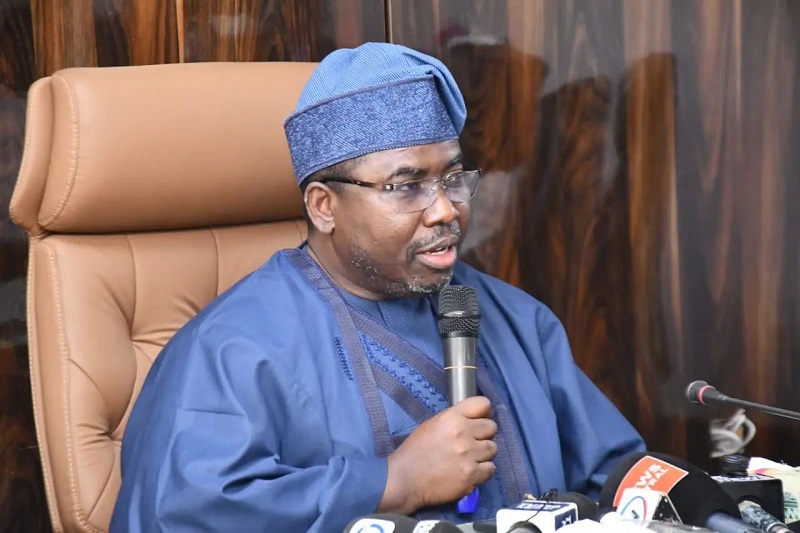
Amupitan acknowledged that controversies surrounding the 2023 presidential election had significantly undermined public confidence in INEC. He admitted that the Commission had not yet fully addressed the resulting trust deficit.
“First and foremost, let me speak about what happened in 2023, which resulted in a significant trust deficit for INEC—damage so large that the Commission has not yet fully recovered from it,” he said.
However, Amupitan, who took office in October 2025, said the Commission had drawn lessons from subsequent elections to identify shortcomings and strengthen its electoral processes.
He cited governorship elections in Anambra, Osun and Ekiti States, elections in the Federal Capital Territory, FCT, Area Councils, and 16 legislative by-elections as examples of progress during his leadership.
Explaining why Nigerians should trust his ability to conduct the 2027 elections, Amupitan said the Commission had demonstrated improvement through its successful administration of recent off-cycle polls.
“Why should Nigerians trust me? They should trust me because, first, I have conducted off-cycle elections, and observers agree that the recent election in Osun State represented a clear improvement,” he said.
“Every election provides a lesson. Nigeria learned a great deal from the 2023 general election, and the Anambra election offered another lesson.”
He said administrative reforms introduced by INEC had helped resolve delays previously encountered during governorship elections in Anambra and Osun.
According to him, unlike earlier elections, which could take several days to conclude, results in both states were successfully declared the day after voting.
The INEC chairman said the Commission’s review of the 2023 general elections found that some of the most significant challenges in managing results arose at collation centres, rather than at polling units.
“We found that the main challenge in managing and declaring election results in Nigeria does not arise at polling units, but at collation centres,” he explained.
“In 2023, some inaccurate results, including results reflecting over-voting, were uploaded to IReV. We have now developed a technical safeguard to prevent this: any result that is inaccurate at the polling unit will not be uploaded to IReV.
“Once a result appears on IReV, citizens will be able to trust it. By addressing inconsistencies at their source, collation will become a transparent formality.”
Amupitan also disclosed that INEC had considered introducing entirely new electoral technology for the 2027 elections. However, given the approaching elections and the limited time available, the Commission chose instead to upgrade and strengthen its existing technological infrastructure.
The INEC chairman also responded to concerns about the performance of the Bimodal Voter Accreditation System, BVAS, particularly reports that extreme temperatures and improper storage had caused technical problems during the 2023 elections.
He said the Commission was taking further measures to ensure the devices operate effectively, including establishing climate-controlled storage facilities across the country to protect its electoral equipment.
As part of these upgrades, Amupitan said INEC had purchased additional BVAS machines and lowered the maximum number of registered voters assigned to each device from 1,250 to 850.
Under the revised arrangement, polling units with more than 850 registered voters will be provided with multiple BVAS machines to reduce accreditation delays and support a smoother voting process.
The chairman also announced that INEC would hold a nationwide mock accreditation and voting exercise on November 28, 2026, to assess the new measures before the 2027 elections.