
In the suit filed on 6 October 2025, the plaintiff named Mr Jonathan as the first defendant, joining INEC and the Attorney-General of the Federation asco-defendants.
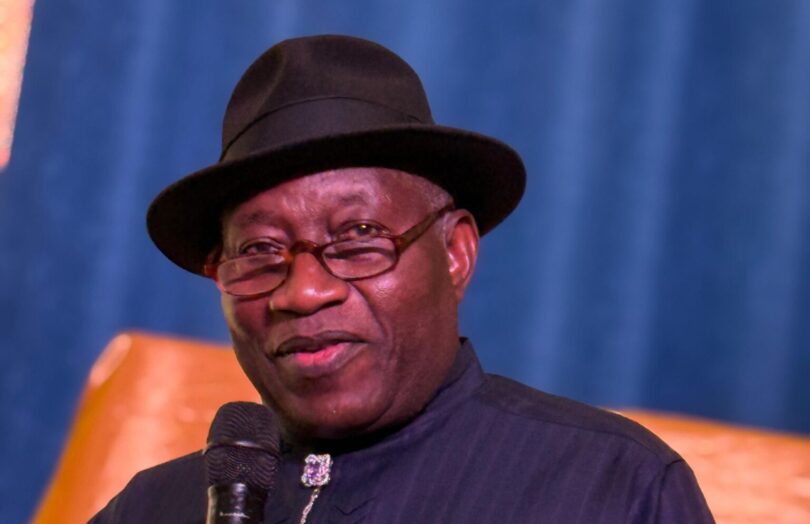
Former President Goodluck Jonathan on Friday opposed a suit filed by lawyer Johnmary Jideobi seeking to stop him from contesting the 2027 presidential election.
Mr Uche told the court that the defence had already filed a conditional appearance, a preliminary objection, a counter-affidavit and a written address, which were filed on 5 May.
He urged the court to dismiss the suit.
According to him, the defence acted promptly after becoming aware of the case through the media.
He said the suit raises issues on Jonathan’s eligibility to contest the next presidential election.
Mr Uche added that the matter was unnecessary, noting that courts had already determined the issue up to the level of the Court of Appeal.
Earlier, lawyer to the plaintiff, Ndubuisi Ukpai, told the court that the matter was for mention.
He said, however, that he had just been served with Jonathan’s processes and would need time to respond.
Judge Lifu adjourned the matter until 11 May for hearing of the preliminary objection and the substantive suit.
The judge also ordered that hearing notices be served on the Independent National Electoral Commission (INEC) and the Attorney-General of the Federation, who were absent in court.
Meanwhile, lawyer to the applicant, Mr Jideobi, filed the suit seeking to bar Mr Jonathan from contesting the 2027 presidential election.
He asked the court to issue a perpetual injunction restraining Jonathan from presenting himself to any political party as a candidate.
He also urged the court to stop INEC from accepting or publishing Jonathan’s name as a duly nominated candidate.
In the suit filed on 6 October 2025, Mr Jideobi named Mr Jonathan as the first defendant, joining INEC and the Attorney-General of the Federation asco-defendants.
The suit pivots on a central question of whether Mr Jonathan, having been sworn in twice as president, can contestl again in 2027 in view of the combined provisions of Sections 1(1), (2) & (3) and 137(3) of the Nigerian constitution.
Relying on those constitutional provisions, the plaintiff argued that the Independent National Electoral Commission (INEC) lacks the constitutional power to accept from any political party the nomination of Mr Jonathan as a presidential candidate for the 2027 general election and any subsequent elections.
Therefore, he sought the court’s order directing the 3rd defendant, the Attorney-General of the Federation, “to ensure compliance with the decisions and orders of this court.”
An affidavit of facts sworn on behqlf of the plaintiff by Emmanuel Agida, described the plaintiff as an advocate of constitutionalism and the rule of law and approached the court to prevent what he described as a possible breach of the Constitution.
The affidavit stated that the court that Mr Jonathan was first sworn in as President on 6 May 2010 following the death of President Umaru Musa Yar’Adua on 5 May 2010, having previously served as Vice-President, and later won the 2011 election to serve a full term in office.
He said he recently came across reports in national newspapers and television stations suggesting that Mr Jonathan intends to contest the 2027 presidential election.
He argued that, having completed the unexpired tenure of the late President and subsequently served a full elected term, Mr Jonathan has exhausted the constitutional limit of two terms as President.
“That if the court does not intervene timeously, a political party may present the 1st defendant as its presidential candidate in the 2027 general election, thereby breaching the Constitution.”
He further argued that there is a likelihood Mr Jonathan could enter the race and possibly emerge victorious if not restrained by the court, which he said would raise constitutional questions on tenure limits and eligibility.
On his locus standi, his right to institute the suit, the plaintiff maintained that, as a lawyer, he has a duty to forestall constitutional breaches and to uphold the rule of law, adding that the suit was brought in the public interest.
He urged the court to grant all the prayers in the originating summons in order to preserve the supremacy of the Constitution and the integrity of the Nigerian constitutional order.
Mr Jonathan governed Nigeria between 2010 and 2015.
He became president in May 2010 after the death of President Umaru Yar’Adua. He later won the 2011 presidential election on the platform of the Peoples Democratic Party (PDP).
Mr Jonathan last contested the presidency in 2015 when he sought re-election against Muhammadu Buhari of the All Progressives Congress (APC).
But Buhari defeated him in the poll, making Jonathan the first sitting Nigerian president to lose a re-election bid.