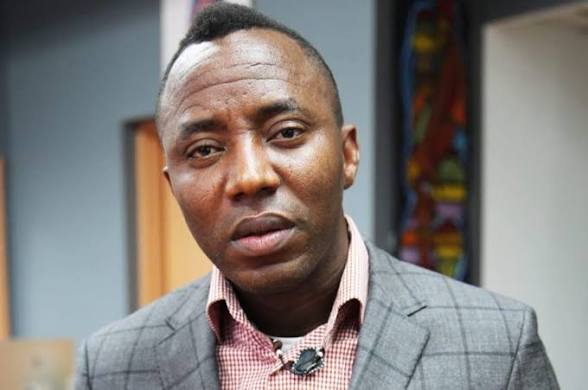
African Action Congress (AAC) presidential candidate and human rights activist, Omoyele Sowore, has announced an ambitious education reform package ahead of the 2027 general election, promising free education from nursery school to university level and the removal of fees for public examinations such as WAEC and NECO.
Sowore disclosed the proposal on Monday while presenting what he described as his administration’s education blueprint for Nigeria if elected president in 2027.
According to him, access to education should not depend on a family’s financial status, insisting that every Nigerian child deserves an opportunity to learn without facing economic barriers.
While unveiling the plan, Sowore said, “Let’s use this opportunity to show you, at a glance, what our education policy will look like after 2027.
“No government under a #Sowore2027 administration will ever ask your child to pay WAEC, NECO, or any other public examination fee. Education will be free because knowledge is a right, not a privilege.
“Our revolutionary education policy guarantees free, high-quality education from early childhood through university, backed by modern classrooms, virtual learning, well-paid teachers, student grants, and equal opportunities for every Nigerian child.
“This is not a promise of politics. It is a revolutionary commitment to build a nation where no child’s future is determined by poverty. Read it. Share it. Debate it. Join the movement to make it a reality.”
The policy document contains a broad range of proposals aimed at overhauling the country’s education sector. At the centre of the plan is a commitment to provide free education at all levels, from early childhood learning to tertiary education.
Sowore also proposed financial support for students in public higher institutions through semester grants intended to help cover academic and living expenses.
As part of the reforms, he outlined a new educational structure consisting of five years of primary education, five years of secondary education and four years of university study. He further proposed the establishment of community colleges in every local government area, offering two-year associate degree programmes and technical training.
The AAC candidate also pledged to expand access to early childhood education through properly equipped nursery and pre-primary schools across the country.
Technology featured prominently in the proposal. Sowore promised to introduce digital classrooms, virtual laboratories, online libraries and high-speed internet access in schools. He also proposed the introduction of coding, artificial intelligence, robotics, cybersecurity and data science education from an early stage.
Under the plan, technical and vocational education would receive significant attention, with training programmes targeted at sectors such as renewable energy, manufacturing, agriculture, construction, aviation, maritime services, healthcare technology and software engineering.
Sowore further proposed converting all polytechnics and monotechnics into universities as part of efforts to restructure tertiary education.
The manifesto also places emphasis on teacher welfare. It promises improved salaries, housing support, research opportunities and professional development programmes for educators. The proposed reforms include specialised teacher training institutes focused on modern teaching methods and digital learning.
On university administration, Sowore pledged greater institutional independence, promising academic, financial and administrative autonomy for universities while maintaining accountability and transparency.
The policy equally advocates stronger protection for academic freedom and student union activities. According to the document, universities should remain centres of intellectual debate, research and free expression.
Research and innovation also form a major component of the proposal. Sowore said his administration would provide merit-based grants to support studies in areas such as medicine, biotechnology, renewable energy, climate science, transportation, manufacturing and artificial intelligence.
The education plan further includes the creation of a national digital education platform containing online libraries, academic journals, virtual laboratories, research databases and AI-assisted learning tools accessible to students and teachers nationwide.
In the area of infrastructure, the proposal promises the construction of modern classrooms, laboratories, libraries, hostels, sports facilities and arts centres. It also outlines plans to improve access to clean water, electricity, internet services and facilities for persons with disabilities.
Student welfare programmes were also highlighted. The manifesto promises school feeding initiatives, health services, counselling support, menstrual hygiene programmes and mental health services for learners.
Sowore said the reforms would also ensure that students with special needs receive adequate support through accessible facilities, assistive technologies, Braille resources, sign language services and specialised educational assistance.
The policy document concludes with plans to increase investment in sports, arts and cultural development, with funding proposed for music, literature, theatre, film and other creative sectors within the education system.