
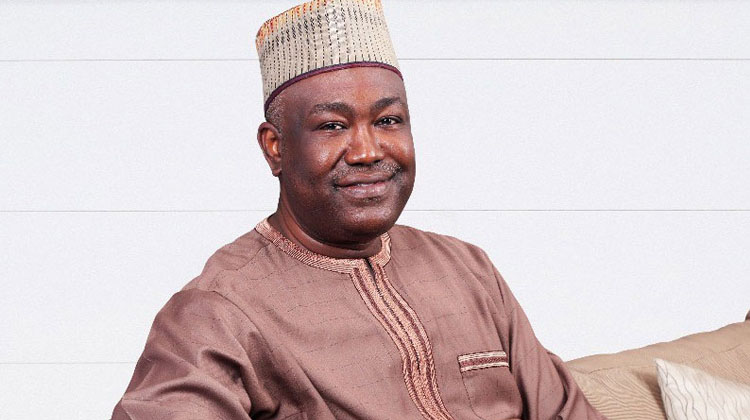
Olawepo-Hashim, a founding member of the Peoples Democratic Party, PDP, and former Deputy National Publicity Secretary of the party, gave the warning during an interview on social media, where he expressed concerns about the credibility of the forthcoming general election and the state of the country’s democracy.
He argued that forcing a political choice on Nigerians amid widespread dissatisfaction and growing insecurity could have serious consequences for national stability.
According to him, the electoral body was still working on its voters’ register barely 60 days before the election, raising concerns about the credibility of the exercise.
He also expressed concern over INEC’s admission that it had uncovered more than 1.6 million questionable voter registrations, noting that the figure was significant when compared with the margin between President Tinubu and his closest challenger in the last presidential election.
“What was the difference between the first President Tinubu and the first runner-up of the last election? Look, it was less than 1.6 million votes,” he said.
Olawepo-Hashim argued that the discovery of questionable registrations on such a scale raised serious questions about the integrity of the electoral process.
“So you have already in the election, if you already have fake ballots, fake voters, more than the difference between this president who has done terribly and his first runner in the last election, so why should he go into that election like that?” he queried.
He further questioned INEC’s impartiality and technical capacity, arguing that the discovery of such a large number of questionable records pointed to possible weaknesses in the commission’s electoral information technology systems.
“There are a lot of issues with the impartiality of INEC, competence, the issue of partiality, the issue of competence. If you have so much infiltration into your IT system, it’s an admission of incompetence,” he stated.
Describing the situation as a major electoral crisis, Olawepo-Hashim said the commission needed to address concerns surrounding the voters’ register before conducting the election.
He also suggested that the INEC chairman should take responsibility for the controversy by stepping down.
“By now, I would have expected an INEC chairman to have taken responsibility and resigned. It’s a major disaster that calls for resignation,” he added.
The former PDP chieftain, however, insisted that attempts to minimise the controversy through public relations would not address the underlying problems, warning that the situation could further undermine confidence in the electoral process.
He also lamented what he described as a decline in the media’s traditional role in defending democracy, recalling the contributions of journalists and publications such as the West African Pilot during Nigeria’s struggle for independence.
According to him, the media played a significant role in the country’s political development, with journalists such as Nnamdi Azikiwe and other early political figures contributing to the struggle for self-government.
Olawepo-Hashim’s comments come amid growing public debate over electoral preparedness, the credibility of the voters’ register and the role of INEC in ensuring transparent and credible elections.