
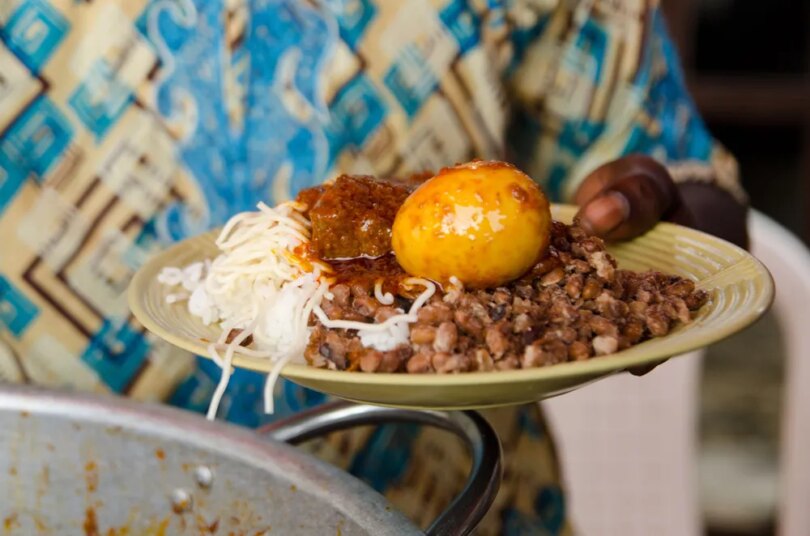
For many residents of the Federal Capital Territory, FCT, the daily routine of breakfast, lunch and dinner is now a luxury.
The residents spoke in an interview with the News Agency of Nigeria on Sunday in Abuja.
According to the residents, a combination of rising fuel prices, costlier foodstuffs and higher transport fares have left them cutting back on how much and how often they eat.
Anita Egbo, a housewife and mother of five, said, “we now eat what we can afford.
“My household has now gone from three meals a day to two, such that skipping breakfast or dinner has become the order of the day,” she said.
According to Joseph Akpan, a father of three, the problem starts before he even gets to the market.
”I live in Wuse, which is within the city centre, and the cost of transportation to the market to buy groceries for the family is something I have to budget specially for.
“The cost of the items in the market is another matter as the market price keeps fluctuating and increasing by the day.
”I used to buy groceries in bulk that will last my family for a month, but these days , i only buy what the cash at hand can afford in order of priority.
“My salary as a civil servant is barely sufficient to cater for the needs of my family, and I pray our salaries will be reviewed soonest,” he said.
Similarly, Friday Solomon, a civil servant said: “in the morning, I sign the attendance register in a government office and by evening, I am behind the wheel of a taxi chasing the fares that will decide whether my family eats dinner.
“In the taxi, nobody knows my grade level, and I prefer it that way. Nobody asks why a man of my rank is driving at night.
“The taxi pays for food. It also takes care of some certain household expenses, which my salary after many years in service cannot augment,” he said.
According to Solomon, if for any reason he fails to do his “kabu-kabu” business after work, his family of six may have to skip meals for that day.
Ngozi Ubani, a widow and mother of three said the cost of feeding a family had become a major concern, particularly for households with several dependants.
“The increasing prices of staple foods has forced me to reduce meal portions and reconsider daily food choices for the family.
“I have resorted to buying cheaper alternatives as we can no longer cope with the rising cost of living,” she said.
Ubani called for measures to reduce food prices and ease the pressure on households.
“I pray the government will support farmers, improve food distribution and address transportation costs, which the traders say contributes to rising food prices.
“The government as a matter of urgency should consider increasing the salaries of workers as this will help ease the burden on household expenditures,” she said.