
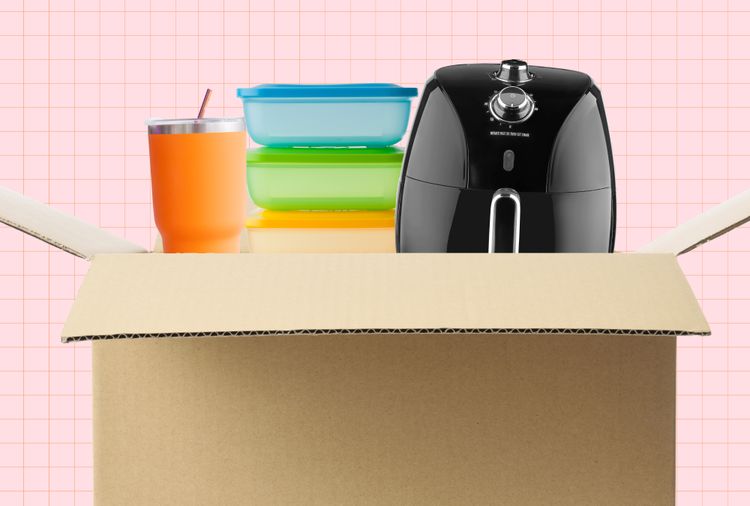
Thrift stores often can’t accept damaged or worn-down kitchen appliances, cookware and dishes.
Safely disposing of or recycling damaged items may be the most responsible option.
You can also try donating items to other organizations or repurposing them into storage items…READ FULL; ORIGINAL POST; FROM SOURCE.
There are few feelings as satisfying as clearing out clutter. Whether you’re moving to a new home, renovating your current space or simply trying to get more organized, letting go of items you no longer use can feel like a fresh start. And for many of us, the kitchen is where clutter builds up fastest.
“Kitchen and food-related items accumulate quietly over the years,” says Angelia York, vice president at Saint Louis Closet Co. “Because kitchens are high-traffic spaces, it’s easy for duplicates, mismatched sets and rarely used gadgets to build up before anyone realizes how much is actually there.’
While your first instinct may be to donate those extra items, not everything may be accepted at your local thrift store. Many common kitchen tools and household goods are turned away due to safety or sanitation concerns. In this article, we speak with a mix of home-organizing and thrifting experts who explain which items thrift stores typically won’t accept—and where to take them instead.
Why Thrift Stores Reject Certain Items
“Thrift stores have surprisingly strict guidelines, especially when it comes to kitchen items,” York says. “Things like chipped dishes, scratched nonstick pans, mismatched food-storage containers or small appliances that are missing parts are commonly turned away because they can’t safely be resold.”
In addition, sometimes thrift stores are at maximum capacity with certain everyday items.
“Thrift stores won’t take everything, and other folks are having the same idea as you,” says Mitch Coluzzi, co-founder of SoldFast, a real estate brokerage that also helps folks downsize on household items. “We’ve seen places stop accepting really common items because they have more than enough to sort through.”
Here are some of the top kitchen-related items thrift stores are likely to pass on.
1. Small Kitchen Appliances
Small kitchen appliances such as mini air fryers, coffee makers, blenders and toaster ovens can pile up in your home. “We tend to think there’s more storage or counter space than there really is, and these smaller appliances are usually bulky and oddly shaped,” Coluzzi points out.
If your kitchen appliance is in top-tier shape or barely used, it’s possible a thrift store would accept it. However, the appliances people try to donate are often older, worn down and past their prime. They may also be too dangerous or finicky for thrift stores to legally sell, Coluzzi notes. “They can also be gross by the time folks decide to donate them,” he adds.
Think about it this way: A thrift store (much like any store) doesn’t want a liability on its hands, and it also doesn’t want to put a price tag on a broken item.
“If [your small appliances] don’t work, then no one else will be able to use them,” says Cathy Orr, co-founder of The Uncluttered Life. “It’s best to let them go or get them fixed, if possible, and the cost is less than the purchase of a new one.”
2. Damaged Cookware, Including Nonstick Items
Most of us are guilty of having too many pots and pans in our cupboards. While it may seem like a good idea to bring those directly to a thrift store, the truth is, you’re likely not going to donate one of your crisp, barely used nonstick pans or a pristine Le Creuset dutch oven.
Damaged cookware, especially with visible rust damage and stains, won’t be accepted, Coluzzi says. “These items can also get rejected for cleanliness concerns.”
Nonstick cookware that has coating flaking off is a complete no-go. “This coating is toxic when reused,” Orr says. “It’s best to toss these.”
3. Damaged Dishes & Glassware
In a similar vein, dishes and glassware with chips or cracks will be turned down.
“These are a safety hazard,” Orr says. “If you’re into making mosaics, for example, they can be broken to use for this type of craft project. If not, then it’s time to trash them.”
4. Reusable Food Containers & Water Bottles
It can be hard to part ways with your trusty food-storage container, go-to travel mug or favorite water bottle. You might think that they could make a great addition to another person’s cabinet collection, but thrift stores are unlikely to accept items like these. They can be difficult to sanitize, Orr points out. Also, if they’re stained, that’s another strike against them.
5. Baby-Friendly Kitchen Gear
“Highchairs and kids’ items may be rejected if they’re dirty and in bad shape,” Coluzzi says. “Safety and hygiene are incredibly important for infants, so they can’t take risks on some donated items.”
If your toddler tower or booster seat is clean and undamaged, a thrift store may be more likely to take it.
What to Do with Items Thrift Stores Won’t Accept
You just learned you can’t donate your kitchen clutter to the thrift store. Now what? There are so many ways you can dispose of your gadgets, appliances and much-loved dishware and cookware in a safe and eco-sensible manner. Consider the following ideas from our experts.
Safely throw away or recycle damaged items. “Things like broken glass can be wrapped in newspaper or cardboard, labeled as such, and placed in the trash,” Orr says. If you have scratched cookware, you can bring it to a metal recycling program near you, she adds. For safe disposal of heavily stained plastic, consider placing it directly in the trash.
Sell your items on Facebook Marketplace. If your appliances or kitchen items are in excellent shape but your local thrift store said they currently have too many of those items on the floor, try making a listing on Marketplace. This may be especially helpful if you have a collector item, like an old-school KitchenAid mixer, Coluzzi says.
Upcycle at home. If you have the urge to be creative, this option may be the perfect fit for you. Empty jars or your former coffeepot can become planters for flowers and herbs, Orr says. “Jars can also be used for storing beans, coffee grounds or sugar.” York adds, “I also see clients repurpose things like jars or trays for organizing inside drawers or pantries.” You can even use old travel mugs as storage for your paintbrushes or makeup brushes. The options are endless when it comes to upcycling.
Donate elsewhere. Sometimes homeless shelters, domestic violence shelters and other sanctuaries may accept kitchenware or kitchen-adjacent items as a donation. “Sometimes pieces that thrift stores won’t take can still be shared through local Buy Nothing groups,” York says.
Donate your broken items to a rage room. For things like chipped glassware or broken ceramic bowls, you can call your local rage room and ask if they accept donations. “I got this idea from a friend, and they’ll take things that are in otherwise-worse shape since it’s just going to be smashed to pieces,” Coluzzi says.
Our Expert Take