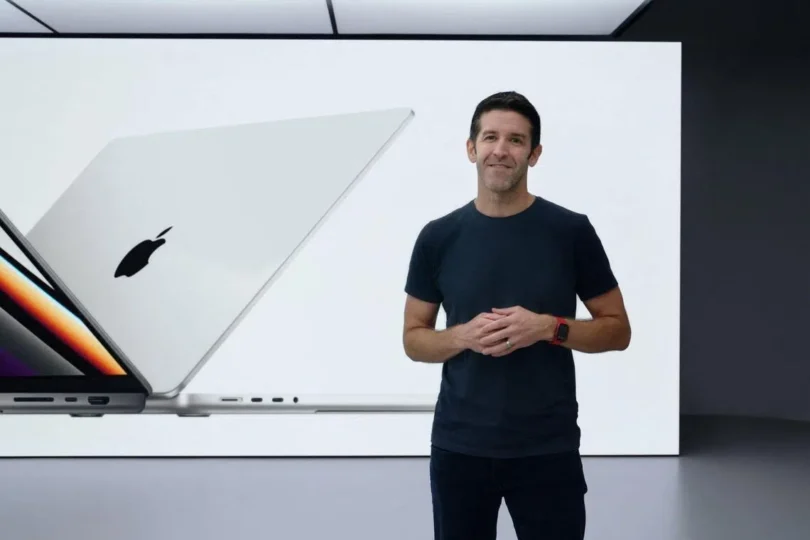
SAN FRANCISCO – Apple said this week that Mr Tim Cook, its chief executive officer since 2011, would step down and become its executive chair in September. Mr John Ternus, the company’s head of hardware engineering, will succeed Mr Cook in the corner office.
Mr Ternus, who has worked at Apple for 25 years, will take over a moneymaking behemoth facing a series of pressing questions, including geopolitical threats, an unpredictable man in the White House, artificial intelligence and the search for new ideas.
Here are some of the challenges confronting Mr Ternus:
Apple makes an estimated 80 per cent of its iPhones in China. The country has, at times, accounted for a quarter of the company’s annual revenue, too. That relationship has become a vulnerability for Apple, particularly as tensions over the future of Taiwan have flared.
As an engineer, Mr Ternus has experience in Asia. Around 2005 – four years after joining Apple – he led the company’s hardware engineering team for iMacs. In that role, he spent extended periods working with manufacturers in Asia.
He also learnt how difficult it could be to have a manufacturing supplier deliver on Apple’s design expectations.
But as the CEO, Mr Ternus will have to learn a delicate balancing act. He will have to navigate the often conflicting agendas of US President Donald Trump and China’s leader, Mr Xi Jinping.
He will also have to manage the risk of China invading Taiwan and cutting off its chip exports to US companies like Apple.
Apple has taken steps to diversify its supply chain, moving some production to India, Vietnam and Thailand. But many of the complex components in an iPhone, like displays, are still assembled in China.
Mr Ternus may have a long runway before he has to become Apple’s emissary in China. As executive chair, Mr Cook “will assist with certain aspects of the company, including engaging with policymakers around the world”, Apple said in a news release on April 20.
In recent years, Mr Cook has become a leading diplomat for the technology industry. He spent years forging a relationship with Mr Trump, who has criticised Apple for not making iPhones in the United States and threatened tariffs on its devices.
In 2025, Mr Cook gave Mr Trump a glass plaque with a 24-karat gold base as the company courted the administration.
In 2019, Mr Trump called Mr Cook “Tim Apple”, a mistake that the executive embraced by briefly changing his last name to Apple’s logo on the social platform X.
“Tim would call me, but never too much, and I would help him where I could,” Mr Trump said in a post on Truth Social on April 21. The first time that Mr Cook called him, Mr Trump added, “I was very impressed with myself to have the head of Apple calling to ‘kiss my’” rear.
As with Beijing, Mr Ternus will have to learn the ropes in Washington. In addition to tariffs and Mr Trump, an upcoming antitrust trial looms over Apple.
In 2024, the Justice Department sued the company, accusing it of building and maintaining a smartphone monopoly. That lawsuit is expected to go to trial in 2027.
Apple’s suppliers have moved some manufacturing to the United States. A Taiwanese chipmaker is building a factory in Arizona that will have Apple as its biggest customer, for example. But Apple still has no public plans to make iPhones in the country.
The execution of Apple’s announcement that Mr Ternus will succeed Mr Cook looked clean; the company’s share price barely moved. But the arrangement itself could be messy.
Mr Ternus will have to find his own lane as CEO, even with Mr Cook as executive chair. Much of that will depend on whether Mr Cook will step back and allow Mr Ternus to make key decisions.
CEOs have often complicated the rise of their successors, said Mr David Larcker, a director of the Corporate Governance Research Initiative at the Stanford Graduate School of Business.
“You want the CEO to have enough room to bring forward his things and his ideas and have a fair chance,” he added.
And a new CEO often means turnover down the management ladder, Mr Larcker said. Those in contention for the top job might move on, while older leaders might retire rather than work under a new CEO.
Mr Ternus will soon have a number of direct reports who have worked at Apple for four decades, or close to it: Mr Greg Joswiak, head of marketing; Mr Eddy Cue, head of services; and Ms Deirdre O’Brien, head of retail and human resources.
On top of that, Apple has recently seen an unusual amount of churn, among both its executives and its rank-and-file staff.
Mr Jeff Williams, its chief operating officer, stepped down in July. Ms Lisa Jackson, its environmental chief, retired in January. And Ms Kate Adams, who succeeded Ms Jackson and was previously general counsel, will retire late 2026.
Mr Ternus will have to navigate those departures and fill out his own leadership team.
“CEO succession is a multiperson event,” Mr Larcker said, adding: “There’s a whole bunch of people potentially in play.”
Nearly two years ago, Apple heralded the arrival of a new and improved Siri. The personal assistant had been a part of its devices for more than a decade but languished, frustrating consumers with its limited abilities.
But Apple postponed the upgrade to Siri over quality problems. Since that stumble, the company has been quiet while other technology giants have funnelled hundreds of billions of dollars into developing AI and startups have broken new ground on the technology.
For now, Apple is filling the gap with technology made by Google. In January, the companies said Apple would base Siri and other AI products on Google’s Gemini AI models and cloud computing services.
The arrangement allows Apple to avoid much of the laborious and expensive process of developing AI models, which requires the computing capacity of massive data centres.
But the delay in charting a path with AI has made expectations high for Apple and Mr Ternus. That includes finally improving Siri and responding to the threat posed by devices from rivals, including Meta’s smart glasses and OpenAI’s forthcoming collaboration with Apple’s former longtime head of design, Mr Jony Ive.
“Now they’ve got to hit a home run, whereas before they could just hit a single,” said Mr John Burkey, who worked on Siri from 2014 to 2016.
“The great thing about being a new leader is he can lead with a new brand and basically say, ‘Now we’re really serious about AI.’”
Despite seeing Apple through years of financial success, Mr Cook never shook the perception that he was not a technological visionary like Mr Steve Jobs, the company co-founder and his predecessor as CEO. During Mr Cook’s tenure, Apple’s reputation as an industry-changing innovator waned.
Inside Apple, Mr Ternus is known more for maintaining products than for developing new ones. In recent years, though, he has assumed more responsibility for product updates.
Mr Ternus has been involved with Apple’s experimentation with foldable phones. He also spearheaded the iPhone Air, which was released in 2025 with a new, slim design. The phone’s marketing was well received, but its sales have disappointed.
Mr Ternus will enter his new role facing high hopes that Apple will push the envelope in product design. It has expanded its product line so much that some of its devices have become difficult to distinguish and arguably even harder for executives to manage.
“Apple remains incredibly dependent on the iPhone and related services,” said Dr David Yoffie, a professor at Harvard Business School who has written case studies about Apple.
“In order for the company to grow, it’s going to have to find new ways to expand into new product categories and new technologies.” NYTIMES