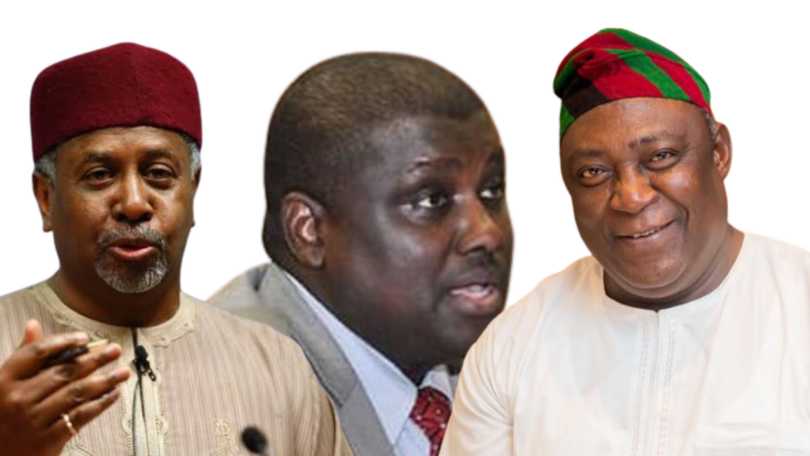
The investigation examined how wealth linked to Nigerian political and economic elites moved into the US real estate market and identified recurring risk factors in the acquisition of the properties.
A new investigation has identified 284 properties in the United States, collectively valued at nearly $271 million, linked to 61 current and former high-level Nigerian officials, their families, associates and affiliated companies.
The findings were presented in Abuja on Tuesday at the launch of the report, titled “Nigeria: Dirty Deeds — How Top Nigerian Officials Bought a Piece of America.”
The investigation examined how wealth linked to Nigerian political and economic elites moved into the US real estate market, and identified recurring risk factors in the acquisition of the properties.
These included purchases made while officials were in office, transactions without apparent financing, and the use of companies and intermediaries that could obscure ownership.
PPLAAF said 230 of the 284 properties, representing about 81 per cent, were purchased without apparent financing. The properties had a combined value of about $232 million.
It also found that 147 properties worth approximately $111 million were acquired by officials or their spouses in their own names or through legal entities registered in their names.
A further 104 properties, valued at about $140 million, were purchased through companies. In 12 cases, Nigerian officials used US-incorporated entities that appeared to be affiliated with their Nigerian companies to purchase, hold or sell properties.
According to the report, 39 of the 61 individuals examined have been publicly accused, indicted or sentenced for corruption.
Among the 39 individuals named are Sambo Dasuki, a former National Security Adviser (NSA); Abdulrasheed Maina, former chairman of the Presidential Task Force on Pension Reforms; Orji Kalu, a former governor of Abia State and now a senator; Chimaroke Nnamani, a former governor of Enugu State; late Ajibola Ajimobi, a former governor of Oyo State; Stella Oduah, a former minister of Aviation; Dibu Ojerinde, a former registrar of the Joint Admissions and Matriculation Board (JAMB); late Alex Badeh, a former chief of defence staff; Abdulrahman Dambazau, a former minister of Interior and ex-chief of army staff; Chris Ngige, a former governor of Anambra State and later minister of Labour and Employment; Willie Obiano, a former governor of Anambra State; and Ronald (Roland) Ewubare, a former group chief operating officer of the Nigerian National Petroleum Corporation (NNPC).
The politically exposed persons were linked to 232 properties valued at approximately $238 million. Of these, 195 properties, worth about $208 million, were acquired without apparent financing during or after the officials’ tenure.
The investigation found that 94 properties, worth approximately $135 million, were acquired without an apparent source of financing while the officials were still in office.
The report also said 79 properties worth approximately $73 million remain connected to 27 individuals who have been publicly accused of corruption.
It said the properties could provide an opportunity for asset recovery where authorities establish that they were acquired with proceeds of corruption or are otherwise subject to applicable forfeiture laws.
The report said the significance of the findings was not only who acquired the properties, but also when and how they were acquired.
“In numerous cases, substantial real estate was acquired while officials held public office, at precisely the moment when their access to state resources and influence was greatest,” the report said.
Most of the other individuals examined were linked to institutions with a documented history of corruption allegations since Nigeria returned to civilian rule in 1999.
Some of the individuals were also implicated in the Pandora Papers and other investigations into suspicious purchases in the United Arab Emirates, according to the report.
The investigation found that 230 properties, worth about $232 million, were purchased without apparent financing.
The report said overseas property purchases can allow politically exposed persons (PEPs) to convert illicit gains into tangible assets, while the use of companies, trusts and intermediaries can make ownership more difficult to establish.
It said the trend of obscuring ownership appeared to have increased over the past two decades, particularly among PEPs who had encountered legal difficulties or become subject to judicial proceedings.
The report also identified professionals involved in some property transactions who allegedly failed to verify identity documents or accepted transactions conducted in the names of deceased individuals, raising questions about safeguards in the US real estate market.
PPLAAF said the investigation identified dozens of additional suspicious assets that require further scrutiny by relevant authorities and could potentially be subject to recovery or seizure proceedings.
PPLAAF Executive Director, Jimmy Kande, said the findings showed how public wealth could move from Nigerian institutions and sectors exposed to corruption risks into foreign real estate.
“At an unprecedented scale, these findings expose the failings of individual officials and the structural gaps that allow stolen public wealth to cross borders and settle quietly into foreign real estate,” Mr Kande said.
“The purchases, transfers, and sales documented here could amount to international money laundering and must be investigated as such. Nigerian and American authorities must work together to ensure these assets are returned to the people they were taken from.”
Mr Kande also highlighted PPLAAF’s partnership with PREMIUM TIMES.
PPLAAF previously published six Dirty Deeds investigations and case studies in partnership with The Washington Post, the Organised Crime and Corruption Reporting Project (OCCRP), PREMIUM TIMES, the Charleston Post and Courier, and the Houston Chronicle.
As part of the partnership, PREMIUM TIMES reported how former National Security Adviser Sambo Dasuki approved billions of naira in payments during his tenure under former President Goodluck Jonathan. The investigation traced funds approved through the Office of the NSA to individuals and companies linked to people in Mr Dasuki’s circle, raising questions about the procedures used to approve the payments and the beneficiaries of the funds.
The report found that, over the three years Mr Dasuki served as NSA, his office made multiple transfers involving substantial sums, including payments to associates and entities connected to them. The investigation used financial records and other documents to reconstruct the money trail and examine how public funds moved from the NSA’s office to the beneficiaries, highlighting gaps and questionable transactions in the management of security funds.