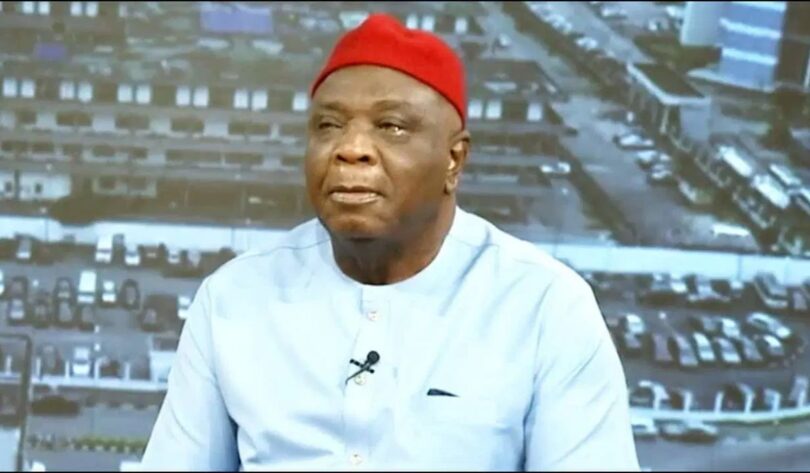
The debate over a national dialogue after 65 years of independence has once again resurfaced in the media, as Dan Ulasi, a chieftain of the Peoples Democratic Party (PDP), called for a convergence of like-minded individuals to re-evaluate the country’s values amid the perceived divisions which the government has failed to address, news.ng reports.
Speaking on the need for national unity and the effects of the 1967–1970 Biafra War, Ulasi said it created a stigma against people of Igbo extraction in the country, a mindset that they still harbour a separatist agenda if allowed to govern the country.
“Coming from the aftermath of the civil war, the rest of the country never trusted the Igbos, a tendency again to want to exit from Nigeria,” he stated during an interview on Arise Television Morning Show on Wednesday.
According to the South-East politician, one of the conditions that led to the civil war is still lingering, noting that insecurity and social unrest in some parts of the country are yet to be addressed.
“We have not sat down to fundamentally have a dialogue about the problem of this country. Why is there Boko Haram? Why is there IPOB? There are many parts of this country that have one problem,” he stated.
He criticised some political leaders, particularly state governors, for presiding over their states’ affairs from elsewhere, abandoning the people who voted them into power.
“Most of the governors in Zamfara and Bornu live in Kaduna. Some of them are in Lagos. That’s where they are ruling their people from,” he claimed.
He therefore proposed that the country’s unity can only be guaranteed if the people begin to trust themselves and show love irrespective of ethnic and regional affiliations.
“For as long as we believe that we want to have this country as Nigeria, we have to develop love. We have a fundamental revision to do of our characterisation, of our disposition in this country, to know that we are people from one family.
“There has to be a process of re-engineering the concept of values in this country. We cannot continue to say that in the 21st century, ordinary water we cannot give to our citizens,” he said.
Watch the clip