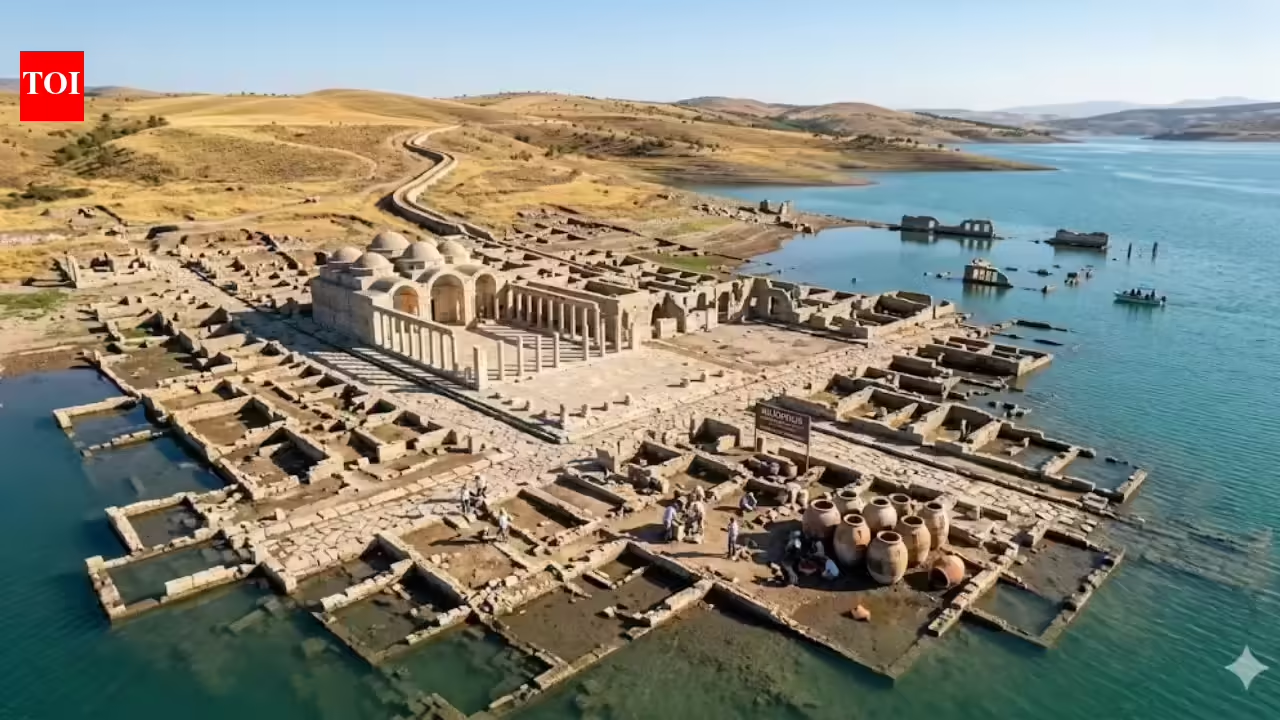
There is an ancient city dating back 2,000 years, which had been underwater for many decades, only resurfacing as a major archaeological find in present-day Turkey. The site is referred to as Iuliopolis, a place which had been under the Sarıyar Dam reservoir waters since the middle of the last century for nearly seven decades. Modern excavations carried out from 2009 to 2025 showed that Iuliopolis was more than just a small settlement.The ancient city lies about 123 km from the capital city of Ankara, having existed initially during the time of the Romans, and later flourishing throughout the Byzantine era.
Submerged ancient city discoveries reshape historical understanding
Evidence from the research, “Juliopolis Anthropological Research: Preliminary Results”, by archaeologists at Karabuk University and the Museum of Anatolian Civilisations, suggests that there may be reasons to reconsider some of the initial presumptions regarding the significance of this city. It became clear that Iuliopolis had organised religious structures, well-planned urbanism, and an economy based on production and trading.Some of the items found in the region are ceramic and storage vessels, as well as tools used by ancient people. One of these is the African Red Slip Ware, which shows the relationship of this city with distant regions via trade, particularly Roman traders active throughout the Mediterranean.
Archaeological evidence shows a strong economic and religious system
The first notable discovery is that of a larder with big clay vessels, which were used to store agricultural products such as grains, wine, and olive oil. Some of these vessels have religious markings on them, indicating that there was an interaction between the economy and religion, perhaps through church institutions.These findings occurred in the research“Juliopolis Anthropological Research: Preliminary Results”, published in the Journal of Ankara Studies.All these points point towards the conclusion that Iuliopolis served as an efficiently planned urban centre rather than being a marginal town.
Dam submergence preserved the ancient city for decades
The effects of the Sarıyar Dam construction, which led to the flooding of the area, were indirectly responsible for helping preserve the location, since exposure to the elements was reduced, as well as contact with people that might interfere with the process of uncovering the past.While some areas of the city remain flooded, it is still possible to conduct archaeological digs in order to understand different aspects of what occurred in the ancient city of Aşıklık Höyük.
Why underwater cities are important for archaeology
Archaeological discoveries at sunken sites such as Iuliopolis present rare chances for researchers. While on-surface archaeological sites are prone to degradation by the elements and humans, undersea locations have been known to serve as protective shells and preserve artefacts.The exploration of these locations helps develop knowledge regarding ancient urban communities and their commercial and religious practices. For instance, research done at Iuliopolis has helped uncover that small cities played an important part within the economic and religious framework of both the Romans and Byzantines.
What this discovery means for future research
The discovery of the city of Iuliopolis illustrates how modern construction endeavours, such as dams, may help cover up but also protect archaeological sites. Future excavations at the site should shed more light on the physical planning, demography, and importance of the site in the ancient world.The development of archaeology makes submerged cities more attractive as a source of information on the past. The discoveries made at the site have added to the growing body of knowledge regarding ancient urban life, especially in areas affected by both Roman and Byzantine cultures.