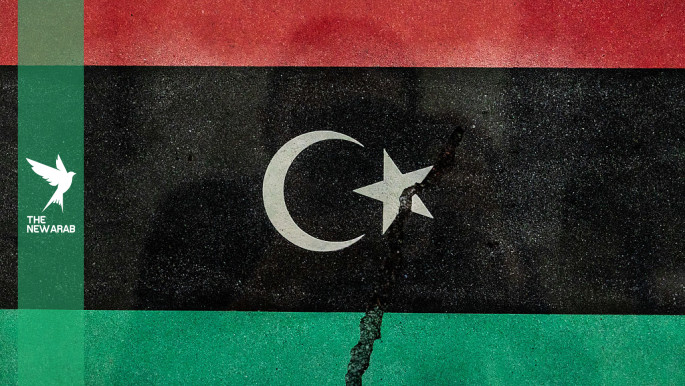
The Libyan population deserves access to its national wealth. But that wealth must first be protected from those who have been squandering it, writes Justyna Gudzowska. [GETTY]
On 11 April, the United States brokered a unified spending framework for Libya, endorsed by both eastern and western factions—a sign of the attention that Washington has been devoting to the North African nation lately. The US-Israeli war with Iran has only increased the strategic value of Libya, an oil-rich country situated on the southern flank of Europe, away from the Persian Gulf. As a result, international diplomats have been paying closer attention to it and to what its leaders want.
One of those wants is the loosening of restrictions on the Libyan Investment Authority (LIA), the country’s sovereign wealth fund. Libya’s current leaders desire easier access to the LIA’s frozen billions via a partial lifting of the UN sanctions in place since 2011. Their message to the Security Council and individual member states has been consistent: the freeze has lasted long enough and has harmed Libya. The reality is that the opposite is true.
A fresh asset valuation looms
On 14 April, the UN Security Council adopted Resolution 2819, a narrow, technical measure that mostly clarified the rules of how some frozen LIA cash can be reinvested to preserve value. But critically, it also reiterated that the LIA should continue to work “with international accounting and auditing firms to provide accurate audited consolidated financial statements… and to further improve the accuracy and comprehensiveness of its investment plan… clarifying data inaccuracies and inconsistencies and addressing conflict of interest issues.”
While the LIA welcomed the resolution’s modest provisions relating to reinvestment of frozen assets, the Council’s continued stance over the need to clean up the LIA’s governance has prompted a fresh commitment from the LIA to revalue its assets.
This undertaking is fraught with risk for the LIA, as a proper asset valuation would necessitate a close look at how Libya’s leaders have been managing the assets they already have access to. An examination of these assets reveals the shaky foundations upon which the LIA’s demands are based.
The case for lifting the asset freeze
The LIA’s lobbyists will no doubt continue promoting the notion that the UN freeze is the main obstacle to sound management of the sovereign fund’s assets. In reality, roughly a third of the portfolio has already been free of restrictions.
A years-long investigation by The Sentry—grounded in forensic inquiry and financial analysis across multiple jurisdictions—found that of the LIA’s $60 billion-plus in assets, only two-thirds are frozen. The LIA’s current leadership has enjoyed unfettered access to about $20 billion worth of assets for years. How those items have been managed tells us everything we need to know about the institution’s fitness to handle the rest.
This reality is easy to miss because the case for easing sanctions sounds, on its face, rather logical. In 2011, I was an attorney at the Treasury Department in the office responsible for imposing swift and expansive sanctions to prevent Muammar Gaddafi from using the LIA to bankroll his violent suppression of a popular uprising and to safeguard those assets for the benefit of the Libyan people. Fifteen years later, the Gaddafi regime is long gone, but the LIA’s assets, which were valued at $62.85 billion in 2020, remain hampered by the UN’s continuing sanctions. One can understand why reasonable voices would advocate for lifting them altogether.
That view has gained support in policy circles. Last year, a report from the International Crisis Group argued that select portfolio components, particularly underperforming assets and idle cash, would benefit from a partial unfreezing under the supervision of the Security Council or the World Bank. The proposal sounded measured, but it did not consider what was happening with the LIA’s assets that were not frozen.
Actively managed assets lose money and frozen assets make money
Analysis of assets actively managed by the LIA and its subsidiaries makes for sobering reading. In London, a $72 million LIA-owned building has sat vacant for a decade, forgoing an estimated $79 million in rental income. In South Africa, at least $210 million was invested in prime Johannesburg real estate beginning in 1999; no returns have reached Libya, and a $110 million loan internal to the LIA from 2006 remains unpaid.
In Liberia, some $100 million in state investments failed under murky circumstances, with assets appearing to have enriched individuals connected to Liberia’s former President.
At Ola Energy, an LIA-owned fuel company operating across 17 African countries, politically driven management appointments led to ballooning costs and more than $10 million in fines from Moroccan regulators due to insider trading. These are merely a handful of examples, but they reflect a systemic pattern of mismanagement.
There is also significant irony in how LIA assets have performed over the past 15 years. The LIA contends that the freeze has cost it $4.1 billion in forgone equity returns. Yet the UN Panel of Experts on Libya found that frozen assets had grown in value by nearly 12%.
On the other hand, the value of the LIA’s subsidiaries, which hold assets unaffected by the freeze, has depreciated. The assets nobody could touch outperformed those the LIA has been actively managing. The freeze may have been the best fund manager Libya had, and that alone speaks volumes about the state of the institution.
This does not mean that keeping the current restrictions in place comes without consequences. But the policy question has been badly framed. The main problem is not that the Security Council froze Libya’s sovereign wealth. It is that the LIA’s current leadership cannot even fully identify the assets it controls, has failed to produce a credible public audit, and presides over an organisation in which conflicts of interest, political interference, and corruption have become routine.
Easing the freeze under these conditions would not unlock prosperity for ordinary Libyans. It would remove the last external constraint on an incumbent team that has demonstrated, across multiple jurisdictions, that it cannot responsibly steward the country’s wealth.
The way forward
Any future sanctions relief must be conditioned on a comprehensive asset valuation and consolidated accounts from the LIA. The details will be critical: robust terms of reference must be established to ensure a genuine reckoning of losses and irregularities, rather than a whitewash (the LIA’s previous efforts have papered over critical data gaps).
The Libyan population deserves access to its national wealth. But that wealth must first be protected from those who have been squandering it. The freeze has not been the problem. It has, in fact, provided a decent if imperfect safeguard. More importantly, it offers precious leverage—perhaps the only such tool the international community has left—to secure a higher standard of governance from Libya’s leaders. Once lifted, that leverage disappears, and with it any realistic prospect of extracting the institutional reforms that ordinary Libyans need.
Loosening the reins without establishing real safeguards amounts to accepting that a substantial share of the country’s wealth will simply vanish, lost to the same combination of negligence, incompetence, and corruption that has defined the LIA’s stewardship so far.
Justyna Gudzowska is an expert on sanctions, corruption, terrorism financing, and money laundering, having worked on these issues across the public and private sectors. She is currently the Executive Director of The Sentry, an investigative and policy organisation that seeks to disable multinational predatory networks that benefit from violent conflict, repression, and kleptocracy. She is also an adjunct professor at Georgetown University’s School of Foreign Service and an associate fellow at the Royal United Services Institute (RUSI).
Have questions or comments? Email us at: editorial-english@newarab.com
Opinions expressed in this article remain those of the author and do not necessarily represent those of The New Arab, its editorial board or staff.