“Debt is not bad in itself; the issue is when debt is borrowed but is not used for capital investment, the servicing of debt becomes a burden.
Policy experts, academics, and researchers have stated that strong public policy implementation and debt management can drive good governance in Africa.
They made these remarks during the just-concluded African Finance and Economics (AFEA) 2026 conference, held in Abuja from 3 to 5 July.
Speaking to PREMIUM TIMES, Evans Osabuohein, a professor of economics, said that the discussions at the event focused on public policy and debt management, which are affecting human capital development in Africa.
“It [is] about how public debt can be managed more efficiently in Africa, so that we can tap into the resources for human capital and energy efficiency in this age of innovation. We need human resources that are well-skilled, equipped, and knowledgeable to harness such potential that technology like artificial intelligence present today,” he said.
“Debt is not bad in itself; the issue is when debt is borrowed but is not used for capital investment, the servicing of debt becomes a burden. We have seen this in most African countries where some of the borrowings are not geared towards human capital development.”
Mr Osabuohein, a board member of AFEA, explained that it would be a win-win option for both governments and citizens if public debt is used judiciously, saying that the execution of projects translates into employing the populace to do the labour.
The three-day international conference, hosted by Nile University Abuja’s faculty of arts and social sciences, brought together scholars, policymakers, and industry experts in the field of economics.
Themed ‘Africa’s Geoeconomic Development Agenda in a Global Realignment Era’, it sought to contribute expert input on shifting geopolitics, climate risk, and development finance across the continent, and drew attendees from Canada, Ghana, Nigeria, and other countries.
Emotimo Agama, director-general of the Securities and Exchanges Commission (SEC); Tope Fasua, an economic adviser to President Bola Tinubu; Tony Okpanachi, managing director of the Development Bank of Nigeria, among others, made up the line-up of dignitaries for the event.
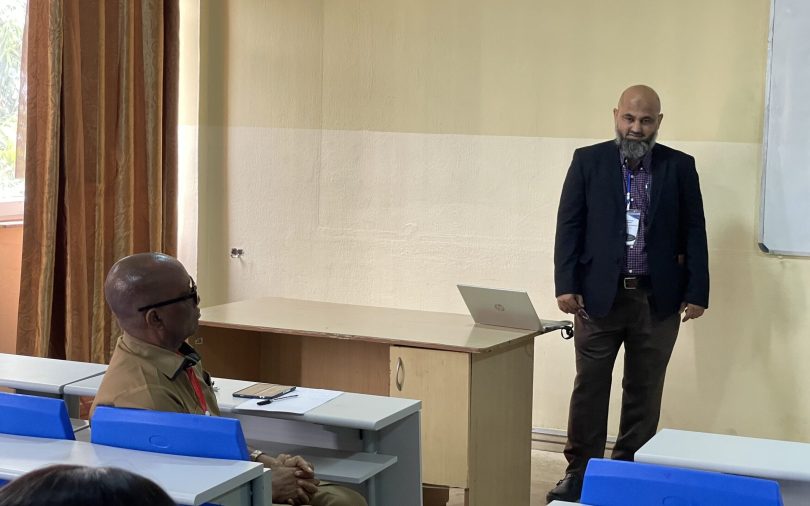
Premium Times monitored breakout sessions at the programme, where participants presented papers on topics including debt sustainability, global financial and health governance systems, digital service delivery, mobile money, financial inclusion, and continental digital markets.
Some sessions also focused on youth, gender, demographic change, and inclusive development; as well as migration, urbanisation, and spatial inequality, with a broad focus on Africa-West relations.
The sessions featured interactive discussions for each paper presenter, including how their research work could be further enhanced.
Abogede Marietu, a PhD candidate of economics at Nile University, described the conference as impactful, adding that it has given her opportunities to learn from scholars in her field.
“Today is actually my first time presenting my work at an international conference, and I think that gives visibility to my work. I have also got to learn from other presenters.”
“It is my earnest desire that the government in Africa would look into the policies that myself and other presenters have come up with, so as to improve the economy, and also aid the livelihood of the citizens of the continent,” she said.
Another paper presenter, Ropheka Bot, stated that she found the discussions in the conference “very timely and engaging as experts gathered to discuss current global issues”
Mrs Bot, a lecturer at Bingham University, Karu, said she hopes that governments in Africa would implement some of their research findings to improve development on the continent.
The African Finance and Economics Association (AFEA) is a professional forum for academics and practitioners (government and industry) of finance, economics, and related disciplines interested in the development of Africa.
It seeks to empower the continent through financial growth and sustainable development, with a mission to promote the exchange of information and ideas among professionals and stakeholders in the field while fostering research that advances knowledge on contemporary African development issues.
With Majune Socrates as its president, Gbadebo Odularu sits as the chairman of the board for the organisation.