
The Arewa Consultative Forum (ACF) has sarcastically “congratulated” Daniel Bwala, Special Adviser to President Bola Tinubu on Policy Communication, for acknowledging that the administration’s economic reforms have contributed to rising poverty and hardship in Nigeria.
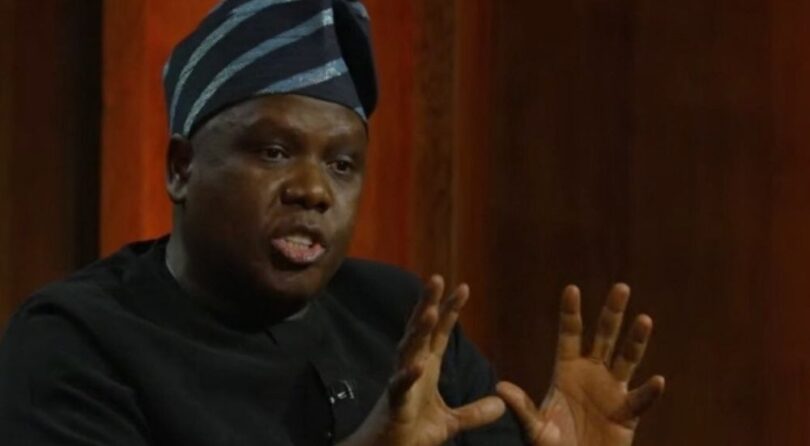
The ACF Publicity Secretary, Professor Tukur Mohammed-Baba, made the remark during an interview on Arise Television’s News Day on Thursday.
Mohammed-Baba was reacting to comments by Bwala during an interview on Channels Television on Wednesday, where the presidential aide acknowledged that the government’s economic reforms had contributed to increased poverty but argued that the administration had made significant progress since introducing the measures.
“Let’s first of all be very happy and congratulate Bwala. Until now, one would expect that whenever he comes on TV or appears on social media, it is to deny, deny, deny,” Mohammed-Baba said.
“But I think we are making progress since his admitting fundamentally that the reforms have brought untold hardships on Nigerians. Most especially, he has not denied that poverty has been rising.”
The ACF spokesman said multidimensional poverty remained widespread, while criticising the administration’s argument that the hardship was a temporary consequence of the reforms.
“As we speak today, the rate of multidimensional poverty is well over 60 per cent in Nigeria,” he said.
Mohammed-Baba also dismissed claims that the long-term benefits of the reforms would outweigh their immediate impact on Nigerians, describing such assurances as “hallucinations” and comparing them with the structural adjustment programme introduced during the administration of former military Head of State Ibrahim Babangida.
He said Nigerians were facing declining purchasing power and rising costs of rent, housing materials, transportation and electricity, while insecurity had further worsened living conditions.
“Look at the purchasing power of the naira. Look at the living conditions of Nigerians. Look at rent. Look at housing materials. Look at transportation. Look at electricity costs,” he said.
“See the condition of the roads in Nigeria, and above all, see the level of insecurity that has been pervading this country.”
Mohammed-Baba, who said he had visited parts of the Northeast, North-Central and Northwest, said insecurity had made basic economic activities, including farming, increasingly difficult.
He also faulted the administration for attributing current challenges to previous governments, arguing that politicians seeking power should have considered the conditions they would inherit before assuming office.
“That is precisely why we have a democracy. You identify there are problems, and you think you have the answer. You go out, canvass for votes. You get it, and now you spend reminding us other leaders have faced these problems,” he said.
The ACF spokesman said the Tinubu administration should accept responsibility for its performance instead of telling Nigerians that it was not responsible for their current hardship.
“There is no doubt that if the government were to go into the room, look at itself in the mirror, and tell us honestly whether it has performed optimally or near satisfactorily, I am sure the answer will be negative,” he said.