
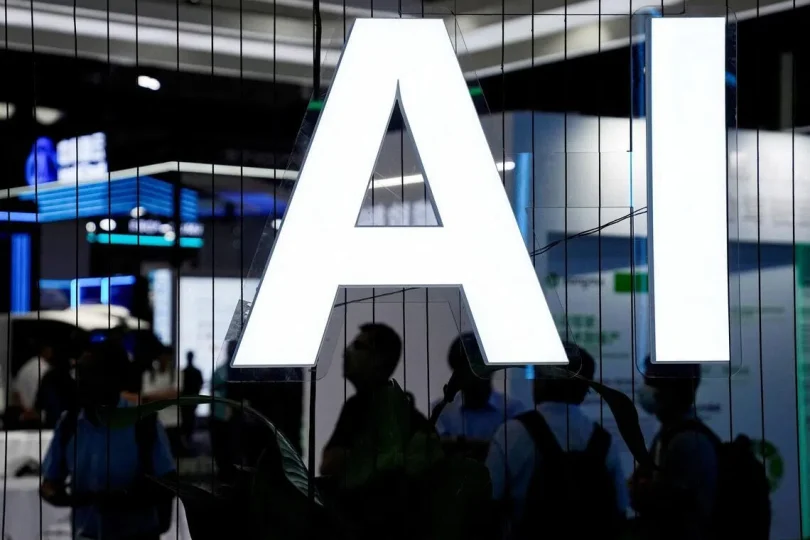
GENEVA – The AI boom has helped drive investments in intangible assets such as software, data and research to a record high in 2025, the United Nations’ patent and innovation agency said on July 8.
These investments, which encompass research and development, software and data, brands, design and organisational know-how, represent a large and growing share of the global economy, the World Intellectual Property Organisation (WIPO) said.
Across the 29 economies studied, which account for 57 per cent of global gross domestic product, intangible investment “reached an all-time high” of over US$10 trillion (S$12.9 trillion) in 2025, according to WIPO.
The study included the United States, EU nations, Britain, Japan, India as well as other countries. However, China, the world’s second-largest economy, was not among the nations covered.
The record figure was detailed in the World Intangible Investment Highlights 2026, which WIPO co-published with the Rome-headquartered Luiss Business School.
Since 2008, intangible investment has grown by 3.5 per cent annually in real terms; way ahead of tangible investments, which saw annual growth of just 0.98 per cent over the same period, the study said.
“These figures point to a durable structural shift in the composition of investment, with intangible assets playing a growing role in value creation,” WIPO said.
The United States accounts for the largest share of intangible investment by far, reaching nearly US$5 trillion in 2025.
This was around six times the level in second-placed Japan, with Germany third.
Sweden retains its position as the most intangible-intensive economy, reaching 17.4 per cent of GDP in 2025, followed by the United States at 15.6 per cent and France at 15.2 per cent.
Meanwhile, India, Japan and the Philippines recorded the fastest growth, said WIPO.
The report said intangible investments proved more resilient than tangible ones in the face of high interest rates, trade tensions and the economic slowdown seen in recent years.
Between 2020 and 2025, they grew by 5.5 per cent annually in real terms, compared to 3.2 per cent for tangible investments.
The report said artificial intelligence was playing a major role in the transformation.
While it initially drives physical investments in data centres, semiconductors and energy infrastructure, WIPO estimates that its lasting impact stems primarily from investments in software, data, research and development, and corporate reorganisation.
Investment in software and databases recorded the highest aggregate real growth rate across all intangible asset categories between 2013 and 2023, at 7.3 per cent annually, ahead of organisational capital (4.9 per cent) and brands (4.4 per cent).
The report also highlights the economic importance of brands, with investments across the 29 economies reaching US$1.4 trillion in 2025.
The US leads global brand investment by a wide margin, exceeding US$566 billion in 2025 – more than four times the figure for Britain, in second place on US$137 billion, followed by Japan on US$112 billion.
Established in 1967, Geneva-based WIPO helps creators and entrepreneurs protect their intellectual property across borders. AFP