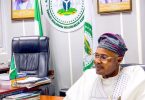
Kuni Tyessi in Abuja
The Alternative Bank, AltBank, has challenged Nigeria’s private sector to take ownership of the country’s climate agenda, warning that sustainable growth will remain elusive without business-driven investment and accountability.
The call was made yesterday at the opening of the Nigerian Environmental Summit, NESt 2026, in Abuja.
With the theme ‘Unlocking Nigeria’s Green Economy: Driving Climate Action and Sustainable Environmental Governance,’ the summit convened federal officials, state representatives, corporate leaders, and development partners to address flooding, pollution, desertification, and biodiversity loss.
Mohammed Abdul, Divisional Head, Commercial and Institutional Banking, Core North, The Alternative Bank, said environmental sustainability must move from CSR statements to core business strategy.
“Our role here is to support an initiative that has a direct impact on the nation. Every private-sector organisation should see itself as a stakeholder and team player in this effort because it serves a national objective,” Abdul told participants.
He said AltBank has mainstreamed social, environmental and ethical considerations into its lending and operations. “At The Alternative Bank, we view our Corporate Social Investment through an impact-driven lens, focusing on sustainable interventions that create measurable value for communities and the economy,” he added.
Speakers at the summit agreed that Nigeria does not lack environmental policies, but lacks enforcement.
Governance strategist Dr. Murtala Mohammed said: “The challenge is not the absence of policy. The challenge is implementation, enforcement, coordination and accountability.”
He proposed the creation of a Nigerian Environmental Governance Index to benchmark states on performance, compliance, financing and institutional capacity.
Senior Special Assistant to the President on Public Health, Uju Rochas Anwukah, warned of the cost of inaction.
“A commitment made in Abuja that does not reach Kebbi, Borno, Nasarawa, or the local government areas is not ‘accountability’. It remains paperwork,” she said.
Executive Secretary of the Nigerian Environmental Summit Group, Mrs. Rita Michael-Ojo, called for multi-stakeholder action.
“We are here because we recognise that no single institution, sector or individual can solve these challenges alone. The government must lead. The private sector must invest. Development partners must collaborate. Communities must participate,” she said.
The 2-day summit will feature technical sessions and policy dialogues focused on mobilizing finance, reforming institutions, and tracking measurable environmental outcomes.