Langovest said the initiative is part of the company’s corporate social responsibility and reflects its broader goal of developing scalable infrastructure solutions.
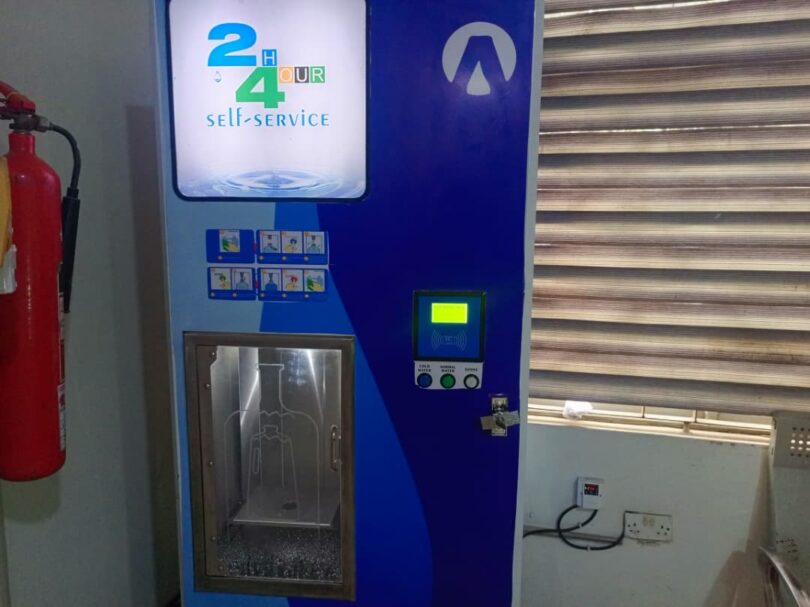
A private firm, Langovest Limited, has installed a pilot water filtration system at the Lagos State University Teaching Hospital (LASUTH), as part of efforts to improve access to clean drinking water in a state where millions lack a reliable supply.
Speaking at the launch, Langovest’s Chief Legal Officer, David Amafina, said the initiative is part of the company’s corporate social responsibility and reflects its broader goal of developing scalable infrastructure solutions.
“We are a company focused on developing modular infrastructure in Nigeria and across Africa. Many companies, institutions, and non-governmental organisations are doing their best to provide safe drinking water. However, the key question is: at what cost? Can the average Nigerian afford it?” Mr Amafina said.
He said the AquaPoint technology is designed to provide safe water at a lower cost, adding that the company is open to partnerships with the government and other stakeholders to expand access, particularly in underserved communities.
“As I said earlier, one organisation cannot do it alone. We are open to partnerships with other organisations and government bodies to expand this technology, especially to grassroots communities where it is most needed.
“While this deployment is in a hospital, we do not intend to limit ourselves to such institutions. We aim to extend it to underserved areas where it can significantly improve health and safety. While businesses aim to make a profit, this particular deployment is part of our corporate social responsibility initiative. We conducted extensive research and prioritised healthcare institutions committed to improving public health,” he added.
Mr Amafina noted that LASUTH was selected after assessing institutions with the capacity to support the system, including access to water and electricity, which are required for its operation.
“LASUTH meets these requirements. We are also working on adapting our machines to function in areas with limited electricity, to bridge that gap. Our message is simple: support organisations developing innovative infrastructure solutions. Government support—through favourable policies, reduced restrictions, and tax considerations—can make it easier for private sector players to expand access. This will ultimately help us reach more communities across Lagos and Nigeria at large,’’ he stated.
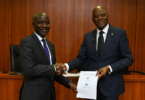
Receiving the donation on behalf of the hospital, the Chief Medical Director, Adetokunbo Fabamwo, thanked the company and said the installation would improve access to clean water within the facility.
“We are most grateful for this kind gesture. Our staff will now have access to clean drinking water, and we will ensure the machine is properly maintained,” he said.
Also speaking on the sidelines, Langovest’s Legal and Compliance Officer, Olatoke Adefunke, said the project marks the first phase of a broader plan to expand water infrastructure across Lagos.
“Today, we are handing over the first set of AquaPoint machines. This is just the starting point,” she said. “We plan to deploy more systems across the state to improve access to clean and affordable water.”
She added that the company is developing different models of the system for residential and public use, noting that the technology filters and dispenses water on-site without the need for bottling or distribution.
In a letter acknowledging the donation, LASUTH management said the facility would provide a reliable source of clean water for staff and visitors and commended the company for its support.
The intervention comes amid persistent water supply challenges in Lagos, where access to potable water remains limited despite years of public investment.
Estimates indicate that only about 10 per cent of residents have access to public water supply, leaving millions to rely on alternative sources such as boreholes, wells and private vendors, which are often expensive and, in some cases, unsafe.
Residents in several parts of the state have raised concerns over the quality and affordability of water, with many households depending on purchased water for daily use.
Public health experts warn that reliance on unregulated water sources increases the risk of waterborne diseases, particularly during the rainy season when flooding can contaminate groundwater.
The Lagos State Government has said it is taking steps to address the challenge through infrastructure upgrades and partnerships.
The Commissioner for Environment and Water Resources, Tokunbo Wahab, said the state is rehabilitating waterworks and exploring collaborations to improve supply.
“Our goal is to ensure all homes have access to clean water,” he said in a recent statement.
Despite these efforts, access to potable water remains a major challenge in the state, underscoring the need for sustained public investment and complementary private sector interventions.