
The protests come as a petition for stricter controls cleared the threshold for submission to parliament and the EU Migration Pact took effect
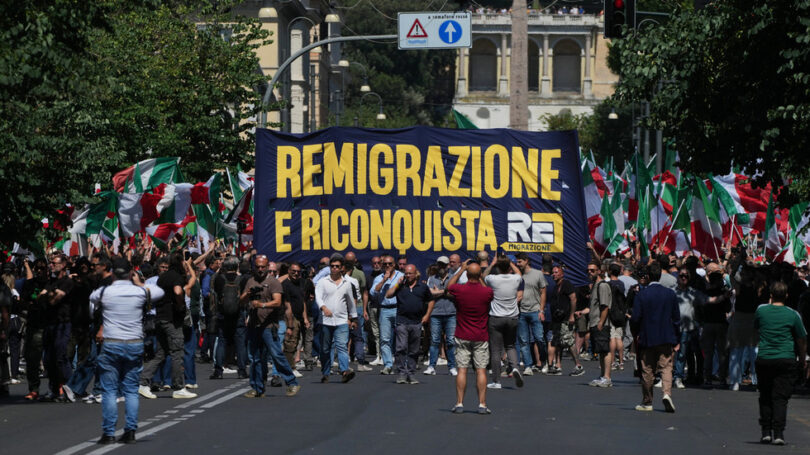
Thousands of anti-migration protesters marched in Rome on Saturday in support of a citizens’ initiative calling for stricter migration controls.
The demonstration was organized by the Remigration and Reconquest Committee, which promotes a popular bill offering financial incentives for foreigners to leave Italy and encouraging descendants of Italians living abroad to return to the country.
A petition by the committee has collected more than 130,000 signatures, well above the 50,000 required for a citizens’ initiative to be formally submitted to parliament.
Italy has been one of the main destinations for migrants crossing the Mediterranean from North Africa, with hundreds of thousands arriving by sea since the 2015 migration crisis. Italy received more than 150,000 sea arrivals in 2023 and about 66,000 in both 2024 and 2025, according to Interior Ministry figures.
A rival pro-migrant demonstration was also held in Rome, drawing left-wing groups, trade unions, and activists who accused the anti-migration campaign of targeting foreigners and undermining rights protections. Police were deployed to keep the opposing rallies apart.
Prime Minister Giorgia Meloni faces competing pressures on migration policy. Her government has moved to curb irregular arrivals while simultaneously expanding legal migration.
READ MORE:
Migrants arrested over 72-hour gang rape – Italian police (VIDEO)
Last year the government approved a plan to admit nearly 500,000 non-EU workers between 2026 and 2028 to fill labor gaps in sectors such as agriculture, construction, tourism, and care services.
Italy has the oldest population in the EU and one of the bloc’s lowest birth and fertility rates, making foreign labor increasingly important to the economy.
The Rome rallies came after the EU’s Migration and Asylum Pact entered into force on Friday. The bloc’s biggest migration overhaul in years introduces mandatory border screening, accelerated asylum procedures for some applicants, expanded biometric registration, and measures intended to speed up the return of rejected asylum seekers.
READ MORE:
EU may be ‘too late’ to stop migration ‘invasion’ – Hegseth
The pact has drawn criticism across Italy’s political spectrum. Supporters of tougher migration controls argue that it remains insufficient to curb irregular arrivals and increase deportations, while migrant-rights groups warn that the reforms weaken asylum protections and expand detention powers. Critics also question whether the pact’s solidarity mechanism will substantially reduce pressure on Mediterranean entry states, despite provisions allowing other EU countries to relocate asylum seekers or provide financial contributions.
You can share this story on social media: