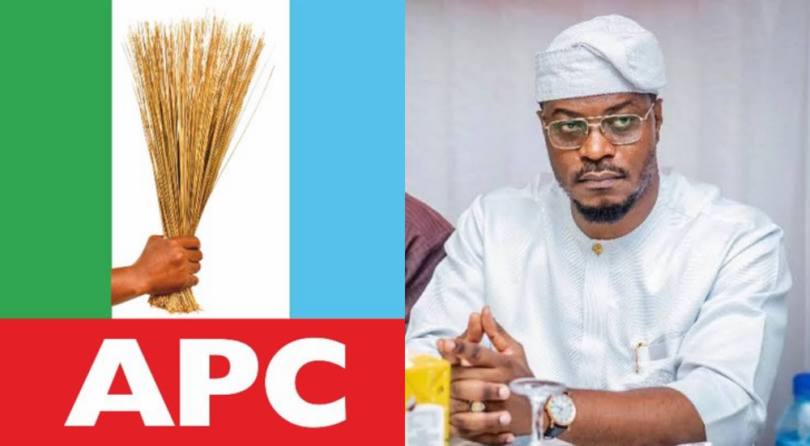
The Lagos State chapter of the All Progressives Congress (APC) has challenged the African Democratic Congress (ADC) governorship candidate, Gbadebo Rhodes-Vivour, to go beyond learning Yoruba and demonstrate a deeper understanding of Lagos ahead of the 2027 election.
The party’s Publicity Secretary, Seye Oladejo, made the remarks on Tuesday following Rhodes-Vivour’s disclosure that he had engaged a Yoruba teacher and could now campaign in the language.
Rhodes-Vivour made the disclosure during an interview on Arise TV, where he said language and culture were important but stressed that his focus remained on addressing challenges confronting Lagos residents.
Oladejo welcomed Rhodes-Vivour’s decision to learn the language but questioned whether learning Yoruba alone amounted to understanding the people and the state he seeks to govern.
“Language is one of the gateways to understanding people. It carries history, humour, values, idioms, traditions and ways of seeing the world,” Oladejo said.
He urged Rhodes-Vivour to go beyond language lessons and familiarise himself with the history, culture, institutions and governance challenges of Lagos.
Oladejo also criticised the ADC candidate’s comments about APC governorship candidate, Dr Obafemi Hamzat, arguing that Rhodes-Vivour’s criticisms could not erase Hamzat’s experience in Lagos public service.
According to him, Hamzat has served as a commissioner and deputy governor, among other public-sector and professional roles.
“Rhodes-Vivour may argue that the administration has not done enough. He may identify areas where he believes Hamzat’s record should have been better. That is politics. But to suggest that experience has no value simply because Lagos still has challenges is a rather curious argument,” he said.
The APC spokesman also took aim at Rhodes-Vivour’s criticism of Lagos’ traffic situation, saying the challenge should not be reduced to political sound bites.
He challenged the ADC candidate to provide details of any alternative plan, including the proposed road infrastructure, financing arrangements, mass-transit strategy, implementation framework, timelines and measurable targets.
“Lagos is not a village road network. It is one of Africa’s largest urban and economic centres, with enormous population pressure, intense commercial activity and rapidly expanding transportation demands,” Oladejo said.
Rhodes-Vivour had identified flooding, housing and traffic among the challenges affecting Lagos residents during his Arise TV interview, while arguing that the problems cut across ethnic and linguistic backgrounds.
The ADC candidate also demonstrated his growing Yoruba proficiency during the interview, responding “Mo ki gbogbo yin” after a presenter greeted him in the language.
Oladejo said the 2027 election should therefore focus on candidates’ understanding of Lagos and their capacity to translate campaign promises into public policy.
“Lagos is not governed by Instagram posts, television appearances or campaign slogans,” he said, adding that governance involved institutions, budgets, planning, infrastructure, security coordination, transportation systems and daily administrative decisions.
He urged Rhodes-Vivour to allow Lagosians to scrutinise his own record, plans and capacity rather than concentrating primarily on Hamzat.
“2027 is not an audition for television. It is a conversation about the future of Lagos,” Oladejo said.