• Says Africa is being shortchanged
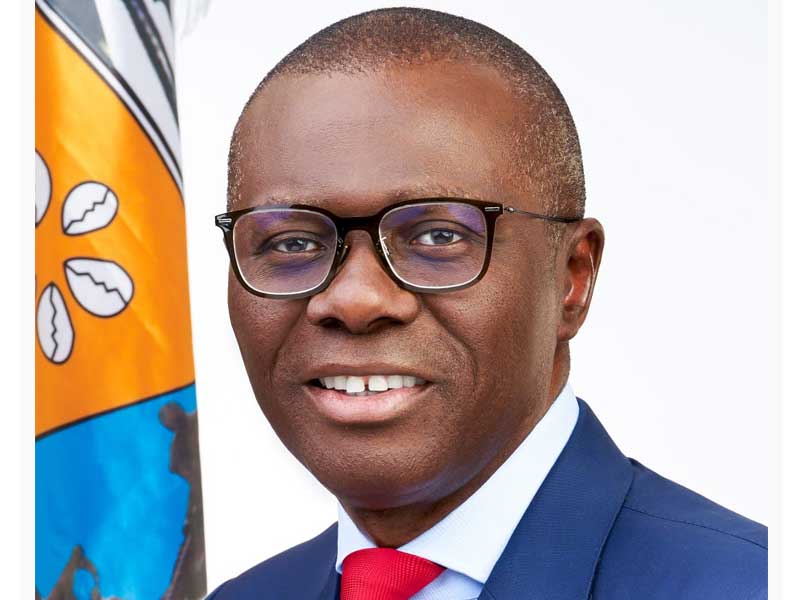
At a roundtable with other world leaders in London, yesterday, at the Climate Change Action Week, the Lagos State Governor, Mr. Babajide Sanwo-Olu, dissected some of the challenges of climate change in the state and how his administration has tamed some of the menaces.
Speaking at the Basinghall Suite 1 of the Guildhall, London, Sanwo-Olu, who had a peer review session with other governors and mayors around the world joined discussions on three topical issues.
The first centred on the reality on the ground and what the leaders were managing in their respective places. The second considered a discussion on, from vulnerability to resilience, looking into what recent shocks taught the leaders about the risks of fossil fuel dependence.
The last of the issues that was considered dwelt on scaling delivery and that was essentially what needed to happen next, for instance, how they could move investment from commitment to prospect.
It also asked questions on how to increase access to finance for states and regions as well as what mechanisms were missing to accelerate implementations.
However, drawing from the Lagos governance experience and examples, Sanwo-Olu said, “I’d also like to thank the two members of the coalition. It’s exciting. We’re hoping that we can advance a lot of peer sharing and a lot of benefits to the government and to the people.
“But we have a background, right? I mean, I’m from a country where I run a state that’s close to 25 million people. Up until very recently, everything regarding power, from generation to distribution to the whole spectrum, was nationally controlled.
“It was just last year that the unbundling of the power sector happened in our country, and now the states can indeed participate across the whole spectrum, from generation to distribution.
“So, now, we’re actually changing the narrative. Almost 40 to 50 per cent of what is generated in the country also gets passed through states, so it’s huge. There’s a whole lot of interest that we’re pushing on, especially in renewables.
“One of the greatest things that happened to me today was being part of the seven-point agenda led by António Guterres. There’s a point where Africa has been shortchanged completely.
“The statistics show that 60 per cent of the solar capabilities are in Africa. Thirty per cent of the minerals are in Africa. Twenty-five per cent of the world’s population is there. And, of course, 70 per cent of the population on the continent is under 30.
“However, only 2 per cent of whatever gets on this table goes to that continent. If we need to be successful in whatever conversation, in a real transition and in wanting this to be a truly global conversation, Africa has to be there. And if it is Africa, Lagos happens to be the biggest city in that coalition.
“So I’m putting the case forward that all of us will have our individual needs. But if we want scale and relevance, we need to go to places that are underserved. Because I’m also moving from availability to affordability before I can even begin to talk about a real transition.
“But we’re doing everything. In the past year, we’ve installed over 45,000 solar street lights and street poles across the city. These are the kinds of things we’re doing. We’re doing them at scale so that we can achieve a lot of catch-up. But that’s just my first point.”
Addressing the second point of discussion, the Lagos governor said, “I think it’s interesting, even listening to my colleagues. I’ve been to Grande do Sul a few times, and it’s interesting to see how he’s been able to turn things around over the last two or three years.
“It’s also interesting to hear the challenges facing cities around the world. We know that the budget of a city like Boston is four or five times that of Lagos, yet, it is encouraging that around this table, there is a lot of care and sharing of experiences.
“My city, where I serve as governor, has some vulnerabilities because part of it is, because we are below the sea level. Year after year, despite all the adaptation strategies we have put in place, we remain vulnerable to coastal erosion and tidal surges from the lagoon.
“We have built various protective structures, including groynes and other coastal defences, but as they say, ‘water must find its level’, because we are below the sea level. Water will always seek to come in.
“We have committed significant funding to contain and reduce the impact of tidal waves and heavy rainfall. We often experience intense flash floods that may last 10 to 12 hours, causing considerable damage before the waters recede.”
According to him, “A major challenge is the time it takes to recover from the damage and the difficulty of getting people to heed early warning signals. Even when advised to move to safer areas, some residents do not respond.
“As a result, government continues to spend substantial resources year after year to manage these risks. That is one of the key vulnerabilities we face.
“On the energy side, because of the reforms and unbundling of our energy regulatory environment, we are investing heavily in off-grid and mini-grid solutions.
“Rather than relying solely on large transmission networks, we have designed models that enable us to develop small-scale grids capable of serving individual communities. This has significantly improved access to electricity.
“Where many people previously had less than 12 hours of electricity daily, some communities are now enjoying 20 to 21 hours of power supply. That is a significant improvement. What we are striving for is the right balance between accessibility, affordability and sustainability.
“Overall, we are moving from a highly vulnerable position to a far more resilient one. We are building adaptable programmes and platforms that allow us to reduce risks year after year, and we are beginning to see measurable progress.
“But, as they say, time is of the essence for all of us. Everyone around this table understands that if there is no consistency of ideas and action, progress will be difficult to sustain.”