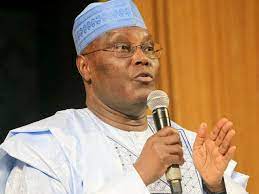
The so-called leadership of the African Democratic Congress (ADC) in Adamawa State has ignited fresh controversy after announcing the suspension of former Vice President Atiku Abubakar and ex-SGF Babachir Lawal over alleged “anti-party activities.”
In what many observers are already describing as a politically charged move, the factional chairman, Muh’d Raji Sulaiman Zumo, read out a statement dripping with authority but raising serious questions about legitimacy, motive, and timing.
> “No individual is above the law,” Zumo declared.
But critics are asking: whose law, and whose party?
Because suspending a political heavyweight like Atiku Abubakar is no routine disciplinary action—it is a declaration of war within the party.
Zumo claimed the move was based on “consultations,” yet failed to clarify whether this decision reflects the position of the national leadership or just a local power bloc flexing muscles in Adamawa.
Also named in the sweeping action are Engr. David Babalawo and Barr. Sadiq Ibrahim Darsin, all accused—without publicly presented evidence—of “creating disunity.”
Let’s be clear:
This is not just about discipline. This is about control, relevance, and the fierce battle for the soul of the ADC.
When a party begins to suspend its most visible figures under vague accusations, it signals one thing—internal collapse masked as enforcement.
The bigger question now is whether this suspension holds any real weight beyond Adamawa, or if it will be dismissed as another factional stunt in Nigeria’s ever-fractured party system.
As the dust settles, one thing is certain:
The ADC is no longer just managing disagreements—it is fighting for its identity.