“Bola, 30 days cannot erase three and a half years of hardship. Nigerians have heard your excuses and endured your failed promises. They are ready to judge your record. After this latest admission of failure, the honourable thing to do is step down. Nigerians deserve a government that will do the work and make life affordable again.”
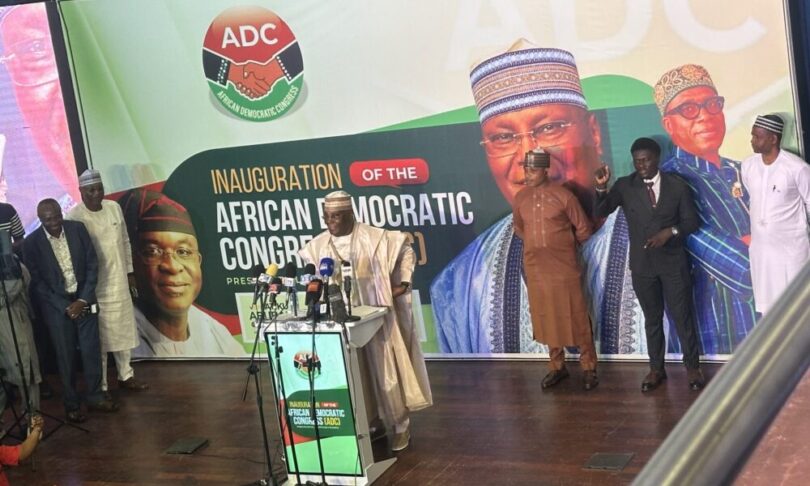
Former Vice President Atiku Abubakar has accused President Bola Tinubu of worsening Nigeria’s economic hardship, describing the federal government’s proposed 30-day petrol discount as an admission of failure and an inadequate response to the rising cost of living.
He spoke on Friday at the inauguration of the ADC Presidential Campaign Council at the Shehu Musa Yar’Adua Centre in Abuja, where he outlined his economic proposals and called on Nigerians to vote Mr Tinubu out of office in the January 2027 election.
“Bola Tinubu has had more than three years to improve our lives. What has he given us? A bag of food that costs more each time we go to the market. A journey to work that eats up our salaries. A business that cannot keep its lights on. A farm we may be too afraid to visit,” Atiku said.
He argued that the administration had imposed painful economic adjustments on Nigerians without delivering sufficient relief, accusing the president of seeking electoral credit for a temporary intervention after years of rising living costs.
“Bola, your government has made life unbearable and called it reform. You have demanded painful sacrifices from the people while you, your family, and friends are junketing all over the place,” he said.
The former vice president questioned the timing and sustainability of the proposed petrol discount, arguing that a 30-day interventions would do little to address the underlying pressures driving up the prices of goods and services.
He challenged the government to explain what would happen when the discount expires, particularly for commuters, farmers, traders and manufacturers whose operating costs are affected by petrol prices.
“More importantly, you owe Nigerians an answer: what happens on day 31?” he asked.
Atiku also accused the Tinubu administration of adopting his proposed production subsidy after previously criticising the idea, but implementing it in a manner he said stripped it of its intended economic benefits.
He said his proposal would provide targeted support for petroleum products refined in Nigeria and sold to Nigerians, with the intervention capped, provided for in the national budget and subjected to independent audits.
“My production subsidy proposal is a lasting, targeted plan. Yours is a temporary palliative dressed up as a solution,” he said.
The ADC candidate argued that supporting locally refined petroleum products could strengthen domestic refining, reduce dependence on imported finished products and ease the pressure of fuel costs on transport, food production and businesses.
He also called for public disclosure of the cost of the intervention and the savings it generates, insisting that imported finished petroleum products should be excluded from the proposed subsidy.
“Support petroleum products actually refined in Nigeria and sold to Nigerians. Cap the support. Put it in the budget. Audit it independently. Exclude imports. Show the public what it costs and what they save,” he said.
Atiku said his economic relief plan was not limited to petrol prices, adding that a government seeking to improve living standards must also make food affordable, restore reliable electricity, create jobs, secure roads and farmlands, and remove barriers confronting young entrepreneurs.
“A speech about growth means nothing to a family that cannot afford dinner,” he said.
He accused the president of failing to take responsibility for the economic consequences of his policies, arguing that the rising cost of petrol, declining purchasing power and closure of businesses were problems the administration must address rather than blame on previous governments.
The former vice president also urged his campaign council to take the party’s economic proposals to markets, motor parks, farms, campuses and communities across the country, insisting that members must explain both what the party intends to do and how it would finance its plans.
He described the 2027 election as a “rescue mission”, urging eligible voters to use their Permanent Voter Cards (PVCs) to demand a change in government.
“Another four years of Bola Tinubu means another four years of hunger, hardship and national decline,” he said.
Beyond the economy, Atiku called for reforms to improve the transparency and credibility of the 2027 general election, arguing that economic recovery would mean little if Nigerians could not trust the electoral process.
He demanded the immediate publication of polling-unit results, protection for political parties and election observers to independently verify results, and the live broadcast of state and national collation proceedings.
He also called for independent audits of election technology before and after elections, as well as the establishment of an independent commission to investigate and prosecute electoral offences.
Atiku said accredited party agents, civil society organisations and election observers should be allowed to operate situation rooms and verify results without being treated as substitutes for the Independent National Electoral Commission (INEC).
“Transparency is not a crime,” he said, adding that electoral technology should serve the electorate rather than conceal the process.
The ADC candidate also warned against attempts to restrict opposition parties from campaigning in parts of the country, citing an alleged attempt to prevent an opposition candidate from campaigning in Benue State.
He said the ADC would campaign across the country and challenge restrictions on its candidates through lawful means, including the courts and the ballot box.
“We will campaign in every state, from the creeks to the savannahs, and resist any effort to stop our candidates from reaching Nigerians,” he said.
Atiku concluded by calling on Mr Tinubu to step down, arguing that the proposed 30-day petrol discount could not erase the economic hardship Nigerians had experienced during the President’s tenure.