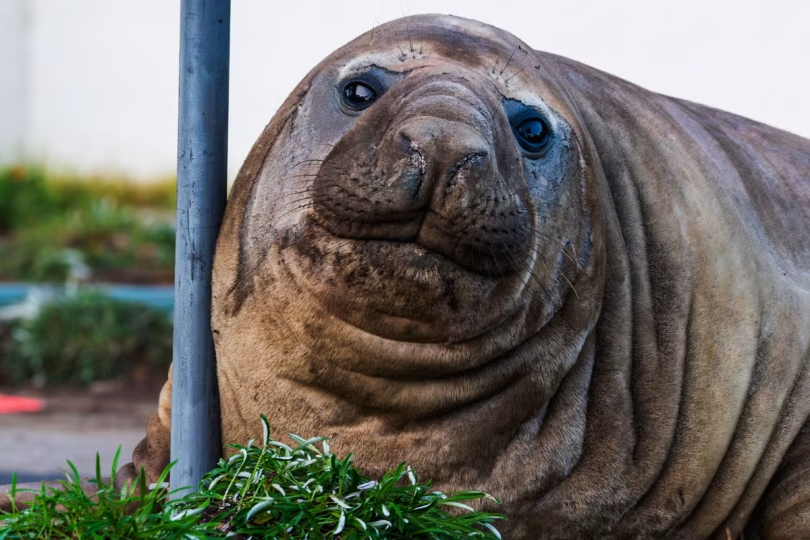
A colossal elephant seal, weighing as much as a small car, has become an unlikely social media sensation and a source of both delight and destruction along Tasmania’s southern coast. Neil, a 1,000 kg, five-year-old mammal, has returned to his birthplace for his biannual visit, leaving a trail of bent traffic bollards, smashed fences, and captivated onlookers in his wake.
After months of feeding at sea, Neil’s return to beachside towns has seen him haul himself onto land, often bringing local traffic to a standstill as he reposes in the middle of roads.
His antics, which include picking fights with parked cars and demolishing barriers, have earned him an enthralled TikTok following of 1.4 million – more than double Tasmania’s human population – with many online hailing him as an anti-authoritarian hero.
However, experts explain that Neil’s destructive behaviour is a natural part of his development. Sophia Volzke, an elephant seal scientist at the University of Tasmania in Hobart, notes that juvenile male elephant seals need to practise for the dominance battles that adult males engage in for breeding opportunities.
With no other young seals to spar with, Neil has resorted to rehearsing on Toyotas and other local infrastructure.
Local officials are increasingly concerned that Neil’s burgeoning fame could lead to dangerous human-seal encounters. Kris Carlyon from Tasmania’s Department of Natural Resources and Environment described Neil’s popularity as “a bit of a double-edged sword” during a news conference in Hobart.
He highlighted “pretty silly behaviour, instances with people carrying their small babies up close to him and simply trying to get that shot for Instagram,” urging fans to give the seal privacy.
Authorities have also requested the public refrain from identifying Neil’s current location, fearing that a disastrous interaction between the seal and an admirer could necessitate a risky operation to relocate him.
Mr Carlyon issued a stark warning, referencing the 2023 case of Freya, a walrus in Norway who drew large crowds but was ultimately euthanised due to escalating risks to human safety. “There is a risk here of essentially loving Neil to death,” he cautioned.
While it is common for seals to return to their birthplace to rest, fast, and shed fur, Neil is unique as the only male elephant seal currently hauling ashore in Tasmania. Historically, humans had largely eradicated these animals from the region, and Ms Volzke suggests their return indicates a potential repopulation of former habitats. “We do need to find a way to coexist,” she stated.
This coexistence could become more challenging as Neil continues to grow. If he survives to adulthood, he could reach up to 5 metres in length and weigh three times his current mass, posing significant logistical challenges for the rangers, police, and security guards who monitor him. However, around 90 per cent of male elephant seals do not survive to breeding age, which is typically around 10 years old.
For now, Neil remains unmoving and unbothered, often occupying a stretch of pavement where he has been observed “canoodling with an orange traffic cone” to the delight of his online followers. Mr Carlyon noted on Thursday, “He’s obviously decided this puddle surrounded by bollards, which are horizontal at the moment, is his spot.”
While locals have mixed feelings, Dale Creamer, a resident of a town Neil is currently “trashing,” remarked, “He’s one of our biggest exports at the moment. It’s Neil’s world and we’re just living in it.”