Every politics is local. Understanding the culture and mindset of a place is essential if politics is to thrive. In Bauchi, elite manipulation in candidate selection has rarely succeeded. That culture makes Bauchi politics distinct.
As the consensus process deepens, transparency and credibility must prevail. In trying to minimise risk through consensus, the party must also avoid gambling with the general election.
If the consensus candidate lacks grassroots support and legitimacy, the party may win the internal contest and still lose the main election.
The pattern of elections in Bauchi
Since the return to democracy, the opposition in Bauchi has won twice in seven election cycles. As another general election approaches, the opposition should be deliberate about agreeing on a consensus candidate whose acceptability cuts across grassroots members, not just elites and the bourgeoisie.
History backs this point. In 2007, despite the influence of Ahmed Adamu Mu’azu, his endorsed candidate was defeated by the ANPP because voters saw the choice as imposition. That move also cost him a Senate seat. A similar scenario played out in 2015. Despite the monetisation and inducement deployed by the incumbent, Bauchi voters voted for the APC, rejected the PDP, and denied Isa Yuguda a Senate seat. The lesson is consistent: imposition does not work in Bauchi. The consensus process must not become elite imposition in another form.
The Bauchi APC elite
To many die-hard opposition members, some of the elite exhibit a “cut-off-your-nose-to-spite-your-face” mentality. A review of their political history explains why many APC members are sceptical about entrusting them with the power to decide the consensus candidate.
H.E. Barr. M.A. Abubakar, SAN
As the first APC governor in 2015, Abubakar joined the party after its formation and secured the ticket. Members of the legacy parties supported him to win. Instead of consolidating that unity, he adopted a winner-takes-all approach. That posture strained relations with key stakeholders, including the National Assembly and then-Speaker Rt. Hon. Yakubu Dogara. The fallout eroded the party’s popularity and contributed to its defeat in 2019. In 2023, he openly supported the PDP’s re-election bid instead of APC’s Amb. Air Marshal Sadique Baba Abubakar. It is difficult to imagine such a figure as the arbiter of the party’s candidate, or as the candidate himself.
H.E. Malam Isa Yuguda
When the PDP denied him a ticket in 2007, the ANPP welcomed him and made him its candidate. That accommodation produced victory. Midway through his first term, however, he defected to the PDP. In 2011, as his popularity waned, the election in Bauchi was delayed and a curfew imposed—steps many believed were meant to deny the CPC victory. In a free contest, PDP would likely have finished third, with the CPC winning and the ACN coming second. Since then, Yuguda has contested for the Senate twice and lost. None of the candidates he backed have won major elections in Bauchi. He has changed parties at least seven times since then, each move serving personal interest.
Prof. Muhammad Ali Pate
The Coordinating Minister of Health and Social Welfare entered Bauchi politics in 2014. Opposition leaders tried to woo him into the APC, but he remained close to the PDP at the time. After Yuguda sidelined him, he defected to the APC. Still unfamiliar with the complexities of Bauchi politics, he has often relied on government patronage rather than popular legitimacy. His inability to grasp the state’s political dynamics has seen him change parties five times, often seeking elite backing through back channels.
Rt. Hon. Yakubu Dogara
The longest-serving member of the House of Representatives from Bauchi became the fourth-highest public official against the wish of APC’s national leadership in 2015. He enjoyed APC’s backing but played a key role in the party’s defeat in Bauchi in 2019. Ahead of the 2023 elections, he was among the leading voices criticising the Muslim-Muslim ticket and blackmailing the APC. Between 2014 and today, he has moved between the PDP and APC at least seven times. Despite that, the APC has reconciled with him without conditions.
Amb. Yusuf Maitama Tuggar
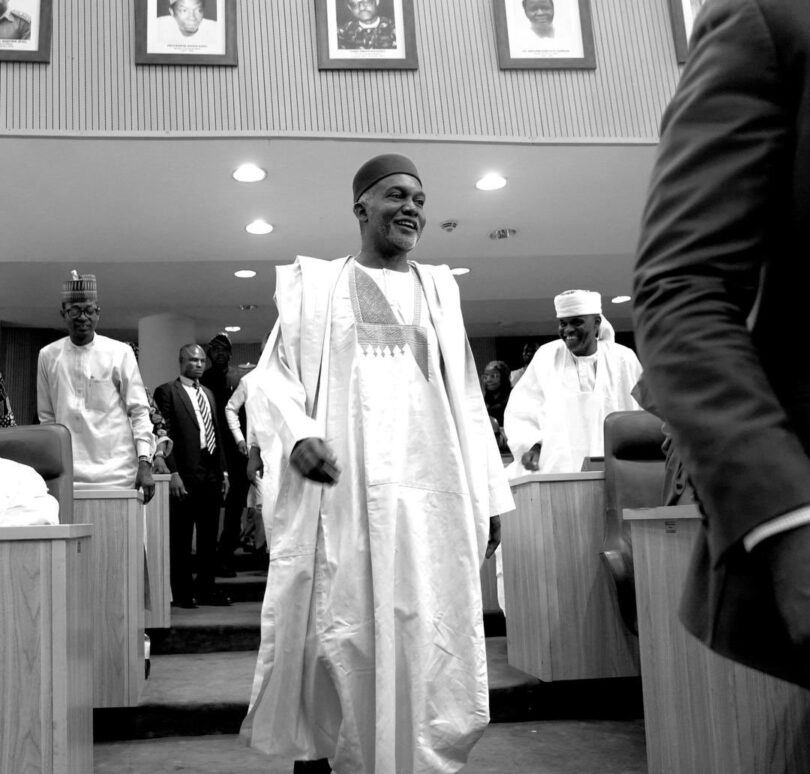
The immediate past Minister of Foreign Affairs and leading gubernatorial aspirant in Bauchi APC is a familiar name in the state’s opposition history. His resilience and consistency stand out. He began in 2007 under the ANPP as one of Bauchi’s most outstanding representatives, and later became a key strategist in the formation of the APC from the CPC bloc in 2013. His sacrifice and consistency are rare among Bauchi APC’s elite.
Party loyalty and reward
From 2007 to 2015, when the opposition won in Bauchi, loyal party members were often sidelined. The impeachment of H.E. Garba Gadi in 2009 and the resignation of H.E. Nuhu Gidado in 2018 to avoid a similar fate illustrate this trend. The rewards given to party members under those administrations were minimal. Such experiences have matured the system and opened the eyes of staunch party members to avoid a repeat.
As we navigate the next election, those tasked with choosing the consensus candidate must rise above personal interest and put the state and its citizens first. When the collective interest of the state is prioritised, individual interests can be pursued legally and within the rules. Doing otherwise harms the party and its members.
There is little doubt that the clear front-runner in this contest is Amb. Yusuf Maitama Tuggar, a long-standing ally of the opposition project in Bauchi. He is competent by all standards and enjoys acceptability across the state. Rewarding loyalists like him will reassure party members and prevent disruptive outsiders who are weak and controversial from hijacking the process.