Stakeholders in the Water, Sanitation and Hygiene (WASH) sector in Bauchi State have proposed the introduction of a “WASH Tax” on companies and allied institutions operating in the state as part of efforts to improve funding for water and sanitation services.
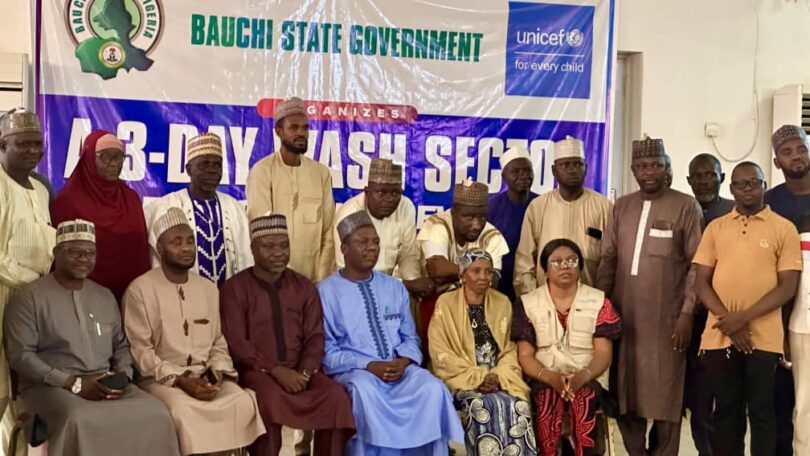
The proposal formed part of resolutions reached at the end of the 2026 State WASH Joint Sector Review (JSR) held between May 12 and 14 at Hazibal Suites, Bauchi.
The communiqué issued at the end of the meeting also recommended the immediate establishment of a WASH Fund Basket and the convening of a donor roundtable to mobilise resources for the sector.
Participants at the meeting included representatives of government ministries, departments and agencies, local government councils, development partners, civil society organisations, private sector actors, traditional and religious institutions, academic bodies, media organisations and community groups.
The stakeholders noted that despite progress recorded in water supply expansion, sanitation campaigns and hygiene promotion, the sector still faces major challenges such as inadequate financing, weak maintenance culture, poor functionality of facilities, climate-related threats and inequitable access to services.
They called on the Bauchi State Government to prioritise WASH as a key public health and development issue through increased funding, stronger policy implementation and sustained political commitment.
Part of the resolutions urged the government to complete the establishment of the Water Regulatory Commission and the Small Towns Water Agency under the Ministry of Water Resources.
The meeting also demanded the full corporatisation of the Bauchi State Urban Water and Sewerage Corporation to improve efficiency and productivity in water service delivery.
The communiqué further urged ministries, departments and local government councils to strengthen coordination and accountability in the implementation of WASH programmes, while calling for stronger support for the existing Multi-sectoral Stakeholders Forum on WASH.
Stakeholders also reiterated the need to revive the WASH Media Network to intensify public sensitisation and awareness campaigns on hygiene and sanitation practices.
Traditional and religious leaders were equally urged to champion sanitation and hygiene promotion at the community level to help the state achieve Open Defecation Free (ODF) status across all local government areas.
Among the priority actions agreed for implementation between 2026 and 2027 are increased budgetary allocation to the WASH sector, rehabilitation of non-functional water schemes, scaling up hygiene behaviour change campaigns and accelerating Community-Led Total Sanitation programmes.
The stakeholders also resolved to reduce the state’s ODF reversion rate from 15 per cent to five per cent within one year.
Other agreed actions include strengthening WASH data management systems, mainstreaming climate resilience and disability inclusion into programmes, and promoting WASH interventions in schools and healthcare facilities across the state.
The communiqué stated that quarterly progress review meetings would be held to monitor implementation, while annual sector performance reports would be published to ensure transparency and accountability.
The communiqué was adopted on May 14, 2026, and signed by representatives of key institutions including the Ministry of Water Resources, State Rural Water Supply and Sanitation Agency, Bauchi State Urban Water and Sewerage Corporation, UNICEF, WaterAid, civil society groups and media representatives.