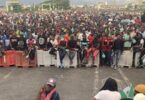
Benue says it spent over N160 million treating displaced people for snakebites in six months, while PREMIUM TIMES’ investigation documented closed camp clinics, medicine shortages and barriers to affordable healthcare.
The Benue State Government has said it spent more than N160 million treating internally displaced persons (IDPs) for snakebites between March and September, as displaced families continue to raise concerns about food shortages and access to healthcare in their camps.
He said the agency had arranged for IDPs to receive treatment at the Benue University Teaching Hospital in Makurdi amid inadequate support from humanitarian partners.
“Through this arrangement, this agency has spent more than N160 million on healthcare interventions between March and September for snake bites alone,” Mr Iorpuu said.
He added that the agency had facilitated medical attention for displaced people with serious illnesses and other emergencies.
However, the spending claim comes amid persistent complaints about healthcare access in the camps and findings from a recent PREMIUM TIMES investigation that documented the closure of a health facility in Anyiin IDP camp, forcing residents to seek treatment outside the settlement, often at costs they cannot afford.
The investigation, “Shut clinic deepens healthcare crisis in Benue IDP camp”, found that the loss of health services had left pregnant women and children particularly vulnerable to medicine shortages, delayed treatment and weak referral arrangements.
During the investigation, PREMIUM TIMES found that the health facility at Anyiin IDP camp in Logo Local Government Area, which previously provided basic medical services, had stopped operating after humanitarian support ended.
Helen Tsavwua, a former worker at the facility, said Médecins Sans Frontières (MSF) established the clinic during the displacement crisis in 2018. The Victim Support Fund subsequently took over before withdrawing in January 2021, after which the facility closed.
A community health worker at the European Economic Community Health Clinic in Anyiin, who previously worked at the camp facility, attributed its closure to inadequate funding and the loss of medical supplies.
The investigation also documented the death of Ngusurun Kengersha, an eight-month-old girl whose grandmother, Anaor Saawuan, said she could not afford the blood transfusion recommended at a hospital.
The child had suffered vomiting, diarrhoea and fever. After struggling to obtain treatment, the family resorted to a traditional remedy. She died on 2 May.
Mrs Saawuan told PREMIUM TIMES that the camp previously had a functioning clinic.
“There used to be a clinic here,” she said. “Medicines were available, and treatment was free, until everything stopped.”
The investigation also found that pregnant women faced financial barriers to antenatal care.
Naomi Teryen, a 32-year-old displaced woman who was pregnant at the time of reporting, said she had to pay for medicines at the government-owned Comprehensive Health Centre in Anyiin.
She said an antenatal visit typically cost her about N3,000, adding that she had once been turned away after arriving with only N1,000.
A medical doctor and UNICEF consultant, Terrence Akighir, told PREMIUM TIMES that multiple micronutrient supplements intended for pregnant women should be provided free of charge.
“MMS is supposed to be free,” he said, calling for any alleged improper charges to be investigated.
The findings raised questions about the availability of essential healthcare services for displaced people, the sustainability of facilities previously supported by humanitarian organisations and the arrangements for emergency referrals.
Responding to complaints about conditions in the camps, Mr Iorpuu said the government had continued to support displaced people through healthcare interventions and the distribution of food and non-food items.
He said monthly food distributions had continued despite dwindling resources and increasing difficulty in meeting the needs of the displaced population.
However, he acknowledged that the quantities of food available for distribution had reduced significantly.
Mr Iorpuu also said SEMA was working with humanitarian partners, including the United Nations High Commissioner for Refugees, on resettlement-related interventions.
The agency’s account contrasts with complaints by leaders of the Agagbe, Daudu and Mega IDP camps, who described food assistance as irregular and healthcare, shelter, sanitation and livelihood support as inadequate.
The camp leaders spoke on condition of anonymity, citing fears of victimisation.
One of them said the last food distribution had taken place about four months earlier and was insufficient for the population.
“Following the engagement, another food distribution was eventually carried out, although it was insufficient compared with the needs of the population. But since the last distribution about four months ago, we have not heard of anything again,” the camp leader said.
The leaders also said some displaced people wanted to return to their ancestral communities but could not do so because of continuing insecurity.
“What we are crying for now is how to leave the camp and return to our ancestral homes. Unfortunately, some of those communities are still not safe,” another leader said.