
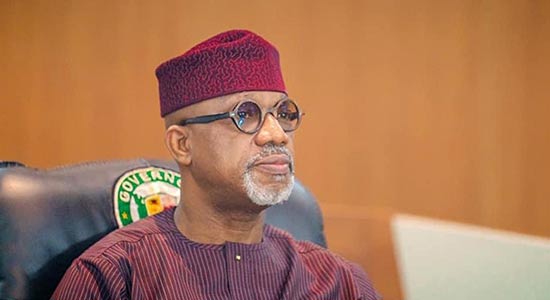
Ogun State Governor, Prince Dapo Abiodun, has called for broad judicial, fiscal and institutional reforms to ensure the proposed State Police system succeeds if eventually approved.
Abiodun said the conversation around state police must go beyond the creation of new security structures, stressing that the legal, financial and accountability frameworks needed to sustain the system must also be addressed.
The governor spoke at the THISDAY/ARISE TV Town Hall Meeting on the State Police Bill, where he described President Bola Tinubu as a committed federalist whose support for the devolution of policing powers reflects his long-standing belief in true federalism.
He said history would be kind to Tinubu for showing the political will to decentralise policing, adding that elder statesman, Chief Olusegun Osoba, and Anambra State Governor, Prof. Chukwuma Soludo, had also attested to the President’s federalist credentials.
Abiodun, however, said the legislative process must address fundamental questions about why the existing Nigeria Police Force has struggled to deliver optimal results and how federal and state police systems can work together without conflict.
According to him, the creation of state police could lead to more arrests and prosecutions, making judicial reform critical to avoid congestion and delays in the administration of justice.
He urged lawmakers to consider additional reforms in the justice sector, including the possible establishment of State Courts of Appeal to handle certain matters, such as land disputes, without unnecessarily overburdening the existing appellate courts.
The governor also said policymakers must tackle the root causes of insecurity, especially recurring farmers-herders conflicts, which he noted have contributed to food insecurity in several parts of the country.
He said resolving such underlying disputes would reduce pressure on law enforcement agencies while promoting peace, stability and agricultural productivity.
On funding, Abiodun warned that differences in states’ revenue capacities could affect the effectiveness of state police if not properly addressed.
Using Ogun State as an example, he said the state remains Nigeria’s industrial hub and one of the country’s fastest-growing economies, yet receives relatively low allocations from the Federation Account Allocation Committee, FAAC.
He called for an equitable funding framework that would combine internally generated revenue with federal allocations to ensure that all states have the financial capacity to establish and sustain functional police services.
Abiodun also advocated the establishment of independent Police Complaints Commissions at both federal and state levels to guard against abuse of power and promote accountability.
He welcomed proposals to expand the membership of the National Police Council to include the leadership of the National Assembly alongside state governors.
The governor also backed fixed tenures for State Commissioners of Police, saying such a measure would help protect them from undue political influence and strengthen professionalism.
Abiodun commended THISDAY and ARISE Television for organising the town hall meeting, describing public engagement as necessary in producing a State Police law that reflects the concerns and expectations of Nigerians.
He expressed confidence that continued consultations would assist lawmakers in producing a strong legal framework capable of improving security and deepening Nigeria’s federal system.
The State Police Bill has continued to attract public debate, with supporters arguing that decentralised policing will improve local intelligence and response time, while critics have raised concerns about funding, political abuse and accountability.
Abiodun’s position adds to calls that the proposed system should be backed by strong safeguards, sustainable funding and judicial reforms before implementation.