LONDON – British Prime Minister Andy Burnham on July 29 relaunched his years-long bid to create a national service to tackle a UK crisis in the care of elderly and vulnerable adults.
Burnham, whose father has Alzheimer’s disease and lives in a care home, previously proposed a national care service when he was health minister from 2009 to 2010 under former prime minister Gordon Brown.
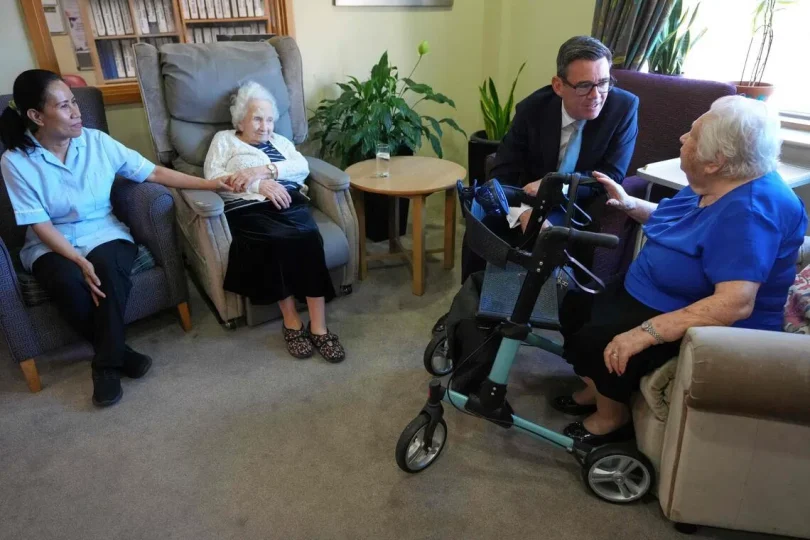
Speaking at a care home in north London less than two weeks after becoming prime minister, he said he was determined to tackle the issue of social care again “for my dad and the millions like him”.
And he stressed that he believed the system along with palliative care needed to be resolved before any future debate on legalising assisted dying.
A bill to legalise assisted dying failed in parliament in April after getting bogged down in Britain’s unelected upper house.
Care costs for the elderly and vulnerable often fall on their families, who can struggle to find the funds or are left shouldering the burden of caring for their loved ones.
“I think social care in England is as unfair as American healthcare,” Burnham said, adding that families often have to pay for “everything and it can completely leave them with nothing”.
Burnham was due to hold a cross-party meeting with the main opposition Conservatives and the Liberal Democrats later on July 29 seeking to find a consensus on the issue.
Tory leader Kemi Badenoch has already written to the prime minister asking him to rule out tax rises or increased borrowing to pay for his reforms.
The invitation to join the talks was not extended to Nigel Farage, leader of the anti-immigration Reform UK Party who accused Burnham of “conspiring behind closed doors” to “foist further tax rises on the country”.
Total expenditure on adult social care in England in 2024-5 reached £34.5 billion (S$59.3 billion), up from £28.4 billion in 2010-11, figures from the King’s Fund think tank showed.
According to Burnham, successive governments had failed to tackle reform of social care, seeing it as “too difficult” and politically risky.
It had been a “major dereliction of duty that parliament has not faced up to this”, he said.
Unlike the publicly funded National Health Service (NHS), which is struggling with long waiting lists and stretched resources, care for elderly and disabled people is largely privatised in Britain.
Burnham previously proposed the creation of a publicly funded National Care Service, which would be free at the point of use like the NHS, when he was health minister in 2009-10.
But the plan ran into trouble when political opponents dubbed a proposed compulsory levy on inheritances to fund it a “death tax”.
He said on July 29 that he was expediting a review of the sector ordered by his predecessor Keir Starmer.
He said he had asked for recommendations on developing a national care service in England to be brought forward to a year’s time rather than in 2028.
“I am not going to be deflected by the point scoring or the screaming headlines,” he said.
Liberal Democrat leader Ed Davey, whose son requires full-time care owing to disabilities, told BBC radio that families could contribute more with better support.
People often needed less hospital care and admissions to care homes could be delayed if families are “properly supported”, he said, adding “that can save huge amounts of money”.
Currently, the system for home and residential care is means-tested and local authorities, who are responsible for providing the services, are struggling to keep up with the demands of an ageing population.
The NHS’ chronic bed and staff shortages stem partly from its inability to discharge elderly and dependent patients who do not have social care in place. AFP