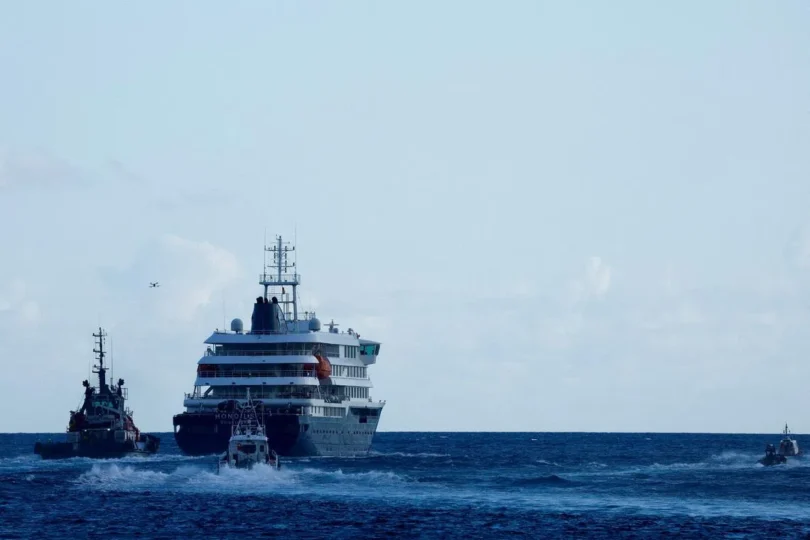
LONDON – Twenty-two British and other citizens who have been in quarantine in north-west England after leaving the cruise ship hit by a hantavirus outbreak were preparing to return home on May 13, officials said.
It comes as the UK Health Security Agency (UKHSA) also announced that 10 other Britons from South Atlantic islands linked to the MV Hondius vessel were to be brought to Britain in case they develop the illness.
The group of 10 – thought to be residents of the UK overseas territories of St Helena and Ascension Island – are being “brought to the UK to complete their self-isolation as a precautionary measure”, the UKHSA said.
In a statement late on May 12, it detailed plans to support the 22 quarantined in England – 20 British nationals, together with a German who is a UK resident, and a Japanese passenger – who will “shortly return home”.
They have been in quarantine since May 10 at a facility near Liverpool, after flying from Tenerife, where the MV Hondius was moored.
“Public health and clinical specialists have assessed each passenger’s individual circumstances, and, where it is safe and possible, tailored support packages will be provided to enable people to isolate at home,” the UKHSA said.
“Health protection teams across the UK will continue to monitor and support everyone after they leave the facility, with daily contact throughout the isolation period to ensure they can isolate safely.”
They are set to isolate for a further 42 days, Britain’s Press Association reported.
The outbreak of the rare hantavirus, for which no vaccines or specific treatments exist, aboard the MV Hondius has sparked international alarm after three passengers died, with a Frenchwoman also in a critical condition.
Yet, health officials have stressed that the global public health risk is low and rejected comparisons to the start of the Covid-19 pandemic.
The 10 people coming to Britain from the South Atlantic islands are understood to include people who left the cruise ship in St Helena, plus medical staff who have been in contact with them.
They are being brought to the UK because the infectious disease network within the state-run National Health Service in England “is well equipped to respond if they become unwell”, according to the UKHSA.
“Currently none of these contacts are symptomatic and this is precautionary to support communities in UK overseas territories,” it said. AFP