
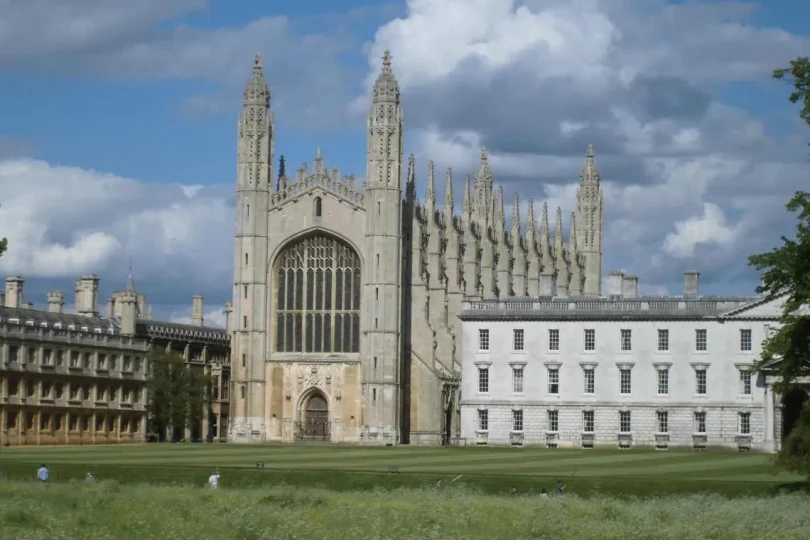
One of the most famous colleges at the University of Cambridge is introducing a string of measures to better hold to account senior academics accused of sexual harassment and bullying.
King’s College is hiring a senior barrister to oversee a review of its culture and is strengthening its human resources processes, Gillian Tett, the head of the college, told Bloomberg News.
The barrister’s report is due to be completed by the spring and King’s plans to make its findings public, Tett said.
“The real issue at stake is not just the fact that unseemly behaviour has happened in Cambridge and in Oxford,” Tett said. It is also that inappropriate behaviour “has gone on for a very long time and been swept under the carpet or normalised, rather than directly dealt with or confronted”.
In recent months, King’s has taken action against two senior male academics after internal investigations upheld allegations of sexual harassment, according to the Times, which first reported the situation.
Simon Goldhill, an internationally renowned classicist, resigned from the university in June. The disciplinary tribunal process is ongoing and restrictions have been imposed on Goldhill entering department spaces and events.
Geophysicist Herbert Huppert, an emeritus professor who is eminent in his field, was stripped of his college fellowship and is banned from university departments.
Both men had been based at King’s for decades. Neither responded to requests for comment.
Tett did not comment on either case. In general, she said, “it is clear that there are people within the university system that have suffered over the years, I’m deeply, deeply sorry for that.”
Bhaskar Vira, the university’s pro-vice-chancellor for education, said: “It is deeply upsetting that cases of sexual harassment still happen at Cambridge.”
He added: “We are committed to doing everything we can to improve our processes and recognise that accountability and continual improvement are critical.”
Cambridge and the University of Oxford each have a central university administration and dozens of individual colleges, which are independent legal entities.
According to people who have made complaints about sexual harassment and bullying, these fragmented systems have in some cases prevented concerns being shared between different parts of a university, making it harder to hold perpetrators to account.
The UK’s top universities, along with other British institutions, have downplayed a systemic problem with sexual harassment and bullying for years, according to Tett. She is one of the most senior figures at the universities to speak publicly after media investigations highlighted serious allegations against academics.
Cambridge’s central administration and colleges have agreed to review information-sharing arrangements, a university spokesperson said, along with other measures including developing a joint risk assessment and improving anti-harassment training for staff and students.
The work will start to be delivered in the next academic year, the spokesperson added.
“It really is time in 2026 to stand up and say very clearly we need to change culture, we need to signal that we are changing culture and that we want to create the most positive environment we can for higher education,” said Tett, a prominent journalist who became provost of King’s in 2023.
Tett said she had spoken to the heads of multiple other colleges at Cambridge and Oxford about problems with the way sexual harassment and bullying is dealt with.
Many want to strengthen reporting systems and address issues with emeritus professors whose prestigious positions create especially pronounced power imbalances, she said. Emeritus status is an honorific title awarded to some staff members on retirement, who tend to retain access to their colleges for meals and socialising.
“There is a real appetite for moving forward and looking at this,” she said.
In a Bloomberg investigation published in November, multiple women at Oxford said that male harassers had remained in elevated positions at the university for months or years after serious concerns were raised.
At Cambridge, King’s is bringing senior academics known as fellows within the remit of its HR system to improve accountability, Tett said. The college has also reviewed its internal processes to ensure it can investigate serious allegations effectively, she said.
The external review is intended to ensure King’s provides a safe and welcoming environment for all, Tett said. The barrister will look at bullying and harassment policies as part of the work.
It is a proactive step to show King’s is “not scared of being accountable”, but there will not be a “witch hunt”, she said. “King’s College is full of amazing people who mostly have good values and high standards of behaviour.”
Tett has also engaged with academic societies where some alleged perpetrators are members and have received additional honours over possible ways to share information more effectively. Huppert is a fellow of the Royal Society, the UK’s national academy of sciences, while Goldhill is a fellow at the British Academy, which promotes humanities and social sciences.
The British Academy will wait for Cambridge’s process to conclude to inform its own response on Goldhill, a spokesperson said, noting that the Academy is reliant on universities and other institutions sharing information about complaints procedures.
The body takes misconduct allegations very seriously and is not planning any major changes to its procedures, the spokesperson added.
The Royal Society consulted King’s about disciplinary action against Huppert following the Times’ recent reporting, a spokesperson said, but on legal advice the college was unable to provide any information. Cambridge academics informally raised concerns with the society in June 2020, but the body was advised there had been no formal investigation, the spokesperson said, adding that the society always keeps its processes under review.
Some students at King’s have proposed carrying out their own review of its anti-harassment processes, Tett said, adding that they will have the college’s support if they decide to go ahead.
King’s cannot address all the problems with the way harassment and bullying are handled by itself, she added. “It has to be an ecosystem discussion.” BLOOMBERG