
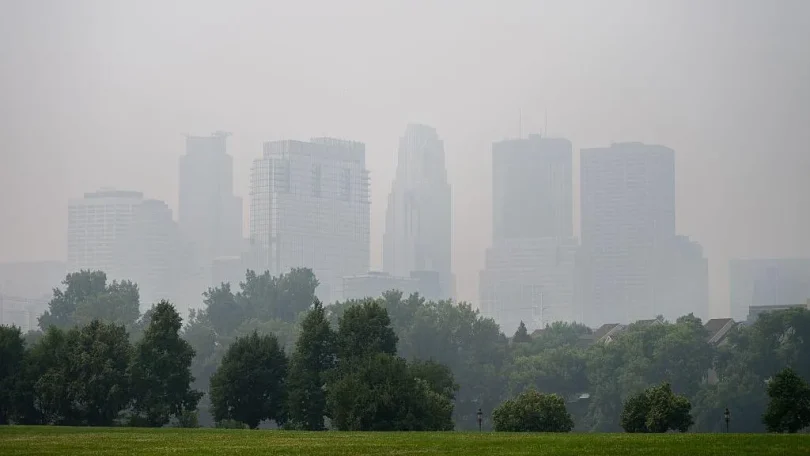
More than 800 wildfires are burning across Canada, sending thick smoke across the border and prompting air quality alerts in several northern US states, with authorities urging residents in some areas to remain indoors. According to the BBC, 858 wildfires are currently active across Canada, including 30 new blazes reported……
More than 800 wildfires are burning across Canada, sending thick smoke across the border and prompting air quality alerts in several northern US states, with authorities urging residents in some areas to remain indoors.
According to the BBC, 858 wildfires are currently active across Canada, including 30 new blazes reported on Thursday, with most of them burning out of control. Smoke from the fires has spread across the Upper Midwest, Great Lakes region and parts of the northeastern United States.
The US Air Quality Index has classified air quality in large parts of Michigan and Minnesota as “hazardous”, while western New York is experiencing “very unhealthy” conditions. Air quality in the New York City metropolitan area has also been rated “unhealthy”.
New York authorities have activated air quality emergency protocols and expanded heat emergency measures, making hundreds of cooling centres and KN95 masks available across the city.
The smoke is being driven south by northwesterly winds and could drift into New Jersey, where Sunday’s FIFA World Cup final is scheduled to be played. Forecasters, however, expect changing wind patterns by Monday to improve air quality across the northern US.
Swiss air quality monitoring firm IQAir said Detroit currently has the worst air quality in the world, followed by Minneapolis, Chicago and Toronto.
Read Also: 2026 W’Cup: Things To Know As South Africa Takes On Canada
In Canada, one of the largest fires in northern Ontario has forced evacuations in several First Nations communities. Namaygoosisagagun First Nation Chief Helen Paavola said an aerial survey showed her community had been “burnt to ashes.”
Republican lawmakers in Michigan have written to Canadian Prime Minister Mark Carney, urging stronger wildfire management after recurring smoke events over the past three years.
Responding to the criticism, Carney said Canada and the United States share a responsibility to tackle climate change and that his government remains in close communication with provincial authorities and affected communities.
Ontario Premier Doug Ford defended his government’s response, saying more than 150 fire crews are battling the blazes and pledged continued support, stating, “We will spend whatever it takes.”
Experts say wildfires are a natural part of Canada’s boreal forest ecosystem, but climate change has contributed to increasingly frequent and intense fire seasons, with major blazes spreading further east in recent years and producing heavier smoke over densely populated cities.