BY EHI BRAIMAH
Each time I discuss Nigeria’s rich cultural heritage with friends and colleagues, it evokes feelings of a broad colourful canvas of costumes, music, dances, and the visual arts, not to mention our foods and drinks.
When we extend the conversation to the rest of Africa, the world usually listens to our stories. Nigerian musicians are taking Afrobeats to international audiences; Nollywood productions are travelling across borders; African fashion designers are attracting global attention and writers are challenging conventional narratives about the continent.
These creative endeavours do more than entertain as they influence perceptions, shape identities and create economic opportunities.
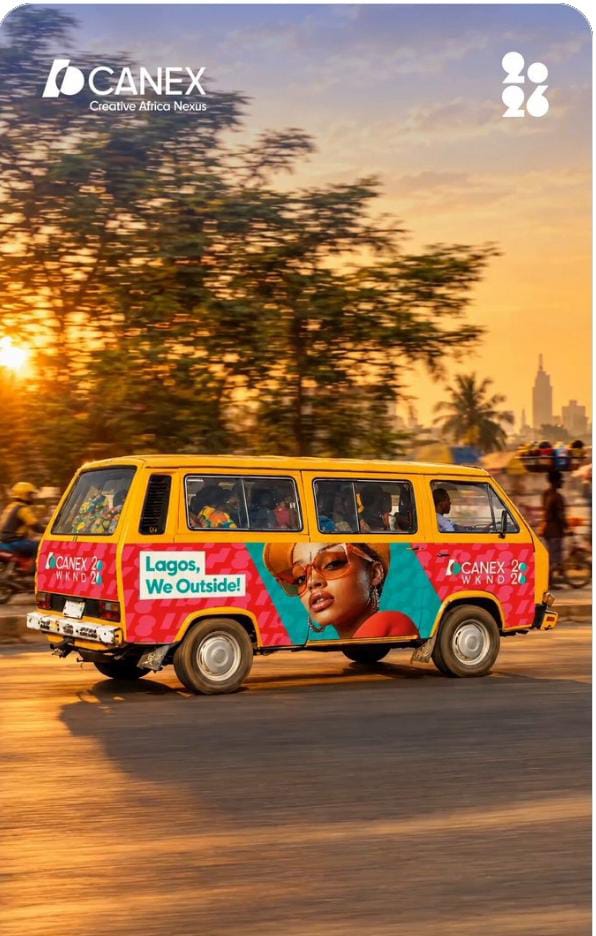
This is why the forthcoming Creative Africa Nexus Weekend (CANEX WKND) is particularly significant. Scheduled for November 5–8, 2026, at the Wole Soyinka Centre for Culture and Creative Arts in Lagos, the event will bring together creative professionals, investors, financiers, policymakers and business leaders from Africa and the diaspora.
Organised by the African Export-Import Bank (Afreximbank), in partnership with the Federal Government of Nigeria, the African Union Commission and the African Continental Free Trade Area (AfCFTA) Secretariat, CANEX WKND aims to connect African creative talent with investment, markets and commercial opportunities.
Its theme, “One People, United in Culture, Creating for the World: From FESTAC ’77 to CANEX ’27,” captures the relationship between cultural identity and economic ambition.
The event should be understood as more than a colourful gathering of artistes, performers and entrepreneurs. It presents an opportunity to rethink how Africa organises, finances and commercialises its creative industries.
Culture as an economic asset
For too long, discussions about Africa’s cultural heritage have concentrated on its historical and social significance. Those dimensions remain important, but culture also possesses considerable economic value. Music, film, fashion, publishing, visual arts, design, gastronomy and sport can generate income, create jobs, attract tourism and expand exports.
The global visibility of Afrobeats and Nollywood illustrates the possibilities. Nigerian music has developed international audiences, while the country’s film industry has established a distinctive presence in global entertainment. African fashion, cuisine and literature are also contributing to the continent’s growing cultural influence.
However, international popularity does not automatically translate into commensurate economic returns for creators and their home countries. For example, a song can become a global sensation without its creators possessing the commercial infrastructure required to maximise royalties.
The challenge, therefore, is to move from visibility to value creation. Africa must develop creative businesses that can produce consistently, compete internationally, protect their intellectual property and retain a greater share of the revenue generated by their work. This requires a combination of investment, professional management, appropriate regulation, reliable infrastructure and access to markets.
CANEX WKND offers a platform for bringing these elements together.
From FESTAC ’77 to a commercial future
Nigeria’s hosting of CANEX WKND carries historical significance. In 1977, Lagos hosted the Second World Black and African Festival of Arts and Culture, popularly known as FESTAC ’77. The festival assembled artistes, writers, musicians, performers and cultural representatives from Africa and the diaspora in a remarkable expression of Pan-African identity.
Culture journalist, enthusiast and practitioner, Jahman Anikulapo who is also the Editorial Director of Naija Times, an online newspaper, says FESTAC demonstrated the capacity of culture to unite people across geographical boundaries and historical experiences. According to him, FESTAC also affirmed the importance of African heritage in a world where the continent’s stories were frequently interpreted through external perspectives.
Almost half a century later, the central challenge has evolved. It is an opportunity for researchers to explore how Africa must preserve the spirit of cultural solidarity while building commercially sustainable creative industries.
The approaching 50th anniversary of FESTAC in 2027 provides an opportunity to assess what has been achieved and what remains unfinished. Cultural celebrations are valuable, but their legacies should extend beyond performances, exhibitions and commemorative ceremonies. They should inspire institutions, businesses and policies that enable creative professionals to build enduring careers.
What Lagos can learn from Algiers: Turning deals into lasting impact
The case for CANEX WKND is strengthened by the results recorded at its 2024 edition in Algiers, Algeria. Held from October 16 to 19, the gathering attracted nearly 4,000 participants from 81 countries, featured 108 exhibitors and facilitated and agreed deals valued at more than US$540 million, according to Afreximbank. These figures suggest that a creative economy platform can do more than bring artistes together; it can connect cultural production with finance, investment and commercial partnerships.
One of the most significant transactions was a €245 million global facility agreement with New World Television (NWTV) to part-finance its acquisition of sports broadcasting rights across 24 African countries. The agreement demonstrated the commercial value of sports content and the opportunities available when African businesses secure the resources to acquire and distribute premium media rights.
Afreximbank also announced a US$3 million financing facility for Mediwood Studios to support the expansion of Tunisia’s film industry. This targeted intervention highlighted the importance of financing production capacity, with potential implications for employment, skills development and the growth of a regional film ecosystem.
Another initiative, CANEX Presents the Angels, demonstrated how smaller creative enterprises could attract investment through direct engagement with potential backers. At the pitch session, angel investors committed US$350,000 to support three creative businesses. Cameroonian fashion designer Kibonen Nfi received a US$250,000 pledge from investor Moji Hunponu-Wusu, while a consortium committed a further US$100,000 towards investments involving Kibonen Nfi and Zimbabwean designers Pam Samasuwo-Nyawiri and Thulani Ngazimbi.
The event also invested in emerging African storytellers. CANEX Shorts selected three winners from 147 submissions for its short-film competition, with cash prizes awarded to filmmakers from Ghana, Kenya and Botswana. The CANEX Prize for Publishing in Africa recognised Cassava Republic Press for Female Fear Factory, a book by Pumla Dineo Gqola.
These initiatives connected creative recognition with opportunities for professional development, financing and market exposure. They also demonstrated the breadth of the creative economy, from broadcasting and film production to fashion, publishing and short-form storytelling. This is why the Lagos edition should facilitate similar and bigger deals.
Afreximbank has committed US$2 billion to support Africa’s creative industries over the 2024–2027 period. The challenge is to ensure that the commitment translates into accessible finance, viable businesses, stronger production capacity and sustainable employment across the continent.
CANEX WKND 2026 should build on Algiers by demonstrating that the platform can facilitate transactions and help turn financial commitments into enduring economic outcomes.
Financing talent and viable businesses
One of the most important barriers confronting African creative entrepreneurs is access to finance. Conventional lenders may consider creative businesses too risky because their assets are often intangible, revenues can be unpredictable and intellectual property is not always easy to value or use as collateral.
This financing gap prevents many businesses from expanding beyond small-scale operations. The CANEX Finance Summit and Deal Room provide opportunities for eligible creative businesses to present commercially viable projects to financiers and investors. For the Lagos edition, the priority should be to convert networking into transactions.
Investors need credible projects, transparent financial information and confidence that contractual obligations will be honoured. Entrepreneurs, in turn, need fair financing terms, mentorship and access to the expertise required to manage growth.
Not every creative idea will become a viable business, and not every project will attract investment. The objective should be to build a system in which promising enterprises can be assessed fairly and supported according to their commercial potential.
Governments and development finance institutions should also explore financing models suited to the creative sector, including guarantees, equity investment, revenue-based financing and facilities that recognise intellectual property as a potential source of economic value without abandoning sound commercial discipline.
Intellectual property and the value of ownership
Africa’s creative ambitions also depend on effective intellectual property protection. A creator’s work is an economic asset. Copyright, trademarks, licensing agreements and other legal protections help determine who can use that work, under what conditions and who receives payment. When these arrangements are weak or poorly enforced, creators risk losing income even when their work achieves widespread recognition.
Digital technology has expanded opportunities for African content to reach global audiences. Streaming services, social media, online publishing and digital marketplaces have reduced some traditional barriers to distribution. But they have also made it more important to understand licensing, royalties, digital rights management and the commercial terms governing the use of creative content.
While African governments must strengthen the institutions responsible for protecting intellectual property, there is also a need for stronger commercial literacy. Talent alone is not enough. Creators must understand contracts, negotiate distribution agreements, maintain records of ownership and distinguish between immediate exposure and long-term commercial value.
Africa should not be satisfied with exporting creativity while surrendering control over the assets that make it valuable.
AfCFTA and the opportunity of a continental market
Another reason CANEX WKND matters is its relationship with the African Continental Free Trade Area. Africa’s creative entrepreneurs need access to markets beyond their national borders. The AfCFTA provides a framework for expanding intra-African trade, including trade in services. However, the existence of a continental trade agreement does not automatically eliminate practical barriers.
Differences in regulations, payment systems, customs procedures, professional standards, distribution infrastructure and consumer markets can still complicate cross-border business. Language differences also require attention, particularly when creative products move between Anglophone, Francophone, Lusophone and Arabic-speaking markets.
CANEX WKND can help bridge these gaps by bringing businesses together, encouraging partnerships and identifying practical obstacles that policymakers need to address.
The objective should be to create a more integrated African marketplace in which talent, capital, services and creative products can move more efficiently. Such a market would also strengthen the continent’s negotiating position with international distributors, technology platforms and investors.
Lagos must deliver more than hospitality
Hosting CANEX WKND provides Nigeria with an opportunity to demonstrate its creative capacity and strengthen its position as a meeting point for African commerce and culture.
Lagos is an appropriate setting. Its music, film, fashion, publishing, advertising, entertainment and technology ecosystems provide a foundation for engagement between creative professionals and commercial partners. The city also offers international participants access to Nigerian entrepreneurs and a wider network of African businesses.
But the benefits of hosting a major international gathering should not be measured only by attendance, hotel occupancy, media coverage or the visibility of prominent personalities. Nigeria must ensure that local creative businesses participate meaningfully. Small and medium-sized enterprises should be able to meet prospective buyers, access technical expertise, explore financing and build partnerships that survive beyond the event. Emerging artistes and entrepreneurs should have opportunities to learn from established professionals and investors.
The government should also consider what happens after the delegates leave. Improved coordination among relevant ministries, stronger industry data, clearer regulations and more accessible support for creative businesses would provide a more durable legacy than a successful four-day programme.
This matters particularly as Nigeria prepares to host the Intra-African Trade Fair in 2027. CANEX WKND can help build relationships and demonstrate the organisational capacity required for a larger continental trade gathering.
Technology and the next generation
Technology is reshaping the creative economy. Artificial intelligence, digital production tools, online distribution and new payment systems are changing how content is created, marketed, distributed and monetised.
For Africa’s young creative professionals, these developments offer opportunities to reach global audiences without necessarily depending on traditional gatekeepers. However, they also introduce questions about copyright, consent, fair remuneration, data ownership and the use of creative material to train artificial intelligence systems.
African policymakers and industry leaders should ensure that innovation does not undermine the rights of the people whose creativity gives these technologies value.
Investment in skills is equally important. Training in production, design, digital marketing, business management, financial literacy and intellectual property can help transform informal creative activity into sustainable enterprise. Access to affordable broadband, reliable electricity, appropriate workspaces and production facilities remains essential.
It must be noted that Nigeria’s minsters, Jumoke Oduwole (Investment, Trade and Industry), and Hannatu Musawa (Art, Culture, Tourism and the Creative Economy) have been strong advocates for a creative economy that is treated as a serious contributor to our economic diversification.
Measuring success beyond the spectacle
CANEX WKND provides a valuable opportunity to celebrate African creativity, but the event’s most important achievements may not be visible on the concert stage or the fashion runway. The Lagos edition should establish a clear framework for measuring success. Organisers and relevant institutions should report the value of deals announced, the financing actually disbursed, the number of businesses supported, the jobs created or sustained, the markets entered and the cross-border contracts completed.
They should also track outcomes for young people, women-led enterprises and emerging creative professionals. These indicators would provide a clearer picture of whether CANEX is strengthening the foundations of the creative economy or merely generating temporary excitement.
A post-event scorecard, followed by periodic progress reports, would distinguish announcements from completed transactions and identify areas where further intervention is required. Such transparency would strengthen investor confidence and help policymakers determine which financing models produce the greatest economic value.
CANEX WKND 2026 offers an opportunity to advance that agenda. Its significance lies in helping to build an economy in which African stories, designs, performances and ideas generate sustainable value for African people.
Braimah is a PR specialist, marketing strategist, and publisher/editor-in-chief of Naija Times (www.ntm.ng) and Lagos Post (www.lagospost.ng). He is also a strong advocate of African prosperity, and can be reached through [email protected]