
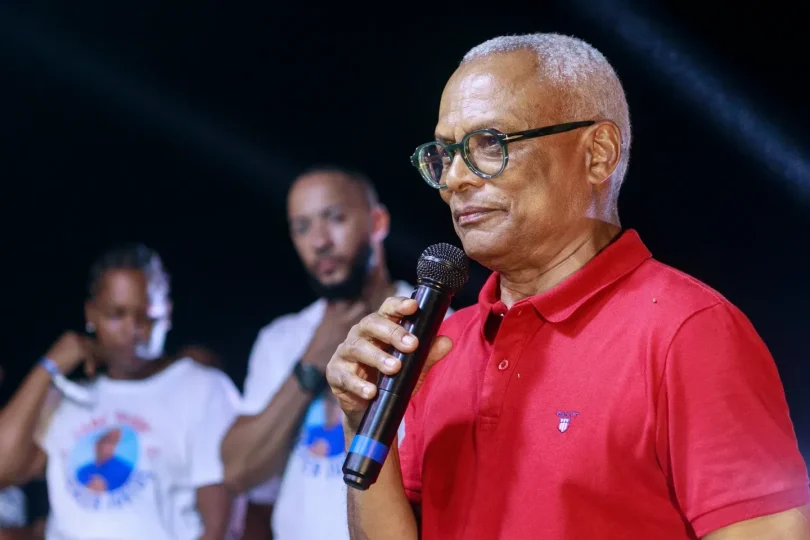
The election, taking place across the West African island nation, is widely expected to be a contest between Neves, 66, and Amado, 61, a lawyer and former justice minister, who are backed by the country’s two major political parties.
Voting is scheduled to close at 7:00 p.m. GMT, with provisional results expected later in the night.
Some voters also expressed optimism about the peaceful conduct of the election, describing the atmosphere at polling stations as calm.
Nearly 420,000 registered voters are eligible to participate in the exercise, which is being monitored by approximately 150 international observers from the Economic Community of West African States, ECOWAS, the African Union and the European Union.
Neves, who was first elected president in 2021, previously served as prime minister between 2001 and 2016. He is backed by the African Party for the Independence of Cape Verde (PAICV), which won the legislative elections in May.
During his campaign, the incumbent stated the need for experienced leadership, particularly amid growing international uncertainty, arguing that the country requires a president capable of providing stability and national direction.
His major challenger, Amado, is supported by the opposition Movement for Democracy (MpD). Campaigning under the slogan “Listen to Cape Verde,” she has presented her candidacy as an opportunity to expand women’s participation in the country’s highest political office.
She argued that electing a woman president would send a powerful message to young women and girls that no position in government is beyond their reach.
The other candidates include 45-year-old surgeon Gilson Alves, who has campaigned on an anti-corruption platform and proposed controversial measures, including allowing gun ownership and reinstating the death penalty.
Unlike several other West African countries that have experienced political instability and contentious elections, Cape Verde has maintained a reputation for democratic stability, peaceful political transitions and relatively strong governance.
The island nation, located in the Atlantic Ocean approximately 600 kilometres off the coast of Senegal, consists of 10 volcanic islands and is increasingly recognised as a major tourist destination.
Its democratic standing was further highlighted by the 2026 Ibrahim Index of African Governance, which ranked the country third among 54 African nations.
Cape Verde operates a semi-presidential system in which executive authority is largely exercised by the prime minister, while the president serves primarily as head of state, constitutionally responsible for safeguarding national unity and ensuring respect for the constitution.
Despite its reputation for stability and recent economic progress, the country continues to face significant challenges, including social inequality, geographical isolation, and limited affordable transportation between its islands.
The World Bank recently classified Cape Verde as an upper-middle-income country, reflecting economic growth driven largely by its tourism industry.
However, rising living costs, increasing fuel prices and youth unemployment remain major concerns among citizens.
Both leading candidates have pledged to improve air and sea transportation between the islands and expand tourist accommodation as part of broader efforts to strengthen the economy.