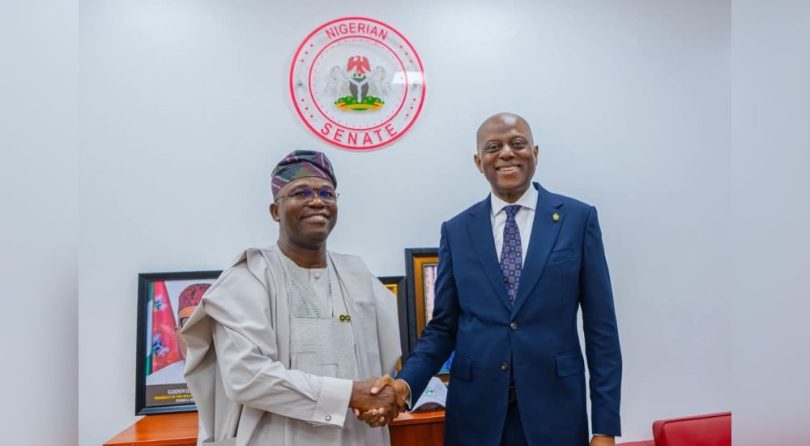
Central Bank of Nigeria (CBN) Governor, Olayemi Cardoso, has defended the apex bank’s ongoing monetary and financial sector reforms, telling lawmakers that the measures were yielding positive results as inflation moderated, the foreign exchange market stabilised and confidence in the economy improved.
Cardoso spoke while presenting the CBN’s First Half 2026 Statutory Briefing to the Senate Committee on Banking, Insurance and Other Financial Institutions.
The CBN governor highlighted the Bank’s achievements during the first six months of the year, citing sustained progress in inflation moderation, stability in the foreign exchange market, growth in external reserves, resilience of the banking sector and reforms aimed at strengthening Nigeria’s financial market infrastructure.
He described the successful completion of the Banking Sector Recapitalisation Programme as one of the Bank’s most significant achievements, noting that the exercise had enhanced the resilience, lending capacity and competitiveness of Nigerian banks.
According to Cardoso, the recapitalisation programme has positioned the banking industry to play a stronger role in supporting economic growth, financing businesses and withstanding domestic and external shocks.
The CBN governor also reaffirmed the Bank’s commitment to restoring price stability and achieving single-digit inflation over the medium term through evidence-based monetary policy and stronger policy transmission mechanisms.
He said the apex bank would remain focused on policies that would sustain macroeconomic stability while supporting long-term economic growth.
Looking ahead to the second half of 2026, Cardoso identified the Bank’s priorities to include post-recapitalisation supervision of banks, deeper reforms in the foreign exchange market, implementation of an inflation-targeting framework, execution of the Payments System Vision 2028, strengthening cybersecurity and safeguarding financial system stability.
He stressed that the CBN would continue to make decisions based on data and empirical evidence in line with its statutory mandate, adding that all policy actions would be guided by the long-term interests of Nigerians.
Expressing optimism about the country’s economic prospects, Cardoso said recent improvements in key macroeconomic indicators showed that the Bank’s reform agenda was producing positive outcomes and laying the foundation for sustainable economic growth.
The Chairman of the Senate Committee on Banking, Insurance and Other Financial Institutions, Senator Mukhail Adetokunbo Abiru, commended the CBN for its efforts in restoring stability to the foreign exchange market.
He also praised the Bank for improving liquidity and reducing distortions in the foreign exchange market, noting that the reforms had contributed to greater confidence among investors and market participants.
Abiru assured the CBN of the committee’s continued legislative support for policies and initiatives aimed at strengthening the financial system and promoting sustainable economic development.