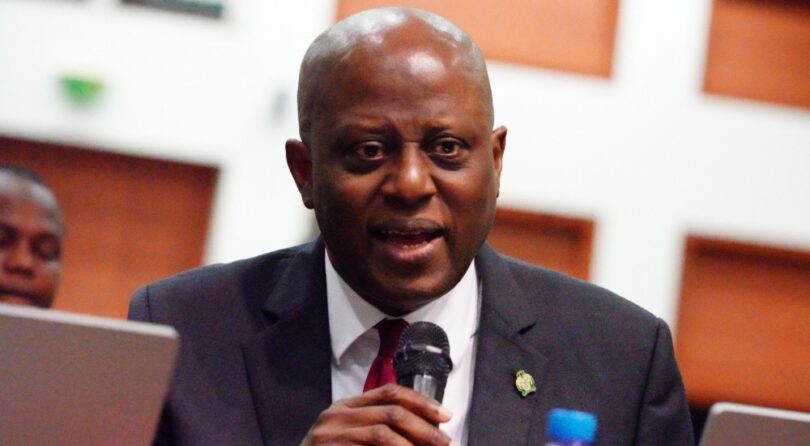
The Governor of the Central Bank of Nigeria (CBN), Olayemi Cardoso, says Nigeria’s economic reforms, policy transparency and effective communication have helped restore investor confidence, ease inflation and strengthen external reserves.
Cardoso spoke during a panel sessions on global economic resilience and risks, and how central banks make decisions, at the 2026 IMF-World Bank Annual Meetings in Bangkok, Thailand.
He said the removal of costly subsidies, foreign exchange reforms and tighter monetary policy had helped address longstanding economic distortions, despite the initial inflationary pressures.
According to him, inflation, which rose to about 34 per cent, has gradually declined to around 15 per cent, while Nigeria’s external reserves have reached their highest level in 18 years.
Cardoso explained that the CBN’s aggressive monetary tightening in 2024, including a 400-basis-point rate increase at one point, was necessary to tackle inflation and restore confidence in the economy.
He said the recent interest rate reduction was informed by the need to improve monetary policy transmission, noting that earlier rate adjustments were not fully reflected across the financial system.
The CBN governor added that the decision did not trigger the expected market turmoil because investors had regained confidence in the bank’s credibility, consistency and communication.
Speaking on how central banks make decisions, Cardoso identified transparency, independent thinking and effective communication as essential to credible monetary policy.
He said independent-minded external members of the CBN’s Monetary Policy Committee bring diverse perspectives, challenge assumptions and help prevent groupthink.
Cardoso stressed that markets were more likely to accept unexpected policy decisions when authorities clearly explained the reasons behind them.
He also highlighted the importance of coordination between fiscal and monetary authorities in strengthening economic stability and sustaining investor confidence.
Meanwhile, the International Monetary Fund Managing Director, Kristalina Georgieva warned that global economic resilience remained fragile despite projected growth of 3.1 per cent in 2026.
She said growth was becoming increasingly uneven, with economies benefiting from artificial intelligence investment performing better than countries affected by conflict, rising energy costs and other external shocks.
Georgieva urged governments to rebuild fiscal buffers, reduce excessive debt and pursue structural reforms to strengthen their economies against future shocks.
The discussions came as Nigeria seeks to sustain the gains from its economic reforms while addressing elevated living costs and maintaining progress in reducing inflation.
Other participants in the global economic resilience session included Kyriakos Pierrakakis, President of the Eurogroup and Greece’s Minister of Economy and Finance; Thailand’s Deputy Prime Minister and Finance Minister, Ekniti Nitithanprapas and Luis Caputo, Argentina’s Minister of Economy.
The central banking session was moderated by IMF First Deputy Managing Director, Dan Katz and featured Swiss National Bank Chairman, Martin Schlegel and Banque de France Governor, Emmanuel Moulin.