
The Central Bank of Nigeria (CBN) has challenged financial technology companies to develop targeted products and services for about 40 million Nigerians living with disabilities, describing the underserved population as a significant opportunity for deeper financial inclusion and fintech growth.
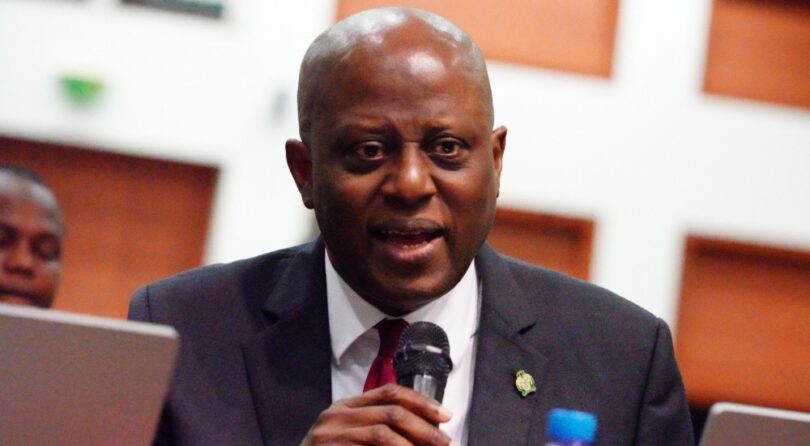
CBN Governor, Olayemi Cardoso, represented by the Head of the Innovation Management Division at the apex bank, Abiodun Olalekan Okunola, made the call at Nigeria Fintech Week 2026 in Lagos.
Cardoso said Nigeria’s financial system had yet to sufficiently innovate around the specific needs of persons with disabilities, leaving millions of potential customers underserved despite their participation in the formal financial system.
He urged fintech operators and other financial institutions to move beyond broad-based digital financial services and develop solutions that address the practical challenges faced by people with different forms of disabilities.
“Many people may not know that there are about 40 million Nigerians that are persons living with disability. Our financial system, we have not innovated to take care of them,” Cardoso said.
According to him, the gap presents both a financial inclusion challenge and a potential commercial opportunity for fintech companies capable of designing accessible and customer-focused solutions.
“So 40 million people excluded, not having targeted technological solutions to meet their needs. I’m sure you’re thinking already, there’s a lot of money to be made there,” he said.
The CBN Governor said the apex bank’s engagement with the National Agency for Persons with Disabilities had highlighted significant shortcomings in the ability of financial institutions to adequately serve customers living with disabilities.
He noted that financial exclusion among persons with disabilities was not limited to a lack of access to digital platforms, but also involved the way customers are treated when they interact physically with banks and other financial institutions.
Cardoso cited the experience of visually impaired customers who may have substantial balances in their bank accounts but could face difficulties accessing services or navigating banking processes.
“Blind people have money in their accounts. They go to the bank. When they get to the bank teller, the first thing they see is somebody coming to beg, even if that person has N20m in their account, they do not treat them well,” he said.
He said financial institutions therefore needed to improve staff training and customer-service practices to ensure that persons with disabilities were treated with dignity and provided with appropriate assistance when accessing financial services.
The CBN Governor also identified challenges associated with the increasing reliance on biometric identification, particularly fingerprint authentication, as another area requiring greater innovation.
He pointed to customers whose fingerprints may have been damaged or become unavailable as a result of certain medical conditions, making conventional fingerprint-based identification difficult or impossible.
“They don’t have fingerprints. So what that means is that we also must innovate so that perhaps we start using their, you know, irises or something to do identity,” he said.
Cardoso’s comments underscore the need for financial technology providers to consider multiple forms of authentication and accessibility when developing digital banking, payments and identity solutions.
He said the financial system could not achieve broad-based inclusion if technology continued to be designed around the needs of the majority while overlooking customers whose physical or other circumstances required alternative methods of accessing financial services.
The CBN Governor identified exclusion as the third major “brake” that must be removed from the financial system, alongside fragmentation and a deficit of trust.
He called on fintech companies to view financial inclusion not only as a regulatory or social responsibility but also as an opportunity to develop commercially viable products for underserved segments of the population.
The call comes as Nigeria’s fintech ecosystem continues to expand across payments, digital banking, lending, savings, wealth management and other financial services, increasing the importance of designing platforms that can serve a broader range of customers.
For persons with disabilities, such innovation could include more accessible digital interfaces, alternative authentication mechanisms, assistive technologies, accessible customer-support channels and financial products designed around specific mobility, visual, hearing or other accessibility requirements.
The CBN’s position also places greater emphasis on the role of financial institutions in ensuring that technological innovation translates into meaningful access for underserved customers.
By addressing both technological and human barriers, financial institutions could potentially expand their customer base while helping to reduce the financial exclusion experienced by millions of Nigerians living with disabilities.
The apex bank therefore expects fintech operators and other stakeholders to explore the needs of the underserved population and develop solutions that can make financial services more accessible, inclusive and responsive to different customer requirements.