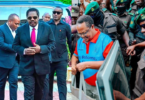
The groups said eyewitnesses gave account of how Mr Sowore was allegedly dragged and manhandled by security personnel in the presence of lawyers, supporters and members of the public within the court premises.
Civil society groups – the Civil Society Legislative Advocacy Centre (CISLAC) and the Human and Environmental Development Agenda (HEDA Resource) – have condemned the reported assault of Sahara Reporters Publisher and activist Omoyele Sowore by security operatives at the Federal High Court in Abuja.
They warned that such actions could undermine public confidence in the judiciary and the rule of law.
The organisations also expressed concern over the lynching of a woman accused of child theft in Kaduna State, describing the two incidents as troubling examples of growing disregard for due process and human rights.
In a statement shared with PREMIUM TIMES on Thursday, CISLAC’s Executive Director and Head of Transparency International Nigeria, Auwal Musa, said reports that security operatives used excessive force against Mr Sowore after court proceedings raised serious concerns about respect for constitutional rights and the conduct of law enforcement agencies.
According to CISLAC, eyewitnesses alleged that Mr Sowore was dragged and manhandled by security personnel in the presence of lawyers, supporters and members of the public within the court premises.
Mr Musa who is popularly known as Rafsanjani explained that the conduct by security personnel within a courtroom environment should reflect respect for human dignity and due process.
“The credibility of the rule of law depends not only on legal procedures but also on public confidence in the fairness and neutrality of judicial processes,” he said.
“When courtroom conduct by security agents appears excessive, intimidating or politically motivated, it risks eroding public trust in the justice system, especially in sensitive cases involving activists, journalists and government critics. Courts must remain symbols of justice, fairness and impartiality,” he said.
He stated that the presence and conduct of heavily armed security personnel in and around the courtroom could create the impression of punishment before conviction and weaken public confidence in judicial proceedings.
According to him, intimidation or attacks on citizens within court premises threaten the sanctity of the judiciary and contribute to a shrinking civic space.
“No democracy can thrive where courts become arenas for violence, intimidation and excessive use of force,” he added.
CISLAC also condemned the killing of Ummulkhairi Muhammad in Maraban Jos, Kaduna State, on 21 June.
The organisation said reports indicated that Ms Muhammad, who had been accused of child theft, was taken into police custody for her protection before an angry mob allegedly overpowered security personnel, dragged her out of custody, killed her and set her body ablaze.
Rafsanjani described the incident as a tragic example of the growing prevalence of mob justice and the inability of state institutions to protect citizens, even when they are under official custody.
He warned that the combination of alleged political repression, mob violence and institutional weaknesses poses a threat to Nigeria’s democratic stability, social cohesion and human rights record.
CISLAC called for independent, impartial and transparent investigations into both incidents and urged authorities to ensure that anyone found responsible is held accountable.
The organisation also urged the government to strengthen protections for civic freedoms, safeguard judicial independence and improve the capacity of security agencies to protect lives and uphold the rule of law.
HEDA, in a separate statement on Thursday by its chairman, Olanrewaju Suraju, expressed concern over reports that operatives of the State Security Service (SSS) prevented lawyers, supporters and members of the public from accessing the courtroom during proceedings involving Mr Sowore on Wednesday.
Mr Suraju said the allegations were particularly troubling given earlier reports that the activist had been forcefully handled by security operatives during a previous court appearance.
According to him, if confirmed, such actions would undermine public confidence in the administration of justice and fall short of the standards expected of security agencies in a constitutional democracy.
“Courts are public institutions established to uphold justice and fairness and should remain accessible to litigants, lawyers, journalists, observers and members of the public. Any action that creates fear or restricts lawful access to court proceedings threatens the openness and transparency that are essential to the judicial process,” he said.
HEDA noted that the rights to fair hearing, freedom of expression, freedom of association and access to justice are guaranteed by the Constitution and protected by international human rights instruments to which Nigeria is a signatory.
The organisation called on the SSS leadership to investigate the reported incidents and ensure accountability where misconduct is established.
“We call on the leadership of the DSS to investigate the reported incidents and ensure accountability where misconduct is established. The agency must guarantee that lawyers, journalists, civil society actors, political associates and members of the public are not subjected to intimidation or unlawful restrictions while attending court proceedings,” Mr Suraju stated.
He added that courtrooms must remain places of justice and constitutional order rather than “theatres of fear.”
Prior to what happened in court on Wednesday, SSS had, however, said it was investigating the incident that followed Mr Sowore’s remand.
In a statement on Tuesday, the agency explained that its director-general had ordered an immediate investigation into the conduct of operatives seen in videos that circulated after the court proceedings.
The SSS stated that it had taken note of public concerns over the confrontation involving Mr Sowore, his supporters and security personnel at the court.
“Although at the end of the saga, he curiously opted for a DSS vehicle instead of that of the Correctional Service, the Director General has ordered an immediate investigation into the alleged conduct of Service operatives involved in the incident,” the agency said.
The service also maintained that Mr Sowore’s detention was a consequence of court proceedings rather than any action taken by its operatives.