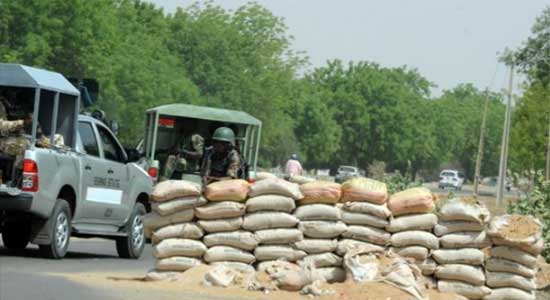
A citizen, Chinedu Agbodike, has filed a fundamental rights suit against the Federal Government and the Nigerian Army over what he described as the indiscriminate proliferation of military checkpoints and roadblocks across the South-East geopolitical zone.
The suit, filed before the High Court of Enugu State on June 17, 2026, was brought by Agbodike for himself and on behalf of citizens of Anambra, Enugu, Ebonyi, Imo and Abia states.
Listed as respondents in the action are the Chief of Army Staff, the Nigerian Army, the Attorney-General of the Federation and the Federal Government of Nigeria.
Counsel to the applicant are Aloy Ejimakor, P.N. Agazie, B.C. Anys, B.K. Agazie, Chinwe Agazie, Eguzoribe Ozioma, E.C. Eze and Iloanya Florence.
In the suit, the applicant is asking the court to declare that the alleged indiscriminate deployment of military checkpoints and roadblocks in the South-East, which he claims has resulted in harassment, extortion and arbitrary arrests, constitutes a violation of the fundamental rights of citizens in the region.
He is also seeking a declaration that the routine deployment of military personnel for checkpoint duties and roadblock operations in Anambra, Enugu, Ebonyi, Imo and Abia states is illegal, unconstitutional and outside the proper role of the military in internal security matters.
According to the suit, the applicant contends that the alleged assumption of internal policing functions by the Chief of Army Staff and the Nigerian Army amounts to an unlawful usurpation of powers constitutionally vested in the Nigeria Police Force under Section 214 of the 1999 Constitution.
He further argues that the alleged militarisation of the South-East constitutes an unjustifiable and disproportionate interference with the rights to freedom of movement, personal liberty, human dignity and freedom from discrimination guaranteed under Chapter IV of the Constitution.
The applicant is also asking the court to declare that the alleged profiling and targeting of citizens at military checkpoints and roadblocks in the South-East on the basis of ethnicity, age, mode of dressing, hairstyle, tattoos, language, physical appearance or perceived affiliation is unconstitutional, illegal, oppressive and a violation of Section 42 of the Constitution.
In one of the reliefs, he asks the court for “a declaration that the discriminatory profiling and targeting of citizens by the 1st and 2nd Respondents at various military checkpoints/roadblocks on the roads of Enugu, Abia, Ebonyi, Anambra and Imo States on account of their ethnicity, age, mode of dressing, hairstyle, tattoos, language, physical appearance or perceived affiliations is unconstitutional, illegal, oppressive and a violation of their constitutional rights under Chapter IV of the Constitution, particularly Section 42 of the 1999 Constitution as amended.”
The applicant is further seeking an order directing the Chief of Army Staff, the Nigerian Army and the Attorney-General of the Federation to immediately dismantle, remove and discontinue all military checkpoints and routine roadblocks operating on federal and state roads within the five South-East states, except where such deployments are specifically authorised by law and justified by exceptional security circumstances.
He also wants the court to direct the Attorney-General of the Federation and Minister of Justice to establish a panel to investigate alleged human rights violations said to have been committed by military personnel at checkpoints in the South-East.
Agbodike is also demanding ₦500 billion as exemplary, aggravated and general damages against the respondents jointly and severally for what he described as widespread and continuing violations of the fundamental rights of citizens of the South-East region.
The suit places before the court the question of whether the continued deployment of soldiers for routine checkpoint operations in the South-East is compatible with constitutional guarantees of liberty, dignity, movement and non-discrimination, and whether such deployments amount to military takeover of police functions in the region.