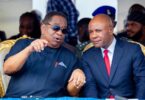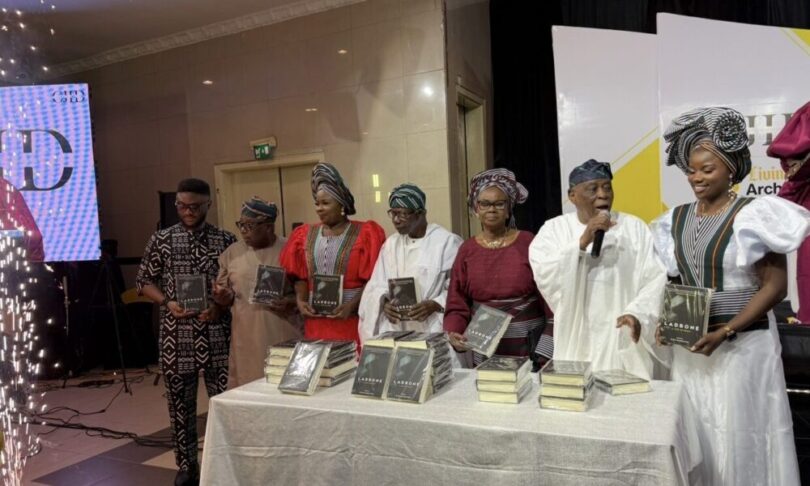
Dapo Olorunyomi, publisher of PREMIUM TIMES and chief executive officer of CJID, said the initiative would digitise and preserve the works and legacies of people who shaped journalism across the continent.
The Centre for Journalism Innovation and Development (CJID), on Thursday, launched its Living Archives Initiative, a project aimed at preserving Africa’s media history.
“Among its broader goals is to digitise and preserve the works, the times, and the personalities that give meaning to our parts of the region, that is, the African region,” Mr Olorunyomi said at the event in Lagos on Thursday.
He said CJID chose Mr Bonuola as the first subject because of his contributions to Nigerian journalism and his continued relevance to the profession.
“We are grateful for his labour of love,” said Dapo Olorunyomi, PREMIUM TIMES publisher and CEO, CJID.
“And fittingly, we thought to begin from our own constituency, the media, and with someone who remains a veteran on active duty, just as inescapable, Lade Bonuola,” he said.
The initiative seeks to address gaps in Africa’s journalistic memory, where newspaper records, personal papers, photographs, broadcast recordings and first-hand accounts are often scattered, deteriorating or inaccessible.
The launch coincided with the unveiling of ‘Lade Bonuola: A Life in Print,’ a collection of essays documenting the veteran journalist’s career and contributions to the profession.
Mr Olorunyomi described Mr Bonuola as “perhaps the most remarkable of the most consequential editor of the late 20th century history of the Nigerian print press.”
The book, according to him, marks 50 years of Mr Bonuola’s professional career, which began at the Daily Times in 1976 and continued through The Guardian, The Comet and The Compass.
It examines six aspects of his life, including his commitment to excellence, editorial expertise, mentorship, courage and contributions beyond the newsroom.
Mr Olorunyomi also used the occasion to celebrate Mr Bonuola’s 80th birthday, wishing him continued good health and many more years of service to journalism and Nigeria.
Friends, family and colleagues, including Olusegun Osoba, former governor of Ogun State and veteran journalist; Motunrayo Alaka, executive director and chief executive officer of the Wole Soyinka Centre for Investigative Journalism (WSCIJ); Ropo Sekoni, professor of semiotics and African literature, and Idowu Obasa, chairman of the PREMIUM TIMES board of directors.
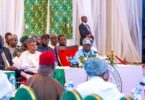
Dapo Olorunyomi, PREMIUM TIMES publisher; Motunrayo Alaka, executive director and chief executive officer of the Wole Soyinka Centre for Investigative Journalism (WSCIJ); Ropo Sekoni, professor of semiotics and African literature; Idowu Obasa, chairman, PREMIUM TIMES board of directors, and media colleagues, at the launching of the Living Archives Initiative, in Lagos on Thursday.
Other notable personalities at the event includ Frank Keurhorst, consul-general of the Netherlands in Lagos; Dipo Ajayi and Kunle Ajibade, veteran journalist and former editor of The News magazine. They joined former colleagues from The Guardian to celebrate Mr Bonuola on his 80th birthday and for his contributions to Nigerian journalism.
Mr Osoba recalled Mr Bonuola’s uncompromising commitment to editorial excellence, recounting their frequent disagreements when he was deputy editor of the Sunday Times and Mr Bonuola served as sub-editor.
He said Mr Bonuola insisted on correcting grammatical and punctuation errors, sometimes delaying production as he worked to perfect stories before publication.
“I will keep telling him, I have a deadline, I have a deadline,” Mr Osoba recalled, adding that he often reminded Mr Bonuola that “If you produce the best paper and it’s not out in time, you’re a failure.”
He described Mr Bonuola as a serious-minded intellectual whose attention to detail helped raise editorial standards. Mr Osoba also recalled recommending him to become the first editor of The Guardian, where he said the veteran journalist helped establish standards that other newspapers later followed.
Another colleague, Mr Ajayi recalled how Mr Bonuola helped him after he was taken for interrogation following the assassination of then-Head of State Murtala Muhammed on 13 February 1976.
Mr Ajayi, who was acting editor of the Daily Times, said security operatives questioned him after the newspaper published vivid pictures of the assassination scene, suspecting that the paper had prior knowledge of the coup.
He said Mr Bonuola sent a dispatch rider to follow the vehicle taking him away and establish where he had been taken. He also contacted Mr Ajayi’s family as efforts were made to secure his release.
Mr Ajayi recalled that he was interrogated until late at night and was about to be taken to a detention cell when an order came for his release.
“Thank you, Lade, for that kindness on that day. God bless you on your 80th birthday. I wish you sound health and a graceful old age,” he said.
Mr Ajibade, former editor of The News magazine, described Mr Bonuola as a journalist committed to excellence, truth and discipline.
Reviewing Lade Bonuola: A Life in Print, Mr Ajibade said the veteran journalist closely followed developments in the international media, particularly in the United States and the United Kingdom. He also admired journalists such as Christiane Amanpour and regularly read books on journalism and autobiographies.
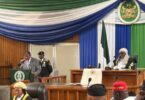
Kunle Ajibade reviews the book, Ladbone: A Life in Print in Lagos on Thursday.
Chairman of the occasion, former Governor of Ogun State Olusegun Osoba unveils Ladbone: A Life in Print.
Mr Ajibade said Mr Bonuola believed newspapers should be readable and inventive and “truthful, not neutral”. He also highlighted Mr Bonuola’s emphasis on preserving newspaper archives and maintaining libraries.
He said Mr Bonuola’s strict approach to discipline extended to his home, where he raised his children with firm rules and responsibilities.