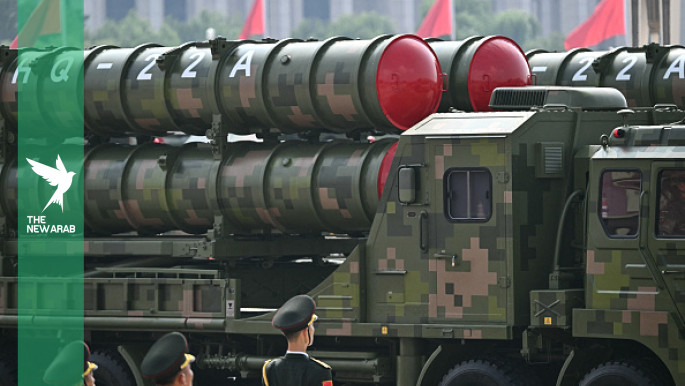
China is reportedly planning to deliver MANPADS to Iran, US intelligence says, amid rising tensions and ongoing negotiations with Washington. [Getty]
US intelligence indicates China is preparing to deliver new air defense systems to Iran within the next few weeks, CNN reported late on Friday, citing three people familiar with recent intelligence assessments.
The network said there are indications that Beijing is working to route the shipments through third countries to mask their origin.
The US State Department, the White House, the Chinese embassy in Washington and China’s foreign ministry did not respond following the CNN report.
Beijing is preparing to transfer shoulder-fired anti-air missile systems known as MANPADs, CNN said, citing sources it did not name.
The US and Iran are set to hold high-level negotiations on Saturday in Pakistan’s capital Islamabad, seeking ways to end their six-week-old war.
After prodding China, which is more reliant on Persian Gulf oil than the US, to get involved in reopening the choked-off Strait of Hormuz, President Donald Trump told the French news outlet Agence France-Presse this week that he believed China played a part in encouraging Iran to agree to this week’s temporary truce.
According to AP news agency, citing three diplomats who were familiar with China’s behind-the-scenes efforts, reported that Beijing, the biggest purchaser of Iranian oil, used its leverage to urge the Iranians back to the negotiating table.
Mao Ning, a Chinese foreign ministry spokesperson, told reporters this week that China “has worked actively to help bring about an end to the conflict.”
The Chinese economy is already feeling pressure from Iran’s effective shuttering of the Strait of Hormuz, where about 20% of the world’s crude normally flows.
The blockade is having an enormous impact on Asia, a factor that seems to have informed the Chinese government’s efforts to consult with Pakistan to help mediate a two-week ceasefire.
Chinese officials are cognizant that a lasting war threatens to have real impact on Beijing’s bottom line.
Premier Li Qiang announced last month that the government was projecting relatively modest 4.5% to 5% economic growth this year during a property slump and growing uncertainty around the globe. It’s the lowest growth target since 1991.