
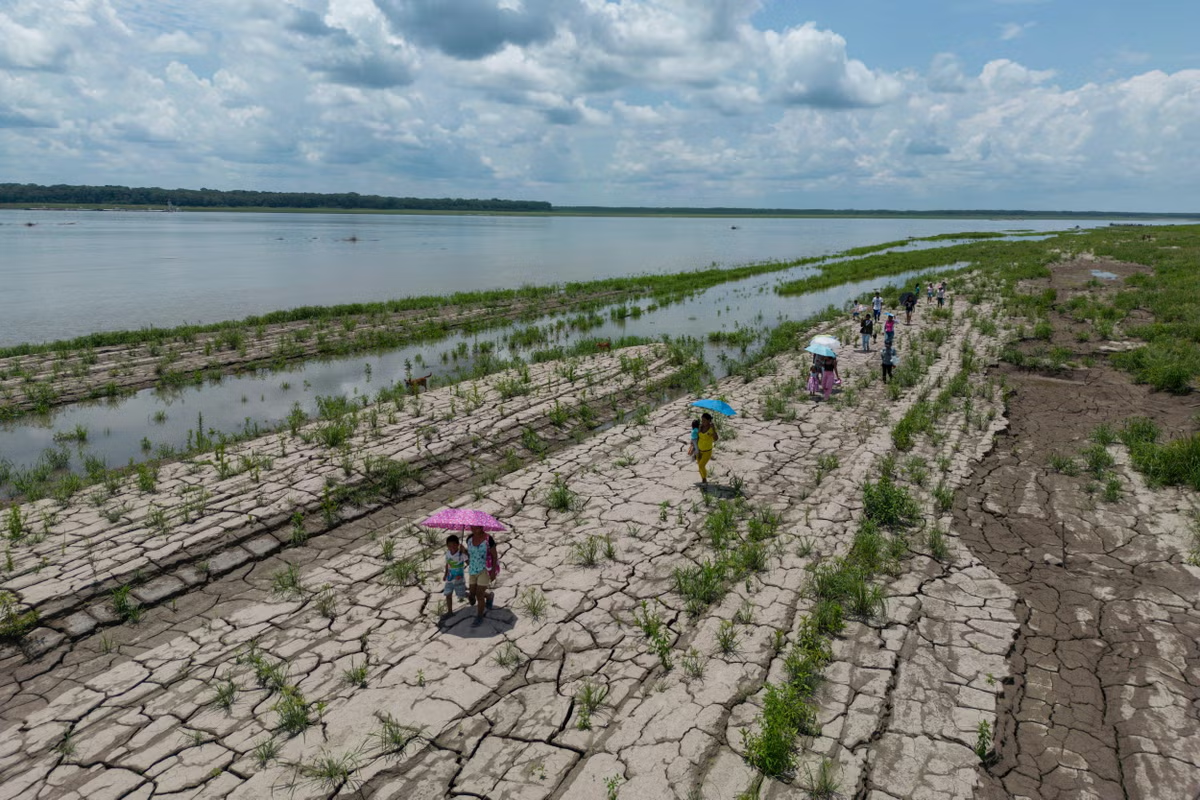
The upcoming Colombian presidential election between Sen. Iván Cepeda, an ally of President Gustavo Petro, and lawyer Abelardo de la Espriella, whom U.S. President Donald Trump has endorsed, is shaping up as a stark choice that could impact the future of the Amazon rainforest, fossil fuel development and the rights of Indigenous communities.
The June 21 runoff comes at a pivotal moment for Colombia, which under Petro emerged as one of the world’s most vocal advocates for protecting the Amazon and transitioning away from oil, gas and coal, the main drivers of climate change.
Petro opposed new oil and gas exploration contracts, vowed not to pursue fracking, a technique used to extract oil and gas from underground rock formations that has environmental consequences, and sought to position Colombia as a global leader on climate issues. Colombia recently hosted a first-of-its-kind international summit focused on a global transition away from fossil fuels.
Analysts say Cepeda would likely represent continuity of Petro’s priorities. He has emphasized Indigenous rights, environmental conservation and reducing Colombia’s dependence on fossil fuels, while signaling support for continuing Petro’s efforts to shift the country toward renewable energy and away from new oil and gas development.
De la Espriella, meanwhile, has campaigned on a platform centered on security and economic growth. He has voiced support for expanding Colombia’s extractive industries, including fracking, and has argued the country should make greater use of its underground resources.
“While both candidates claim that they value the conservation of the Amazon ecosystem, the choice that voters face is between an approach that focuses on maintaining a pristine ecosystem versus one based on productive exploitation,” said Elizabeth Dickinson, deputy director for Latin America at the International Crisis Group, a nonprofit think tank.
“On issues of climate, this is a choice between prioritizing green energy and reinvigorating fossil fuels,” she added.
Representatives for Cepeda and de la Espriella did not respond to requests for comment from The Associated Press.
Competing visions for development
Petro has repeatedly clashed with Trump over migration, climate policy and security cooperation. Earlier this year, the two sparred publicly on social media after Petro refused to allow U.S. military deportation flights carrying Colombian migrants to land, prompting Trump to threaten tariffs and visa restrictions before the countries reached a deal.
Espriella, on the other hand, was recently endorsed by Trump, who praised the candidate’s positions on law enforcement and security and said the election was important to U.S.-Colombia relations.
Colombia contains a significant portion of the Amazon rainforest, one of the world’s most important tropical forests, which is increasingly under pressure from deforestation, illegal mining, drug trafficking and climate change.
Petro’s administration tried to combat those things by promoting greater Indigenous participation in environmental policy and sought to strengthen cooperation among Amazon nations. On the international stage, he became one of the most vocal advocates for protecting the rainforest and moving away from fossil fuels.
Supporters of expanding oil and gas production argue Colombia remains heavily dependent on oil and gas revenues and foreign investment, and warn that a rapid transition away from fossil fuels could strain public finances and economic growth.
The tension between economic dependence on extractive industries and environmental protection is likely to shape whichever administration takes office.
How candidates differ on crime and resource extraction
Illegal gold mining, drug trafficking and deforestation have expanded across large areas of the rainforest in recent years, often under the control of armed groups. Rising gold prices, persistent demand for cocaine and the expansion of transnational criminal networks have made environmental crimes more profitable than ever.
“The greatest threat to conservation of the Amazon ecosystem is the expansion of organized crime,” Dickinson said. “The challenge for both of these candidates will be to hold back that criminal expansion into these industries.”
She said criminal groups have increasingly invested in illegal mining and deforestation, turning environmental destruction into a lucrative business model.
That reality has fueled competing visions on security.
Cepeda has signaled support for continuing negotiations with armed groups, building on Petro’s “Total Peace” policy, which sought to reduce violence through negotiations with guerrilla groups, drug-trafficking organizations and other armed actors. Supporters say dialogue offers the best chance of reducing violence, while critics argue some criminal organizations have used the process to consolidate territorial control.
Even under Petro, violence against environmental defenders spiked, said Andrew Miller, advocacy director at Amazon Watch, a nonprofit focused on environmental protection and Indigenous rights. Colombia has repeatedly ranked among the world’s deadliest countries for environmental activists despite the administration’s environmental agenda.
De la Espriella has promised a tougher approach centered on military force and restoring state authority.
Gimena Sánchez, Andes director at the Washington Office on Latin America, a nonprofit focused on human rights, said Indigenous communities are particularly concerned about how aggressive security operations could affect territories that have long been caught between armed groups and the state.
“The history of militarization of Indigenous peoples throughout the Amazon, but especially Colombia, has been devastating,” she said.
More details here…