The Nigerian Midstream and Downstream Petroleum Regulatory Authority, NMDPRA, says increased domestic gas supply and improved distribution would help reduce cooking gas prices and strengthen Nigeria’s energy security.
The Authority Chief Executive, ACE, Rabiu A. Umar, said this during his visit to the Nigeria LNG Ltd. (NLNG) plant and Train 7 project site in Bonny on Saturday.
Umar said gas penetration, energy security and operational efficiency were among the authority’s major priorities.
He stated that the priorities aligned with President Bola Tinubu’s agenda to deepen gas utilisation, improve access to natural gas and expand infrastructure across the country.
The chief executive said the authority was committed to ensuring adequate availability of cooking gas and natural gas, particularly in underserved areas, through infrastructure development and increased supply.
He cited the ongoing Ajaokuta-Kaduna-Kano (AKK) gas pipeline project as part of efforts to expand gas infrastructure and extend supply to more locations.
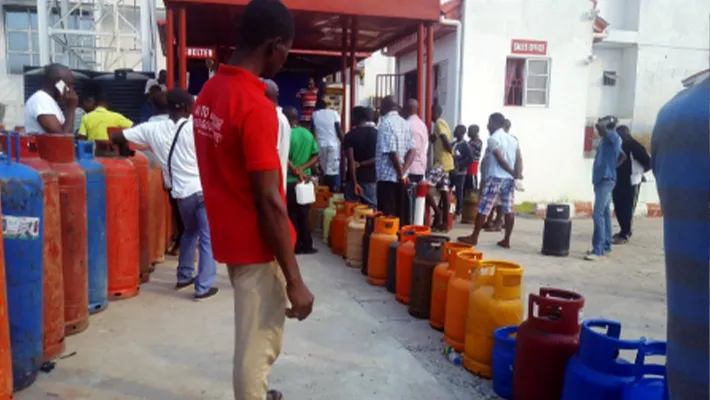
The ACE said cooking gas prices had started declining by between N300 and N400 per kilogramme following increased supply and interventions to address distribution challenges.
He attributed fluctuations in cooking gas prices to demand and supply dynamics, as well as logistical challenges associated with product transportation, shipping and vessel availability.
Umar said although some of the gas consumed in Nigeria was produced locally, domestic supplies were also affected by global shipping challenges, adding that the authority was working with operators to address the constraints.
He said the engagement with NLNG was aimed at increasing the volume of cooking gas available in the domestic market to ease supply pressure and moderate prices.
On the possibility of cooking gas selling below N1,000 per kilogramme, Umar said he would not commit to a specific price because the country operated a deregulated market.
He, however, said the regulator would ensure that prices remained cost-reflective and intervene whenever pricing components moved outside acceptable limits to protect consumers from exploitation.
Umar urged NLNG to expand its production capacity through additional LNG trains, assuring the company of the authority’s commitment to providing an enabling regulatory environment.
Earlier, the Managing Director and Chief Executive Officer of NLNG, Mr Adelaye Falade, said the company was working to increase gas production and domestic supply of Liquefied Petroleum Gas (LPG) to improve availability and address price distortions.
Falade said NLNG’s major priority was to operate its production facilities at full capacity but noted that inadequate feed gas supply had affected optimal utilisation of the plant.
He said the company’s installed production capacity stood at 22 million tonnes per annum (MTPA), comprising six trains, adding that it was currently operating at about 80 per cent capacity year-to-date.
According to him, the performance represented an improvement over the approximately 60 per cent capacity utilisation recorded in the previous two years.
The NLNG chief executive said the ongoing Train 7 project would increase the company’s LNG production capacity by an additional 7.5 MTPA, bringing its total installed capacity to approximately 30 MTPA.
He added that the project would also increase NLNG’s domestic LPG supply capacity by 50 per cent, from the current 500,000 tonnes to about 750,000 tonnes annually.
Falade said the additional capacity would help bridge the gap between domestic LPG supply and national demand, reducing the country’s dependence on imported cooking gas.