HAVANA – Cuba’s powerful Communist Party on Thursday approved an emergency economic package featuring unprecedented free-market measures aimed at opening up the struggling island’s economy as pressure from the U.S. and the European Union heightens.
The document, which has not yet been made public, will be submitted Thursday to Cuba’s National Assembly. It envisions expanding opportunities for private enterprise, greater autonomy for municipalities and state-owned companies and measures to attract additional foreign investment, including from Cubans abroad.
In recent days, residents in several Havana neighborhoods staged protests, banging pots and pans as power outages spread across the island.
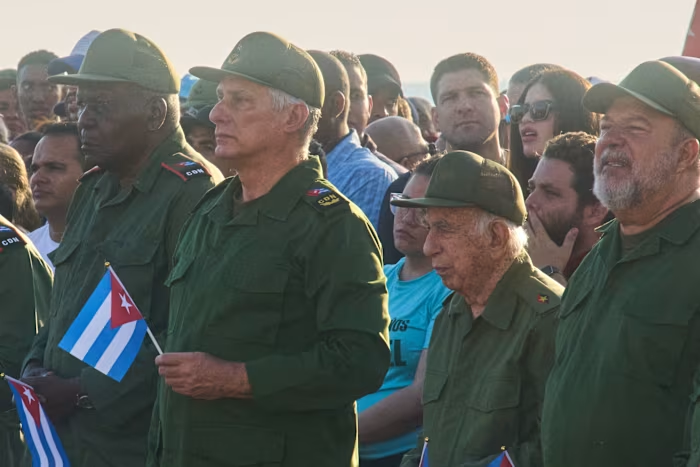
“Cuba resists heroically and creatively, but has endured for too long a barbaric, undeserved and unbearable punishment, to which is now added the threat of military aggression,” President Miguel Díaz-Canel said late Wednesday in the closing speech of the Communist Party session. The speech was published Thursday.
The announcement comes after months of increasing pressure from the U.S. and high-level talks between the two countries that have included Raúl Castro’s grandson, Raúl Guillermo Rodríguez Castro. The U.S. has levied numerous sanctions against Cuba and has indicted Raúl Castro in connection with the 1996 downing of two civilian planes operated by Miami exiles.
U.S. Vice President JD Vance said at a White House press briefing that the administration is watching the island’s actions to determine how to respond.
“We’re going to see what they do. And obviously, if they do one thing, we’re going to do something,” Vance said. “If they make smart decisions, we’re going to have a much better relationship with that island.”
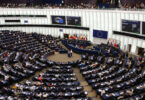
Pressure from the European Union also ratcheted up Thursday, with lawmakers passing a resolution condemning “the systematic repression” by the Cuban government and demanding “profound economic and political change.” The resolution also called for EU sanctions targeting Díaz-Canel and the leadership of Grupo de Administración Empresarial S.A. (GAESA), a business conglomerate operated by the Cuban Revolutionary Armed Forces. Both have already been sanctioned by the U.S.
Díaz-Canel said the emergency plan and the policy document prepared by the Communist Party’s Central Committee were shaped by the experiences of China and Vietnam, two communist countries that have introduced market-oriented economic reforms while maintaining one-party rule.
The document will be submitted to the National Assembly for debate during a special session that, like the recent party meeting, was convened without prior public notice.
__
Seung Min Kim in Washington and Sam McNeil in Brussels contributed to this story.
__
Follow AP’s coverage of Latin America and the Caribbean at https://apnews.com/hub/latin-america
Copyright 2026 The Associated Press. All rights reserved. This material may not be published, broadcast, rewritten or redistributed without permission.