A don, Professor Ifeoma Dunu, has charged Nigerian journalists to be pro-citizens in their reportage of the build-up to the 2027 general elections.
Prof Dunu, Director of UNIZIK 94.1 FM, Awka, gave the task when she presented a paper at a two-day media interface with the theme, “Interface with Nigeria Union of Journalists (NUJ) and Editors/Publishers on Democratic Scorecard”, held in Enugu. According to her, routine coverage of political rallies should focus on accountability, citizens’ welfare and fact-checking.
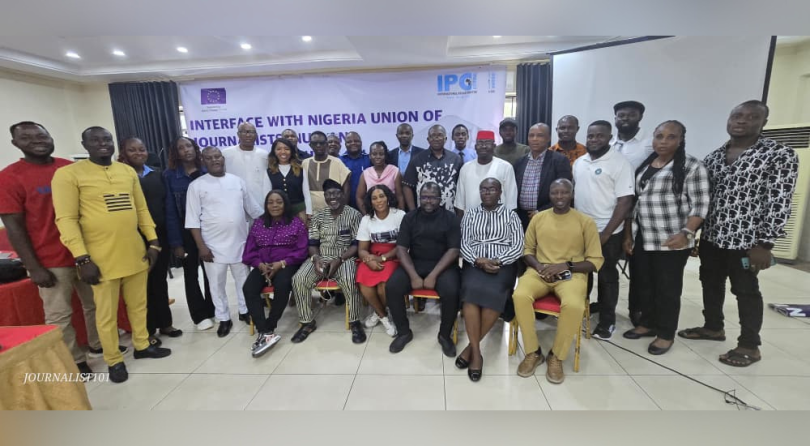
NEWSNGR reports that the workshop was organised by the International Press Centre (IPC), with support from the European Union through the EU Support to Democratic Governance in Nigeria (EU-SDGN) project.
The professor of mass communication cautioned journalists against focusing primarily on political parties, defections, rallies, endorsements, opinion polls and campaign rhetoric. She said “Effective election journalism must move beyond reporting what politicians say to investigating what they do, verifying what they claim, and establishing how their decisions affect citizens’ lives.”
According to her, election coverage should not be treated merely as a contest between political candidates but as an opportunity to scrutinise public needs, democratic rights and policy choices. Citizens’ concerns should determine newsroom priorities and shape editorial decisions before, during and after election day, she said.
The Executive Director, International Press Centre, IPC, Lanre Arogundade, said the workshop was aimed at strengthening the media towards result-oriented coverage of the elections.
He said, “With the 2027 general elections drawing closer, pertinent questions continue to be asked about how well-prepared INEC’s electoral communication systems are, particularly in the context of withstanding possible uncertainties, public controversies, false narratives, and competing claims. The key challenge is doing all this without compromising accuracy, impartiality or public confidence. Addressing this challenge makes Voter Education and Publicity officials very important factors in the trust building equation of our electoral processes.”
He explained that electoral trust is shaped well ahead of elections with citizens’ perceptions capable of determining whether they would trust the voting process on election day. In his words, “Trust, therefore, is not built only on election day, but in the weeks and months before it; by what citizens know, when they hear it and who they hear it from. That makes electoral communication more than the dissemination of official information. It is about ensuring that citizens can access, understand and verify that information, especially in an electoral environment when processes are regularly contested, court actions frequently instituted amidst confusion over legal provisions as well as misleading narratives.”
On the importance of fact-checking, the executive director said journalists should ensure accuracy in their reportage, noting that with AI, “voices can be cloned in minutes while results sheets can be falsified in seconds thus highlighting the danger that false claims can outrun official corrections”.
He added that, “Voters have legal questions to clarify, many of them about the 2026 Electoral Act, and a vague or inaccurate answer from an official can cost the commission more than silence would, meaning that every public interaction either deposits or withdraws institutional trust. That is the pressure this programme seeks to respond to.”