
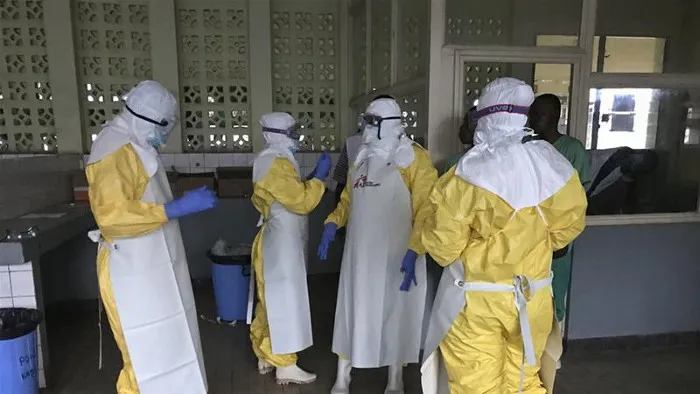
The World Health Organisation, WHO, says most of the early epicentres of Ebola outbreak in the Democratic Republic of the Congo, DRC, have been successfully brought under control as 3,000 people recovered six months into the Ebola outbreak
The UN health agency, in a statement on Sunday stated that the outbreak had been successfully controlled and rapid transmission had been halted, including in Mongbwalu, Nyankunde, Nizi, Rwampara and Butembo.
It stated that even in Bunia, one of the larger early epicentres, though there was still significant transmission, the number of new cases had halved, and treatment centres were reporting low occupancy.
“Diagnostic capacity has grown from two laboratories to more than two dozen, while close to 2000 treatment beds are now available in 104 treatment and transit centres.
“Around 3000 people have recovered from Ebola, and a quarter of those have enrolled in the survivor programme.
“Over 17, 000 community health workers and 46,000 community actors have been trained and provided with supplies to safely do their jobs.
“Health teams are implementing targeted strategies to support women and children, including by keeping maternal health services running.
“Nearly one million hot meals across 59 treatment, isolation and transit facilities have been delivered to more than 180,000 people affected by the outbreak and to support containment efforts.”
“The UN, Africa Centres for Disease Control and Prevention, regional economic bodies and humanitarian partners are fully mobilised behind government leadership.
WHO is directing the technical health response, and the wider humanitarian system is helping enable access, logistics, protection, and continuity of essential services.
Nearly 100 health and humanitarian partners are present across the affected areas, providing essential health services, including treatment for acute malnutrition.
Africa CDC and WHO co-lead the joint continental Incident Management Support Team, which supports the technical health response and coordinates health and development partners across affected and at-risk countries in response, preparedness and readiness.
The UN health agency, however, reported significant progress in the past six months in bringing lifesaving services closer to the affected communities,
However, fuelled by ongoing conflict, displacement and humanitarian needs, the outbreak continues to expand, particularly in affected areas.
Since the start of the outbreak, more than 11,000 cases and 5400 deaths had been reported.
The agency said children account for more than a quarter of confirmed cases and one third of deaths.
It added that seven in 10 children under five with confirmed Ebola have died.
While the response has slowed transmission in the initial epicentres, 400 to 500 new cases continue to be reported each week, and the outbreak has expanded to 67 health zones in eight provinces.
It said contact follow-up remains below target.
The agency said the high number of deaths occurring in communities, which account for two-thirds of confirmed deaths, show that infections are still being identified too late.