
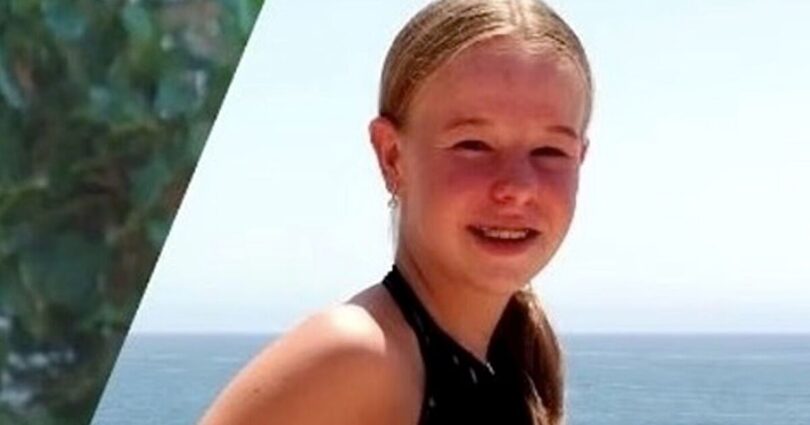
A high-profile Dutch court case has returned to the spotlight (Image: -)
A Dutch mother who has spent six years fighting for answers over the death of her 14-year-old daughter is set to give evidence in a court case that could finally shed new light on the tragedy.
Tamar died after being struck by a Mazda near the Dutch village of Marken on 25 July 2020. Her death has attracted renewed international attention after questions were raised about the handling of the investigation and the circumstances surrounding the driver involved.
The driver, identified under Dutch privacy laws as Jamal T, is due to appear in court later this month charged with causing death by reckless driving following a fresh review of the case.
Tamar’s mother, Trijntje, claims key questions remain unanswered, including how her daughter’s body came to be found in a roadside ditch and why the occupants of the vehicle left the Netherlands shortly after the collision.
The case has drawn attention in the Netherlands and abroad, with social media users drawing comparisons to other controversial incidents involving disputed police accounts. Tamar has even been referred to online as “the Dutch Henry Nowak”, in reference to the recent UK case that has sparked public horror.
Tech billionaire Elon Musk also commented on aspects of the wider debate, referring online to what he described as “homicidal empathy”, a phrase used by critics discussing perceived bias in the handling of such cases.
The renewed scrutiny follows allegations that authorities initially identified the driver as German before it later emerged he was a refugee living in Germany.
Dutch authorities have not accepted allegations of wrongdoing or cover-up. However, the case has become politically sensitive, with Trijntje previously alleging that officials were concerned about the so-called “Wilders effect”, referring to fears of fuelling support for Dutch right-wing politician Geert Wilders and his Party for Freedom.
What happened on the night Tamar died?
According to her mother, Tamar left the family home in Marken shortly after 1am after taking a key from her school bag and slipping out while her parents were asleep.
Trijntje said she heard the front door close and immediately realised her daughter had left.
She and her husband began searching for her, with Trijntje taking a bicycle and her husband using both a car and bicycle.
“We could not lock her in as though we were a prison,” Trijntje said previously.
“That night she was making a statement. She was 14 – an age when you want to start asserting independence.”
Police were alerted and joined the search.
Tamar’s body was found shortly after 3am beside a road linking Marken and Monnickendam, around three miles from her home.
Why has the investigation become controversial?
The family says they were initially told the driver was German, before later learning the occupants of the Mazda were Iraqi refugees living in Germany.
Trijntje has accused authorities of lacking transparency over the identities of those involved.
She said previously: “The lying began right from the start.
“We were first told that it was a ‘German’ man driving the Mazda.
“Later we were informed that the four in the car were refugees who had sought asylum in Germany.”
She added: “When I challenged the police, they said they had known about their true identities earlier. The explanation I was given was that the authorities wanted to avoid the ‘Wilders effect’.”
Dutch authorities have not responded to those specific claims, according to a Daily Mail report.
Why is Tamar’s body at the centre of the case?
Questions also remain over how Tamar’s body came to rest in a roadside ditch.
An independent collision expert commissioned by the family’s lawyer concluded the final position could not be explained by the impact alone.
“The expert’s findings show that the final position of Tamar’s body cannot be explained by the collision itself,” the report stated.
“One must assume that her body was dragged or moved after the collision.”
Police carried out a reconstruction of the incident, concluding the occupants of the Mazda may have had a brief window to move the body before other vehicles passed, although they described the timeframe as extremely limited.
No DNA from the occupants was found on Tamar’s body.
The driver’s lawyer, Anis Boujami, has rejected any suggestion his client moved the teenager.
He said Jamal T did not see Tamar and “therefore, did not touch her”.
The driver told police he believed he had struck a pothole, road sign or animal.
What happens next?
Following a renewed legal push by Tamar’s family and their lawyer, Sebas Diekstra, prosecutors reopened aspects of the case.
Jamal T is now due to appear before a judge charged with causing death by reckless driving.
Fresh evidence, including CCTV footage and witness testimony from residents, is expected to be examined in court.
Reports suggest footage shows the Mazda in a Marken car park shortly after 3am, around the time Tamar’s body was discovered.
The family hopes the hearing will finally provide answers to questions that have remained unresolved for almost six years.
Speaking about her daughter, Trijntje said: “My daughter was left in a roadside ditch like a dead animal. You wouldn’t wish that on anyone.”