
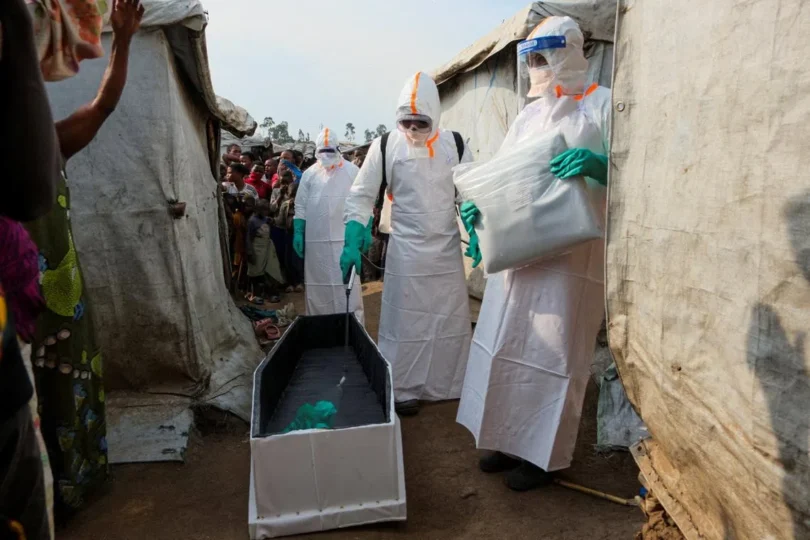
KINSHASA – Ebola cases have surpassed 1,000 in the Democratic Republic of the Congo, where health workers are becoming infected before anyone realises they are treating the deadly virus, exposing a dangerous weakness in efforts to contain one of the world’s fastest-growing outbreaks.
At least 78 nurses, doctors and other healthcare workers have become ill and 18 have died during the epidemic, according to Congo’s National Public Health Institute.
Many of the infections have occurred in ordinary clinics and hospitals rather than specialised Ebola treatment centers, according to outbreak responders.
“All infected health workers were infected outside Ebola treatment facilities so far,” said Abdou Sebushishe, medical lead in Congo for International Medical Corps.
Bundibugyo Ebola often begins with symptoms that resemble malaria and other common illnesses, meaning healthcare workers may be exposed before the disease is suspected and strict infection-control measures are put in place.
Sebushishe said the infections were largely linked to weak infection-control measures, shortages of protective equipment, inadequate training and poor surveillance in health facilities.
The World Health Organization has warned that Ebola transmission is amplified in healthcare settings when infection-prevention measures are inadequate.
Early symptoms are non-specific and can delay diagnosis, the agency said on June 19 in an update on the outbreak.
Congo reported 1,003 confirmed cases and 254 deaths as at June 20, according to figures released by the government on June 21.
The number of recovered patients rose to 100 after eight additional people were declared cured.
The outbreak remains concentrated in Ituri province, which accounts for more than 90 per cent of confirmed infections.
Treatment facilities there have come under increasing strain, with isolation wards operating above capacity as the number of patients requiring care continues to rise.
Authorities are making healthcare free across Ituri during the outbreak to encourage earlier diagnosis and treatment.
Laboratory capacity has been expanded and surveillance strengthened, while health workers are being retrained in infection prevention and control.
Even so, the response continues to face major challenges.
The proportion of identified contacts successfully followed by health authorities fell to 58 per cent on June 20 from more than 70 per cent earlier in the week, underscoring the difficulty of tracking transmission chains in conflict-affected areas.
“On a scale of zero to 10, compared with where this response needs to be, I would say we are at about three or four,” WHO Africa emergency response lead Marie Roseline Belizaire said in an interview with UN News.
“We now have psychosocial support and nutritional support that provide assistance to confirmed patients, their families and the contacts we are monitoring, so that we can take a holistic approach to this outbreak.”
Despite the setbacks, officials say more patients are surviving the disease and community outreach efforts are being expanded.
International donors and African leaders in June pledged about US$910 million (S$1.2 billion) for Ebola response and preparedness efforts, reflecting concerns that the outbreak could continue for months despite the growing scale of the response. BLOOMBERG