
BEN AHANONU
Electricity is one of the most important things a modern society needs to survive and grow. It lights up our homes, keeps our food fresh in refrigerators, powers our phones, and keeps our hospitals and schools running. Most importantly, electricity is the engine that drives small* *businesses, markets, and big factories. Without steady power, life becomes hard, and the economy slows down.
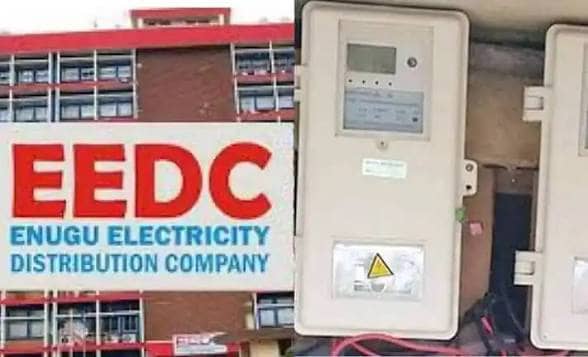
Yet, across the five states of South-East Nigeria—Abia, Anambra, Ebonyi, Enugu, and Imo—the company given the job of* *supplying this vital service has become a major source of pain and anger. The Enugu Electricity Distribution Company* *(EEDC) was supposed to bring light and progress to the region. Instead, for millions of ordinary people, EEDC has come to* *represent unfair treatment, bad service, and a greedy focus on making money at the expense of suffering citizens.
To understand the anger on the streets today, we have to look back at how EEDC came into power. Over ten years ago, the Nigerian government decided to sell its electricity companies to private businessmen. The government promised that private companies would bring in fresh money, fix old power lines, bring in smart managers, and finally end the long years of darkness that Nigerians had suffered. People across the South-East welcomed this change with high hopes. They believed that if they were going to pay higher bills, they would at least get steady light in return.
Sadly, that promise has turned into a nightmare. More than a decade later, power supply across the South-East has not improved for most people. In many areas, it has actually got worse. Families go for days, weeks, and sometimes months without seeing a single flash of electricity. Yet, at the end of every month, the bills arrive right on time, demanding huge sums of money for power that was never supplied.
*One of the biggest ways EEDC exploits the people is through a system called “estimated billing”.* In simple terms, estimated billing means guessing how much electricity a house has used instead of measuring it with a prepaid meter. For years, the Nigerian government and its electricity regulators have ordered power companies to give prepaid meters to all customers so that people only pay for the exact electricity they use. Despite these clear orders, EEDC has been very slow to provide meters. Millions of homes and shops across Umuahia, Owerri, Aba, Onitsha, Enugu, Abakaliki and other cities are still left without meters.
Because these customers do not have meters, EEDC officials sit in their offices and write down crazy, inflated figures on paper bills. A poor widow living in a single room with just one light bulb and a small fan can receive a monthly bill of thirty thousand or fifty thousand naira. Meanwhile, her neighbourhood might have had light for only ten hours in the entire month. When people complain, they are told to pay first before complaining—a trick that ensures their money is taken with no hope of getting a refund. This is not fair business; it is a system designed to take money from poor people for services they never received.
What makes EEDC’s actions feel even more anti-people is how the company treats power equipment like transformers, electric poles, and wires. In any normal business, the company buys its own tools and machines, uses them to serve customers, and makes a profit from the sales. EEDC does the exact opposite. Across towns and villages in the South-East, whenever a transformer breaks down or a storm knocks down electric poles, EEDC refuses to fix or replace them. They leave entire communities in total darkness for months or even years. Out of desperation, poor villagers, market women, and town unions are forced to tax themselves. They collect contributions from their hard-earned money to buy brand-new transformers, cables, and poles.
Here is the most painful part: as soon as the community buys and installs the transformer, EEDC officials show up, claim ownership of the transformer as company property, and immediately start distributing monthly bills to the very people who bought it. If a fuse blows on that same transformer a few months later, EEDC staff will still demand bribes or “mobilisation fees” from the community before they will come out to fix it. In this setup, EEDC spends almost nothing on equipment, forces the public to pay for repairs, and collects all the profits. No business model could be more unfair than that.
The South-East is famous across Africa for the hard work and business spirit of its people. From the busy markets of Ariaria and Onitsha to the workshops of Nnewi and the growing tech hubs in Enugu and Owerri, the region thrives on small and medium businesses. Today, EEDC is slowly choking these businesses to death. Think about the local welder, the barber, the tailor, the cold-room owner selling frozen fish, or the small bakery. These businesses need steady electricity to survive. Because EEDC fails to give them light, these business owners are forced to buy fuel and diesel every single day to run noisy generators. With the high cost of fuel in Nigeria today, spending money on generators eats up all their profits.
Many small businesses have already shut down. Those that are still open have had to raise the prices of their goods and services just to stay alive, making life even harder for everyday buyers. Worse still, when a business shuts down, young people lose their jobs. Instead of helping the South-East grow rich and peaceful, EEDC’s poor service is pushing more people into poverty and unemployment.
A good company treats its customers with respect. It listens to their problems and tries to solve them quickly. EEDC, however, often acts like an angry landlord bullying helpless tenants. Instead of fixing faults, EEDC puts all its energy into disconnection drives. Their workers move around with ladders and pliers, cutting off wires from poles with speed and aggression. Even worse, EEDC often practises “mass disconnection”. If five houses on a street owe money, EEDC officials will cut off the main power line supplying the entire street of fifty houses. By doing this, they punish innocent people who have paid their bills on time or who use prepaid meters, using them as human shields to force their neighbours to pay up.
Trying to get help from an EEDC customer care office is another nightmare. Customers are made to wait in long queues under the hot sun, tossed from one office to another, and given empty promises that are never kept. The message from the company is clear: your comfort does not matter; only your money matters.
*The people of the South-East are not asking for free electricity. They are hardworking, honest* *citizens, who are more than willing to pay fair prices for steady, reliable power.* *What they reject is paying high prices for darkness. What they reject is buying transformers for a* *private company that refuses to invest in its own network.*
*Electricity is too important to be left in the hands of a company that cares only about maximising profit* *while ignoring human suffering.* The federal government, electricity regulators, and South-East state governors must wake up and protect their citizens. EEDC must be compelled to provide free prepaid meters to every home, stop issuing exorbitant estimated bills, refund communities that purchased transformers, and deliver steady power. Until EEDC changes its ways and puts people before profit, it will rightly be remembered by history as an anti-people establishment that held an entire region back for far too long.
*Prince Ben AHANONU,*
*Principal Partner,*
*Ben AHANONU and* *Associates.*
*Email:* *[email protected]*