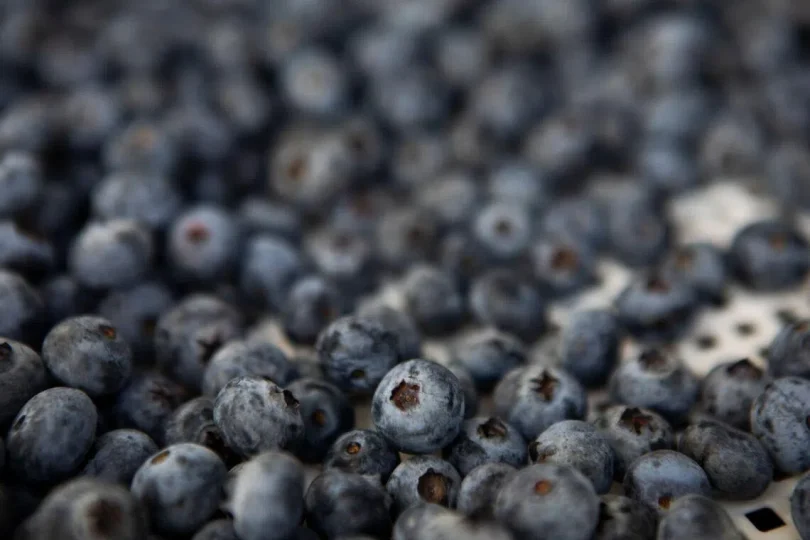
LIMA – Americans worried about their grocery bill have another popular superfood to worry about: already expensive blueberries are facing even more pricing pressure.
That’s because potentially the strongest El Nino in more than 75 years is expected to pick up during Peru’s peak blueberry harvest, coinciding with the start of the rainy season along the country’s northern coast where most blueberries are grown.
Peru, the world’s largest exporter of fresh blueberries, is already facing disruptions from the weather phenomenon.
Higher temperatures and heavy rains threaten to interfere with the fruit’s flowering, reduce yields and drive up the cost of exports from the Andean nation, which supplies about one in three fresh blueberries sold in the US.
The risks extend well beyond blueberries.
The weather pattern imperils years of steady growth for Peru’s agribusiness and an already pressured fishing sector amid freight cost swings and geopolitical strife.
Higher temperatures threaten to drive up global prices for a range of popular products as the country is also the world’s top exporter of grapes and one of the biggest suppliers of mangoes, asparagus and avocados.
“Nothing is set in stone when it comes to El Nino,” said Gabriel Amaro, head of Peru’s agribusiness group AGAP. “There are risks to the production and export of several crops.”
El Nino is set to be one of the first major challenges for the new administration of conservative President Keiko Fujimori, who during her inauguration this week announced “extraordinary” funding and a contingency plan to address the threat, including flood mitigation and financial aid for Peruvian farmers.
In the last coastal El Nino in 2023, Peru’s economy shrank 0.4 per cent, its second-worst contraction in over two decades, as extreme weather and social unrest hit the nation.
El Nino and a fertiliser crisis made that year the worst for Peru’s agricultural sector since 1992 – largely due to the impact of bad weather on blueberry production.
This time, the climate phenomenon could shave up to 0.8 percentage points off Peru’s economic growth in 2026, and another 0.9 in 2027, according to central bank estimates.
The economy is still expected to grow more than 3 per cent in both years.
Superfood
Workers harvest blueberries at a farm near Huacho, Huaura Valley in Peru.
PHOTO: BLOOMBERG
For Americans, the blueberry is a healthy superfood, and its grab-and-go convenience has helped fuel a boom, stoking demand even as prices have steadily crept higher.
The price of blueberries has gone up by more than US$1 (S$1.28) per pound since 2021.
But their inclusion in everything from smoothies to barbecue sauce means Americans eat roughly twice as many blueberries as they did a decade ago, according to the latest official estimates of per-capita availability, a proxy for consumption.
“Blueberries check multiple boxes as it relates to how we value our food,” said Lori Taylor, founder of the Produce Moms, a US-based informational resource helping consumers eat more fresh fruits and vegetables. “There are very few commodities seeing that jump in popularity.”
Most blueberry shipments from Peru arrive between September and February, during the Northern Hemisphere’s off-season.
But El Nino threatens to delay that timeline, said Ricardo Naranjo, chief executive officer of Peru’s top producer and exporter of blueberries, Camposol.
The company estimates the phenomenon could cut 15 per cent from the more than 50,000 tons it had expected to export in 2026.
New blueberry fields and higher prices for importers are expected to help cushion the blow.
“When the world’s largest supplier has less fruit available, it’s reasonable to expect upward pressure on prices,” Naranjo said.
Still, retailers, rather than risk losing shoppers, are likely to shield US consumers from taking on the brunt of price increases, said Jonna Parker, vice-president of the fresh foods team at the data analytics firm Circana.
During the 2023 El Nino, Peruvian blueberry export volumes fell 25 per cent as temperatures rose by as much as 5 deg C, while average export prices jumped around 75 per cent.
US retail prices rose a more modest 9 per cent, suggesting retailers absorbed much of the higher import costs, Parker said.

A worker loads baskets of harvested blueberries into a trailer at a farm near Huacho, Huaura Valley in Peru.
PHOTO: BLOOMBERG
It was the biggest annual increase in retail prices of the past five years, yet higher-income consumers continued to stoke demand.
“Retailers will find ways to keep blueberries at decent value,” she said. “If we can get the berries to the shelf, maybe we won’t see deep discounts, but we’ll still see that demand.”
In Peru, the worries are broader as overall farm export volumes are already down 1 per cent through May and could fall by more than 30 per cent for the entire year, according to AGAP.
Weaker shipments could leave agricultural export revenue little changed, breaking a long streak of double-digit growth.
The nonprofit association revised its export forecast to around US$14.5 billion to US$15 billion, in line with 2025’s US$14.6 billion, and below the prior outlook of US$16 billion.
Fishing fallout
The fallout is rippling through another of Peru’s long-standing and biggest export industries.
It was Peruvian fishermen in the 17th century who were the first to notice unusually warm Pacific waters around Christmas some years, calling it “El Nino de Navidad” after the baby Jesus.
Today the country is the world’s top producer of fishmeal.
El Nino has already resulted in an unusually warm sea since May, disrupting catches of anchovy – a key ingredient in fishmeal – as adult fish move into deeper, cooler waters, leaving behind more juvenile fish.
To protect the stock, Peruvian authorities suspended the first anchovy-fishing season, typically from April to July, for an initial 15 days before extending the ban.
Prices have already climbed to record highs, driving up costs for major importers such as China.
They could rise even further if the next season, typically November to January, is also upended.
With only about a quarter of Peru’s anchovy quota caught so far in 2026, fishmeal export volumes fell more than 30 per cent in the first five months.
The 2023 El Nino cut exports in half, costing an estimated US$1.4 billion in lost exports.
“Losses could be even greater this year,” said Rafael Zacnich, economic research manager at the trade association ComexPerú. “It’s going to be hard, it’s going to be a very, very strong El Nino.” BLOOMBERG