The government of Equatorial Guinea has resigned after failing to meet key performance benchmarks set by President Teodoro Mbasogo; the Vice-President Teodoro Mangue announced on Tuesday. Mangue, who is also the son of President Teodoro Obiang Nguema Mbasogo, disclosed the development in a post on X, saying the cabinet stepped……
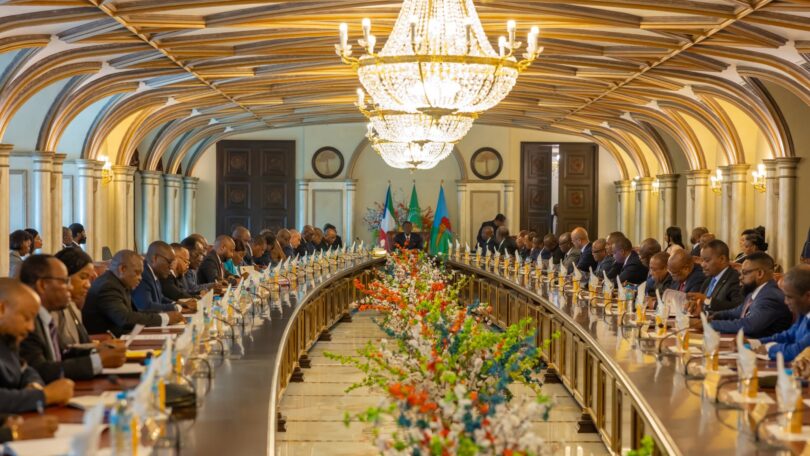
The government of Equatorial Guinea has resigned after failing to meet key performance benchmarks set by President Teodoro Mbasogo; the Vice-President Teodoro Mangue announced on Tuesday.
Mangue, who is also the son of President Teodoro Obiang Nguema Mbasogo, disclosed the development in a post on X, saying the cabinet stepped down after delivering only a fraction of its expected objectives.
According to him, the outgoing administration achieved “barely 10 per cent” of the goals assigned to it.
“The rule is simple: public responsibility has to come with results,” Mangue wrote.
READ ALSO: Gov Lawal Approves Minor Cabinet Shake-Up in Zamfara
“The state puts significant human, material and financial resources at the disposal of the government to address the needs of the population.
“So the degree of execution achieved is clearly insufficient in relation to the expectations and commitments undertaken.”
The vice-president, however, did not reveal the specific targets that the government failed to achieve.
The resignation marks a major shake-up in the Central African nation, where Mbasogo has remained in power since 1979, making him the world’s longest-serving head of state.
The outgoing cabinet was appointed in 2024 and headed by Prime Minister Manuel Osa Nsue Nsua, a former governor of the National Bank of Equatorial Guinea.
Nsua was brought into office with a mandate to drive economic reforms and improve living conditions, particularly for vulnerable citizens.
However, nearly two years later, the country continues to grapple with economic challenges linked to declining oil output, reduced investment inflows and broader external economic pressures.
Despite being one of Africa’s major oil producers, Equatorial Guinea remains heavily dependent on hydrocarbons, with crude oil and natural gas accounting for the bulk of government revenue and export earnings.
In a separate statement, the ruling Democratic Party of Equatorial Guinea (PDGE) said the president had become dissatisfied with the performance of the administration.
According to the party, Mbasogo faulted the government for failing to implement policies aimed at diversifying the economy, particularly through agriculture.