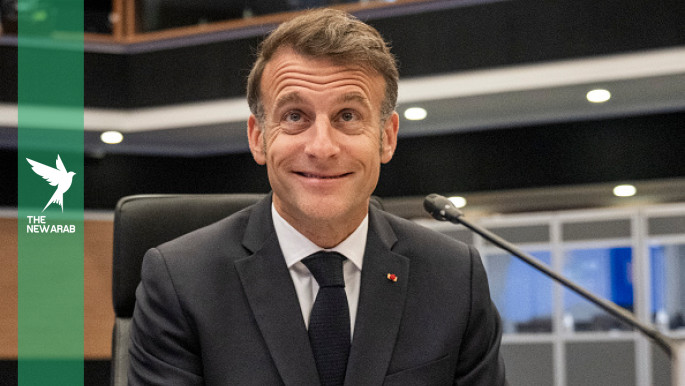
Macron seems to be addressing the lack of any French or European presence in Lebanon-Israel ceasefire talks [Getty]
Europe is moving to assert a greater role in efforts to secure peace between Lebanon and Israel, with fresh proposals for a post-UNIFIL mission and a French-led diplomatic push, after the US took the lead in brokering a new ceasefire extension between the two sides.
EU foreign policy chief Kaja Kallas said European leaders were discussing whether they could “put our own mission together once UNIFIL ends but not with the same mandate, to really address the needs that they have”, including supporting the Lebanese armed forces and helping them assert control on the ground.
French President Emmanuel Macron said on Friday that “Europe needs to do even more” to help secure peace in Lebanon, adding that “France will organise a conference of support” and that “feeding on all the contributions of the Europeans is important”.
“We continue the work, the negotiations for peace, stability in Lebanon and its sovereignty.”
“I think we all have an interest in seeing stability return as quickly as possible and world economies calm down,” Macron added, saying “Europe has never been in greater need of unity, independence and sovereignty.”
The European push comes after US President Donald Trump announced late Thursday–Friday that the ceasefire between Lebanon and Israel had been extended for three weeks following a White House meeting involving senior officials from both sides.
There were no European representatives present or invited to Trump’s announcement.
In a statement posted on Truth Social, Trump said the talks “went very well”, adding that Washington would continue working with Lebanon “to help it protect itself”.
The US president also signalled a parallel political track that could include a future meeting between Lebanese President Joseph Aoun and Israeli Prime Minister Benjamin Netanyahu.
The meeting was moved to the Oval Office at short notice, with Trump personally chairing the talks.
In separate remarks, Trump said peace between Lebanon and Israel was “relatively easy” compared to other conflicts, adding there was a strong chance of reaching an agreement this year. He also said the US would cut funding to Hezbollah, stating that “Israel has the right to defend itself against Hezbollah if attacked”, while cautioning that this “must be done carefully”.
US Secretary of State Marco Rubio said the extension would allow more time to work towards peace between “two states that want peace”, while US Vice President JD Vance described it as “an important historic moment”.
Despite the diplomatic momentum, developments on the ground point to a fragile and uneven ceasefire. The Israeli military said it struck buildings in the southern Lebanese towns of Kherbet Selem and Tulin, claiming, without providing evidence, that they were used by Hezbollah to “plot” against Israel, in response to rocket fire towards the Israeli town of Shlomi.
The escalation has been among the most intense since the night of 16-17 April, including the killing of journalist Amal Khalil, as Israeli forces have intensified attacks on southern villages.
Since the ceasefire came into effect a week ago, official Lebanese bodies have documented more than 480 Israeli violations across over 29 categories, excluding aerial breaches, including three direct attacks on journalists and six on paramedics. At least seven people have been killed and more than 20 injured.
Lebanon has set firm conditions for any future agreement, as the country seeks to protect itself from current and future Israeli aggression.
Prime Minister Nawaf Salam said that “Lebanon cannot sign any agreement that does not include a full withdrawal of Israeli forces.”
“Nor can we accept what is being called a buffer zone, or any Israeli presence in which displaced Lebanese are not allowed to return, or in which the reconstruction of destroyed villages and towns is not permitted,” he added.
Lebanese President Joseph Aoun has also rejected the prospect of meeting Netanyahu at this stage, emphasising that the priority remains consolidating the ceasefire, which officials warn is still fragile and at risk of collapse.